Before Okinawa was part of Japan, it was the Ryukyu Kingdom, an independent state that grew rich on trade between China, Japan and Southeast Asia. Its lords built stone fortresses called gusuku and prayed in forest sanctuaries called utaki, and a group of them are now a World Heritage site. Seeing them gives the island a deeper meaning than its beaches alone, and they are easy to string together over two or three days.
Shuri Castle Park: the capital
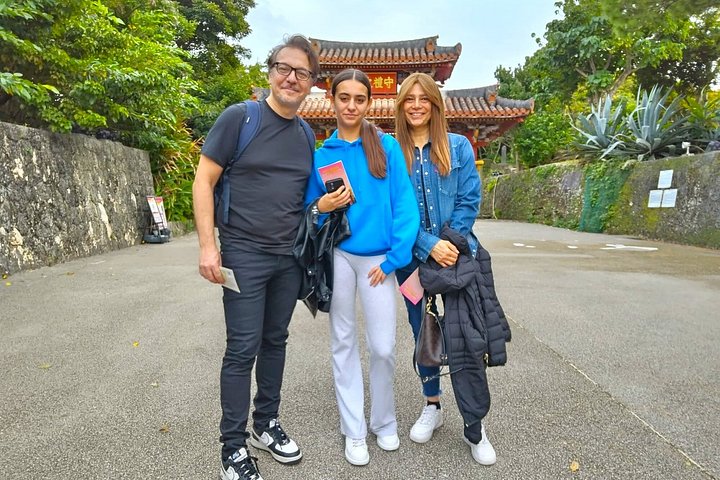
Start in Naha at Shuri Castle Park, the palace and political heart of the kingdom for around four and a half centuries. A fire destroyed the main hall in 2019, and reconstruction has continued since, with much of the park staying open. You can walk through the gates, along the original walls and into the sacred sites, and see exhibits on the rebuilding. Because access to the main hall interior changes with the works, check the park's current notices before you go. Nearby, Tamaudun is the royal mausoleum, and Shikinaen is the garden the kings used for rest and for hosting envoys.
Nakijin Castle: the northern kingdom
In the north, Nakijin Castle was the residence of the Hokuzan king before the kingdom was united. Its long, curved walls climb the hillside and look out to sea, and in late winter the cherry trees along the approach bloom early. It combines naturally with the Churaumi Aquarium and Kouri Island, and a visit takes about two hours. The walls are among the finest in Japan, and walking along them gives a clear sense of how large the fortress was.
Nakagusuku and Katsuren: the central ridge
On the central part of the island, Nakagusuku Castle is the best preserved of the gusuku, with graceful curved enclosures, arched gateways and views of both coasts. Katsuren Castle, on its limestone hill near the east coast, tells the story of the rebel lord Amawari, who rose through overseas trade and fell in 1458. The two are a short drive apart and together make a half day. Nakagusuku is the easier walk, and Katsuren has steep stairs and a more dramatic summit, so wear shoes with grip.
Urasoe: before Shuri
Urasoe Castle, north of Naha, was a power centre before the royal seat moved to Shuri, and its hilltop holds a royal tomb and a small museum. The ridge below was also the scene of heavy fighting in 1945, so the visit joins the story of the kings to the story of the war. It works well as a short stop on the way north or as a first look at the island's history before Shuri.
Sefa Utaki: the sacred centre
In the south, Sefa Utaki is the holiest site of the old religion, a forest path to sanctuaries formed by great leaning rocks, with a triangular opening that frames the sacred island of Kudaka. It is still used for prayer, so keep to the paths, dress modestly, speak quietly and do not enter the sanctuaries. Allow an hour, and arrive early for the quietest atmosphere. Okinawa World and the Peace Memorial Park are close, so the three combine into a good day.
Planning tips
A rental car makes the castles much easier, because buses to Nakagusuku, Katsuren and Sefa Utaki are slow. Visit early or late to avoid heat and crowds, wear shoes with grip, carry water and check opening hours and any notices before you go. Learn a few names and dates beforehand, because the sites have limited signage compared with major European monuments, and consider a guided walk at one or two of them. Treat the sacred places with respect, and leave everything as you found it.
A suggested order
For a first visit, begin with Shuri to learn the story of the kingdom, then see Nakijin or Nakagusuku to understand what a gusuku really looked like, and end with Sefa Utaki to feel the older religious world behind the castles. Visiting in that sequence lets the details accumulate, from the gate styles and curved walls to the priestesses who led the rituals. If you have only one day, combine Nakagusuku and Katsuren on the central ridge, or Shuri and Shikinaen in Naha. Allow time for the quiet moments, because the best part of these places is often the stillness rather than the stones themselves.