Pamukkale is a small place with a big reputation. The village sits at the foot of a white slope of calcium terraces, with the ruins of Hierapolis on the plateau above and thermal hotels strung out toward the red springs of Karahayit. Most visitors come for a night or two, and a short stay can be rewarding if you plan it around the light and the weather.
When to go
Spring and autumn are the most comfortable seasons, with mild days and softer light on the terraces. Summer is hot and crowded in the middle of the day, and winter is cool and quiet, with shorter opening hours. In November, expect cool mornings, fewer tour groups and the site on its winter timetable, which the museums portal lists as 08:00 to 18:00 from 1 October to 30 April. Balloon and paragliding flights depend on the wind, so leave some slack.
What to book ahead
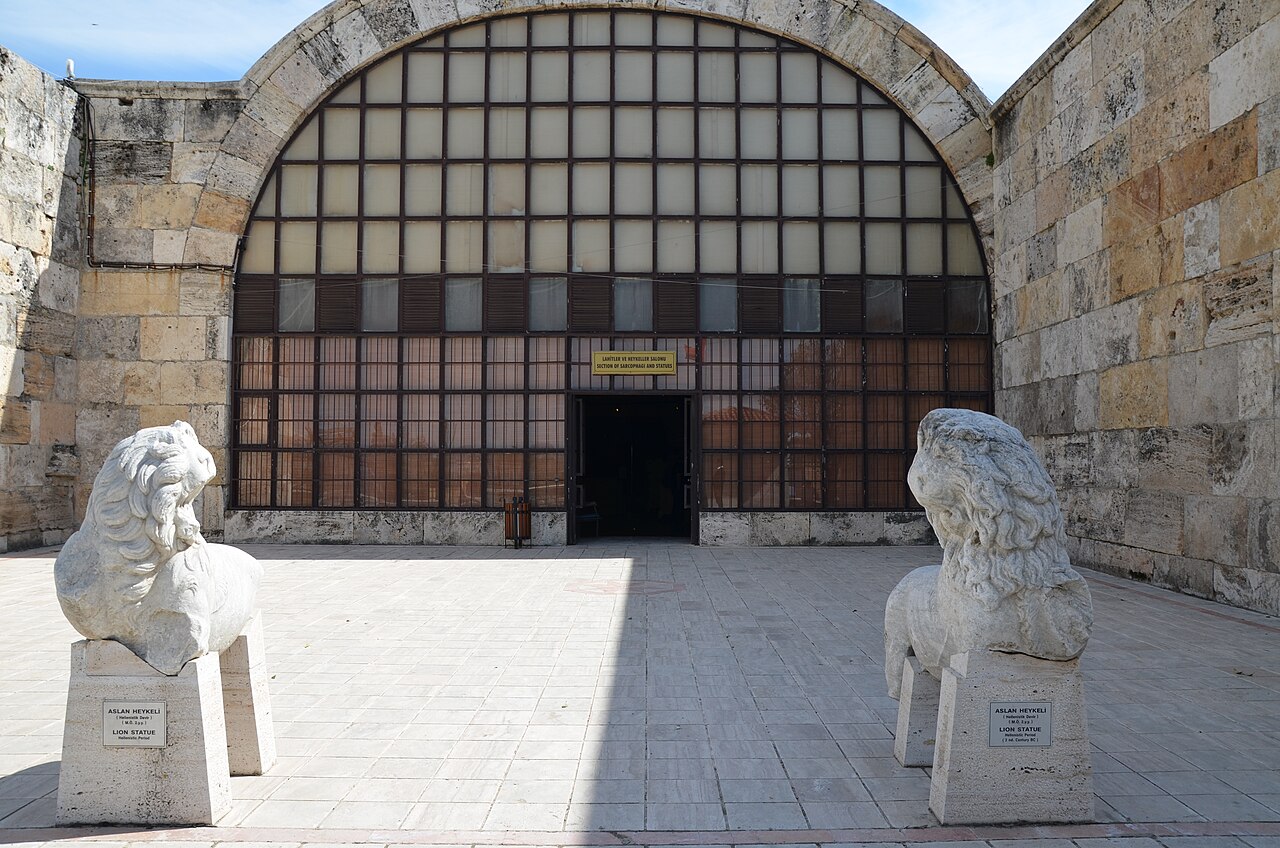
The main ticket covers the travertine terraces, Hierapolis and the archaeology museum, and is bought at the gate or online through the museums e-ticket service. Cleopatra's Antique Pool is a separate fee at the pool. If you want a sunrise balloon, book as soon as your dates are firm and keep a spare morning in case of a weather cancellation. Paragliding is similar. Day tours to Aphrodisias are best arranged a day or two ahead, and thermal hotels can fill on weekends.
Getting around
Pamukkale village is walkable: the site gate, the terraces and most restaurants are within a few minutes of each other. Karahayit is a short drive or taxi ride away, and Laodicea is a short drive in the other direction toward Denizli. Denizli Cardak airport is about an hour from the village by road, and many hotels arrange transfers. Hotels and local operators can arrange a driver for Laodicea and Aphrodisias if you do not have a car, and Antalya and the Aegean coast are a long drive away.
How many days
One night is the minimum to see the terraces and Hierapolis without a long coach day. Two nights lets you add Laodicea, a thermal soak in Karahayit and a balloon or paragliding flight, and three nights makes room for an Aphrodisias day trip. If you are on the coast, a day trip from Antalya, Kusadasi or Bodrum is possible, but it is a very long day and means little time on the site.
How the sights fit
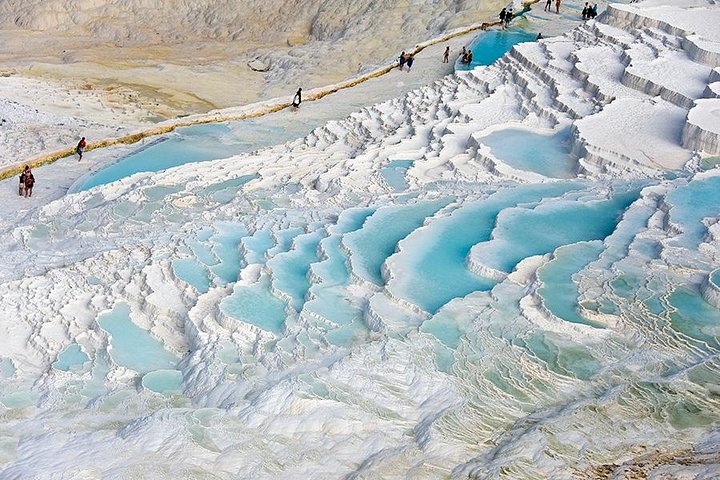
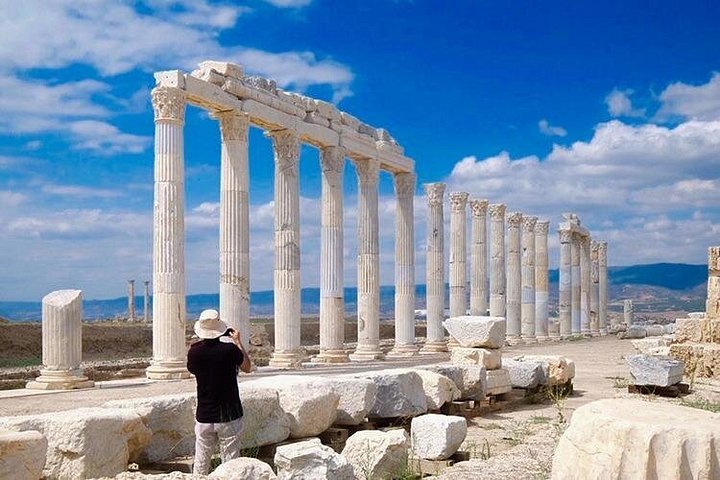
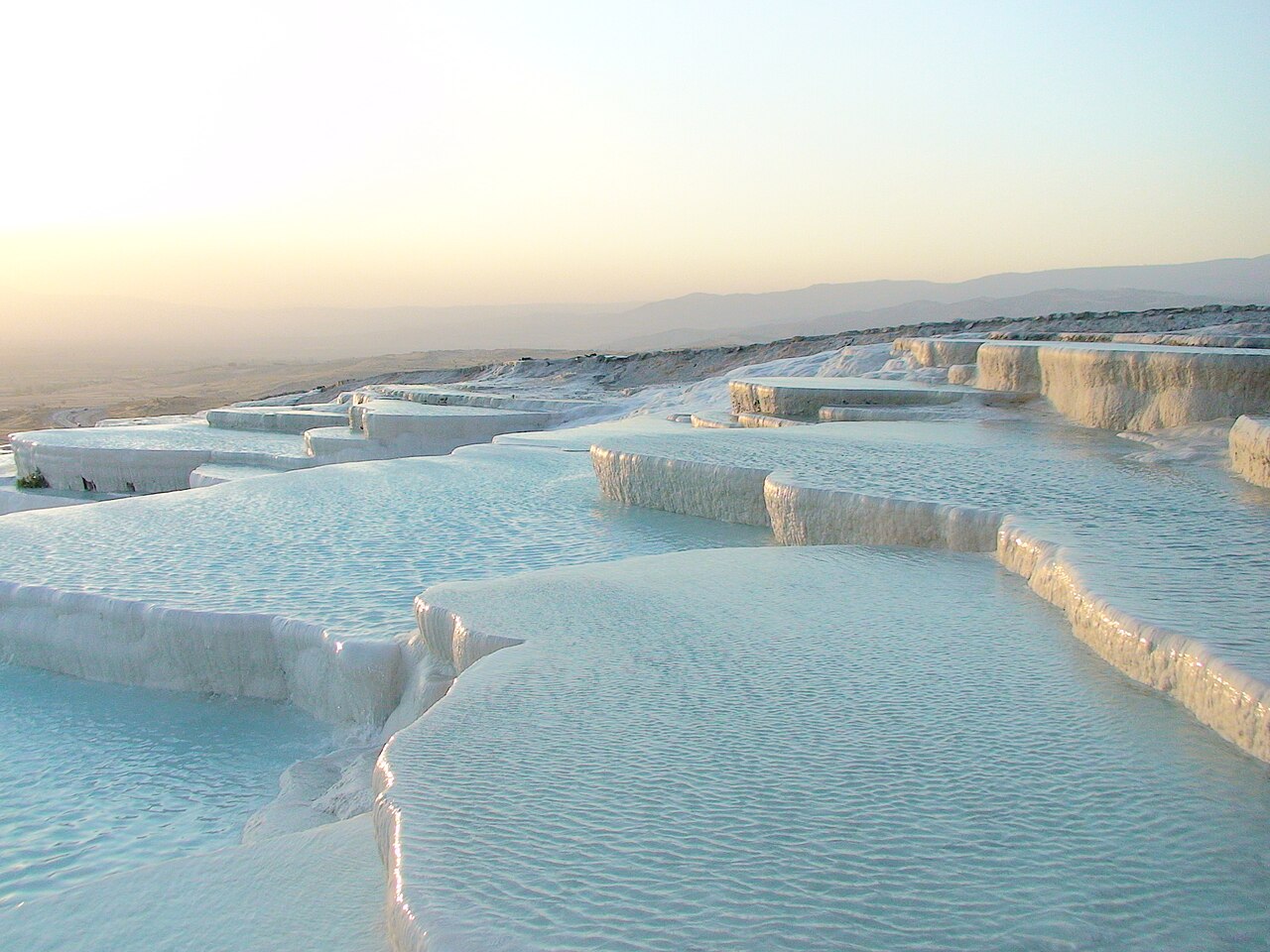
Start with the travertine terraces and Hierapolis, which are the headline sights. Walk the terraces barefoot, swim in Cleopatra's Antique Pool among the fallen columns, then visit the archaeology museum and the necropolis to understand the ancient city. Laodicea is the best second ruin, with a colonnaded street and few crowds. Aphrodisias is the big-ticket add-on for sculpture and a stadium. Finish an afternoon with a hot soak in Karahayit, whose iron-rich red water contrasts with the white terraces.
A sample day
Be at the gate when it opens in the morning and walk the terraces while it is quiet. Late morning, climb through the ruins to the theatre, drop into the museum, and swim in the antique pool. Take lunch in the village, then spend the late afternoon at the necropolis or the terraces in softer light, and end with a thermal pool or dinner in town.
Practical tips
Take shoes off on the travertines and carry them. Bring a swimsuit and a towel, a hat, water and a light layer, because mornings and evenings can be cool. Check the day's opening hours before you plan a late visit, and avoid booking an early flight on your last morning. Carry some cash for small purchases, and ask your hotel about shuttles and tour bookings.