Pamukkale's valley is richer than most visitors realise. Beyond the white terraces, there are Roman cities, a turquoise lake, an underground travertine cave and a famous coastal ruin within reach of a long day. This guide compares the main day trips so that you can pick the one that matches your energy, interests and schedule.
Laodicea: the easy one
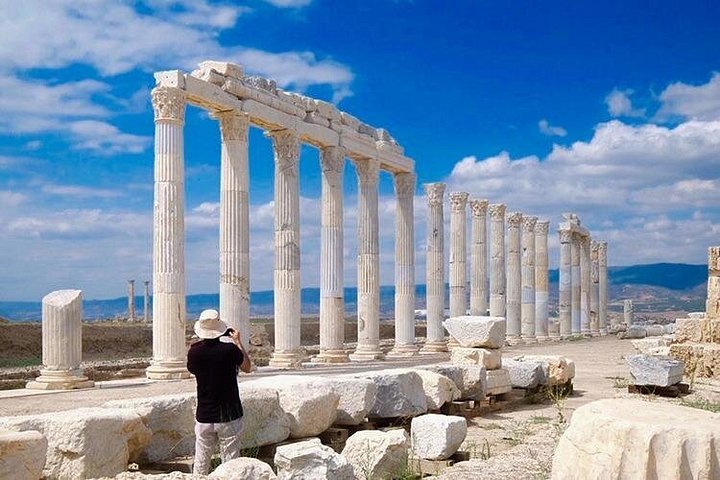
Laodicea is a large Roman city on the road toward Denizli, only a short drive from Pamukkale, and it is the easiest add-on. It was a wealthy trading centre, later one of the Seven Churches of Revelation, and the ruins include a long colonnaded street, theatres, a stadium and a nymphaeum. It is usually quiet, so you can wander at will. Two to three hours is enough, and it combines well with a half-day trip or a morning before a thermal soak.
Kaklik Cave: the short surprise
Roughly half an hour from the village, Kaklik Cave is a small underground chamber of travertine formations and pools, with daylight falling through a gap in the ceiling. It is cool, damp and atmospheric, and it works as a short stop on the way to Laodicea or as a rainy-day alternative. Wear shoes with grip, because the steps and floor are slippery.
Aphrodisias: the sculpture city
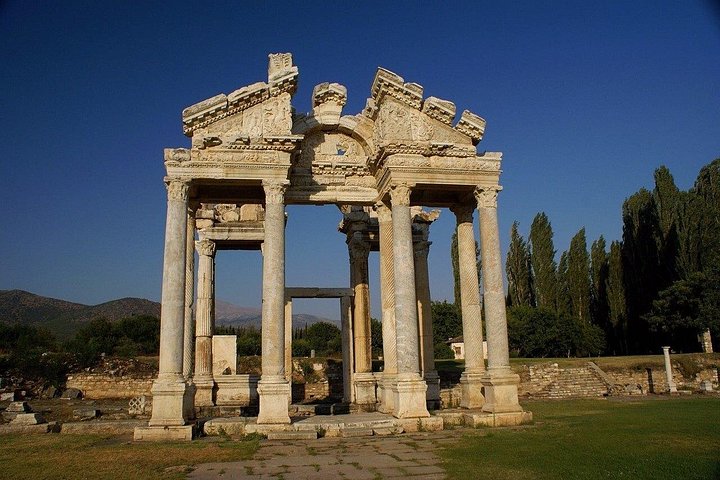
Aphrodisias is the big-ticket ruin, a UNESCO-listed marble city of the goddess of love, with a remarkably intact stadium, the Sebasteion's carved reliefs and a museum of sculpture. The drive takes around two hours each way, so this is a full-day trip, usually with a guide. It rewards history lovers and anyone who enjoys fine carving, and it is best in spring or autumn, when the exposed site is comfortable.
Salda Lake: the scenic escape
Roughly two to three hours from Pamukkale, Salda Lake in Burdur province is a turquoise lake with blinding white shores, nicknamed the Turkish Maldives. It is the farthest stop in the usual loop, and many tours combine it with Laodicea and Kaklik Cave in a single long day. It is best from late spring to early autumn, when swimming is possible in the permitted areas, and photographers love it in softer light.
Ephesus: the long haul
Ephesus is the most famous Roman city in Turkey, with the Library of Celsus and the Great Theatre, but it lies roughly three hours from Pamukkale each way. A private same-day tour is possible and can be worth it if time is short, but it is exhausting. If you can, visit Ephesus from the Aegean coast and combine Pamukkale with an overnight stay. Take water, a hat and comfortable shoes in any case.
Antalya and the coast
Coach tours also run from Antalya to Pamukkale and back, which is useful if you are based on the coast and want to see the terraces without moving hotels. These are very long days, typically ten to twelve hours, with limited time on site, so consider staying at least one night in Pamukkale instead.
How to choose
If you have one day and want ruins, pick Aphrodisias. If you want scenery, pick Salda Lake with Kaklik Cave and Laodicea. If you have half a day, pick Laodicea. If you are short on time and love Roman cities, Ephesus is possible but demanding. Mixing and matching is easy, and your hotel or a local operator can usually suggest a plan that fits your dates.
Booking and practicalities
Many day trips leave early, so arrange them a day or two in advance, especially in high season. Check what is included, such as transport, a guide, lunch and entrance fees, because arrangements differ between tours. Bring water, snacks, sun protection, a light layer and some cash. Shared tours are cheaper but follow a fixed schedule, while private tours cost more but let you set the pace. If you prefer to drive, be prepared for country roads and allow extra time.
Combining with your stay
A typical three-day plan puts the terraces and Hierapolis on the first day, a balloon or Karahayit soak on the second and a day trip on the third. If you have more time, add a second day trip, but leave a rest day between long journeys. Thermal hotels make a pleasant place to recover after a long day on the road, and village hotels are handy if you plan an early start.