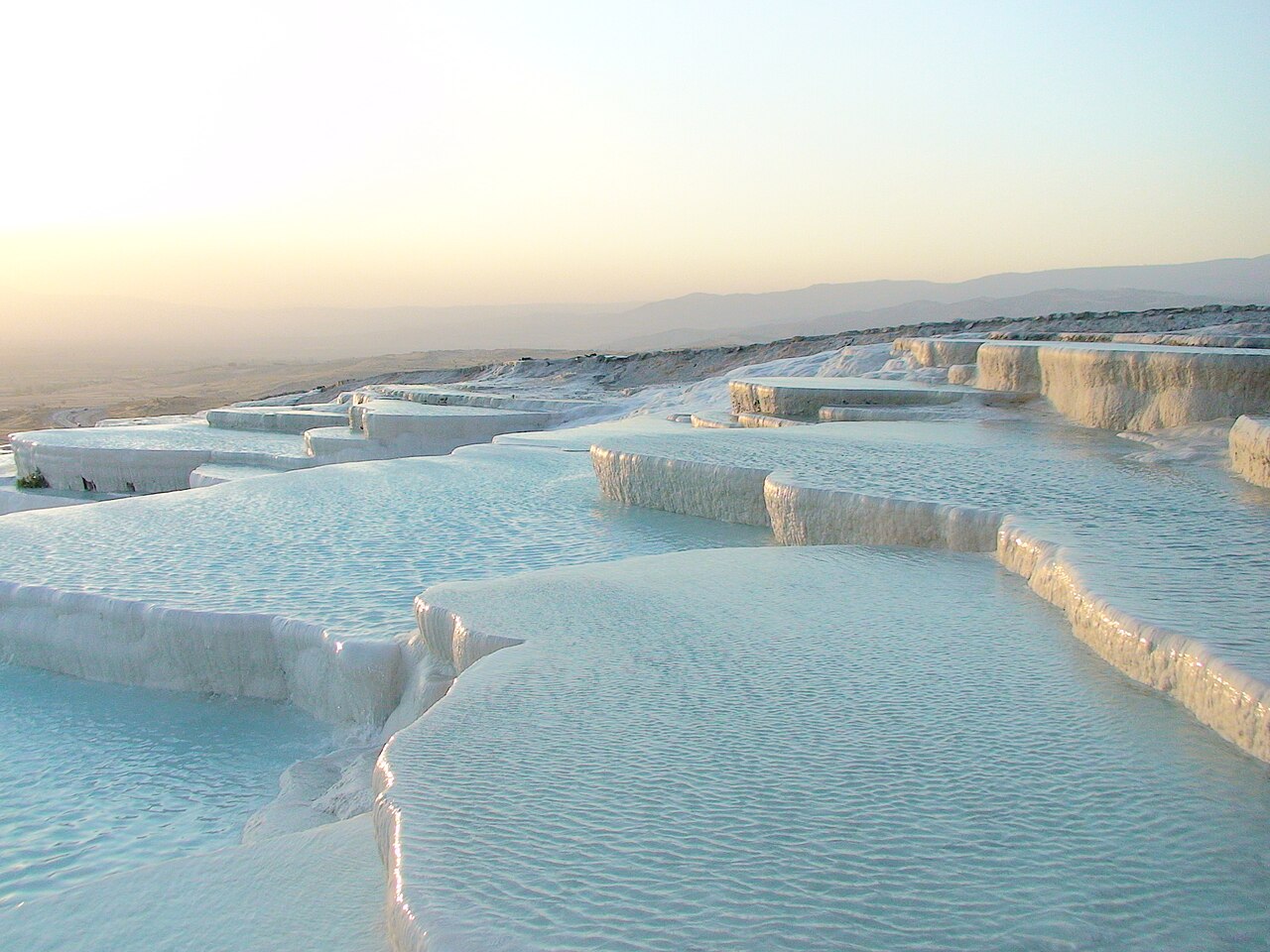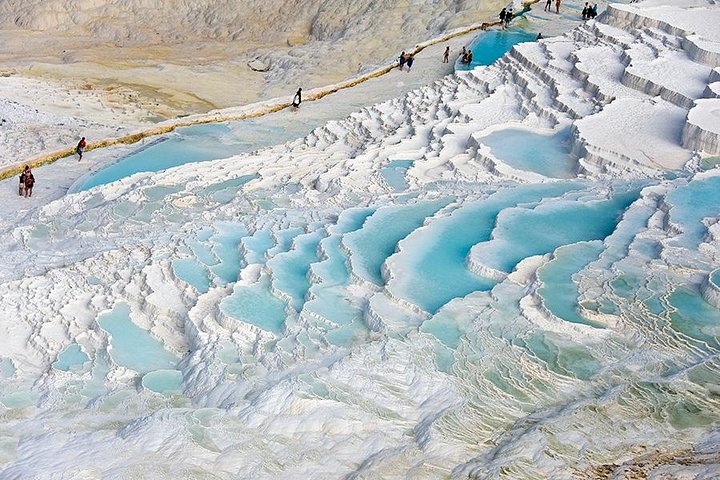
Pamukkale exists because of hot water. Spring water rising from deep underground carries dissolved calcium, and when it cools on the slope it leaves the white travertine that gives the place its name. The same water has drawn bathers for more than two thousand years, and today you can soak in it in several very different ways. This guide sorts them out so you can choose the right mix for your trip.
The travertine terraces: wading, not swimming
The white pools on the slope are for wading only. You walk barefoot through shallow, warm, milky water, which is gentle on tired feet and a surprisingly pleasant way to see the site. Shoes are not allowed on the terraces, and swimming is not permitted, so think of it as a paddle rather than a soak. Water levels and flow vary through the year, so the pools are not equally full on every visit.
Cleopatra's Antique Pool: swimming among columns
For a proper swim, head to the antique pool inside the ruins. The water is naturally warm, the bottom is strewn with fallen Roman columns and the experience is unlike any other pool in the world. It has changing rooms, lockers and a cafe, and it is run as a separate paid attraction. It is busiest in the middle of the day, so go early or late. Wear water shoes, because the submerged stone is uneven.
Karahayit: the red springs
A few minutes from the village, Karahayit is known for its iron-rich red water, which leaves rust-coloured deposits on the rocks and has a distinctive mineral smell. A small area of red travertine and a spring fountain can be visited, and many of the area's thermal hotels draw on the same source. The red water is traditionally valued for soaking, and a short stop here is easy to combine with a hotel spa day.
Hotel spas and thermal pools
The most comfortable way to soak is at a thermal hotel. Several in the valley have indoor and outdoor thermal pools, saunas, steam rooms and massage treatments, and some welcome day guests while others are for residents. Hotels such as Spa Hotel Colossae Thermal, Hierapark Thermal and Spa Hotel and Pam Thermal Hotel and Clinic Spa are built around their pools, and the larger ones add Turkish baths and wellness programmes. Winter is a particularly good time, because outdoor pools steam against the cool air and the valley is quiet.
Choosing between them
For a quick, free-feeling experience, wade the terraces. For a memorable swim, book the antique pool. For a full relaxation day, stay in a thermal hotel and treat the sights as short excursions from it. Many travellers do all three across a two- or three-night stay, with the terraces in the morning, the antique pool at midday and a hotel soak in the evening.
Health and safety
Thermal water is hot and mineral rich, and it is not suitable for everyone. If you are pregnant, have a heart condition, low blood pressure or any chronic illness, ask a doctor before long soaks. Drink water, limit your time in the hottest pools to short stretches and get out if you feel dizzy. Never leave children unattended near thermal pools, which can be deeper and warmer than they look.
What to pack
Bring a swimsuit, a quick-dry towel, water shoes, a hat and sun cream, plus a robe or warm layer for the walk back to your room in cooler months. A waterproof pouch protects your phone. Rinse off afterwards, because the minerals can leave a film on skin and swimwear.
Planning a soak day
A relaxed plan is a morning on the terraces and ruins, a swim in the antique pool at midday, lunch in the village, and a long soak and massage at your hotel or in Karahayit in the afternoon. Keep the evening free, because the warm water makes most people ready for an early night, and the next morning's balloon or paragliding flight will thank you.
Seasons
In summer the water feels hottest in the evening and the terraces can be glaring by midday, so early and late soaks are kinder. In winter the contrast between cool air and warm water is the appeal, and hotel pools are quieter. Spring and autumn are the easiest seasons for combining several kinds of soak in one day without overheating.