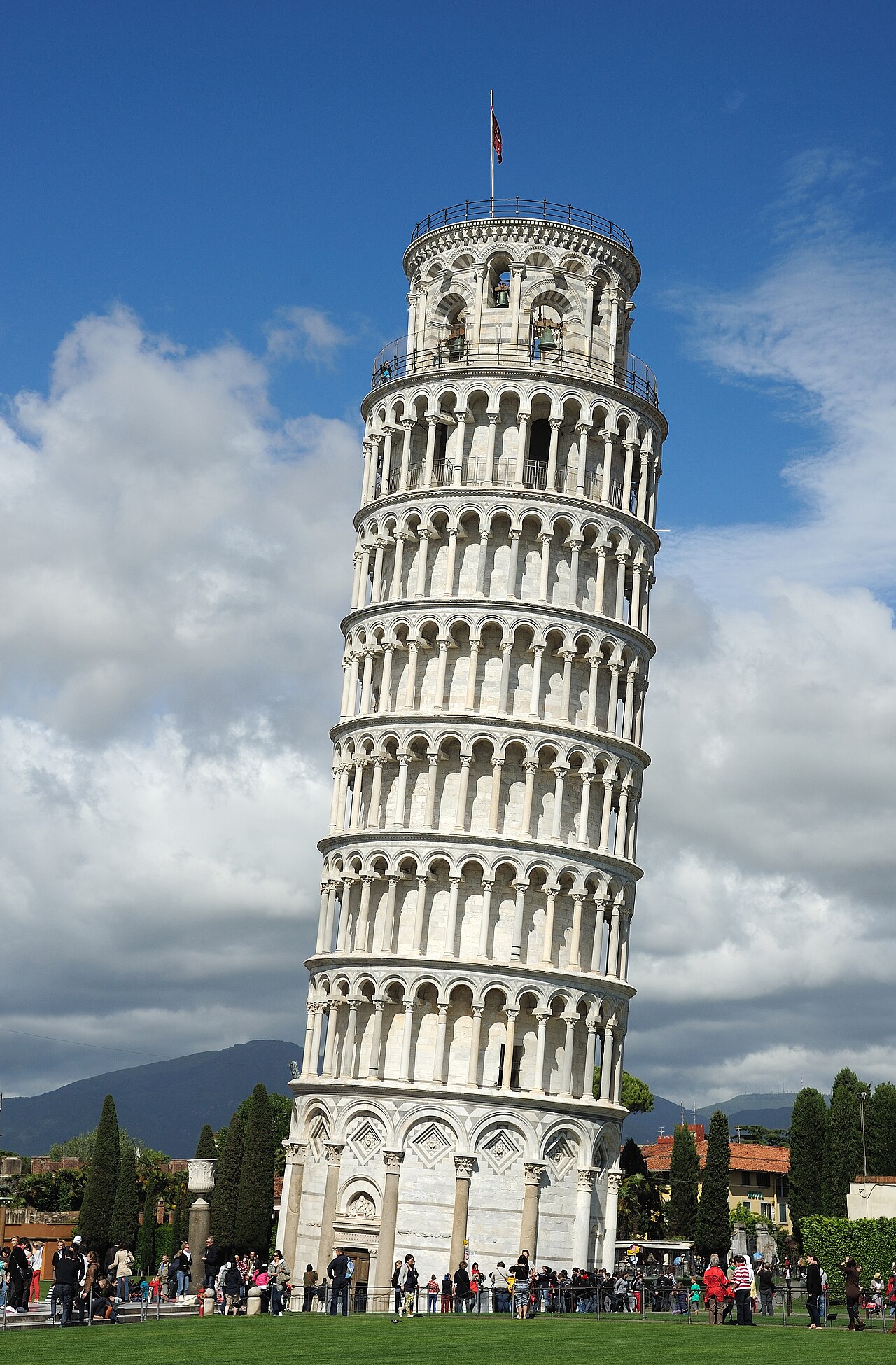
Pisa and Lucca are easier with children than many Italian cities. Both historic centres are compact and largely traffic-free, the distances are short, there is plenty of open space and each city has at least one thing that children genuinely love: a famous leaning tower in Pisa and a ring of tree-lined walls made for bikes in Lucca. With a little planning, you can build a trip that keeps young travellers engaged without turning it into a museum marathon. This guide covers what works best, what to book and a few things to watch for.
The Leaning Tower and the age limit
The tower is the obvious highlight, and for many children it is the best part of the trip, but there are rules. Children under eight are not allowed to climb, and children and teenagers under eighteen must be accompanied by an adult. Bags, including small handbags, must be left in the cloakroom before the climb, and the narrow spiral staircase is steep and worn, so it is not suitable for pushchairs and is hard for anyone who gets tired easily. Book a timed slot ahead, because families often want the same morning times. If you have a child under eight, one adult can climb while another stays with them, and the family can swap, or you can skip the climb and enjoy the tower from the lawn.
Make the lawn fun
The classic trick photograph of pretending to hold up the tower never gets old, and children will happily spend ten minutes arranging it. The grass is also a good place to run around and eat a picnic, although you should check the signs about where you can sit. Afterwards, the Baptistery is a surprise hit, because the custodian sings at set times and the dome makes the voice echo for seconds. Children find it magical. The Cathedral and the Camposanto are quieter and more serious, so keep those short, and use the Camposanto’s long cloister as a place to talk about the frescoes rather than read every label. If your child is old enough, a guided tour that tells the story of the lean as a detective story can hold attention far better than a self-guided visit.
Lucca: the walls on two wheels
This is the best family activity in the whole region. The ring of ramparts is around four kilometres long, flat, shaded and free of cars, and bike rental shops near the gates rent bikes in many sizes, often including child seats, trailers and tandems. A leisurely lap takes about an hour with stops, and the lawns on the bastions are good places for a snack. Ride slowly and keep to the right, because the path is shared with walkers and runners. If your children are too young to ride, they will still enjoy running along the grass and looking down into the gardens.
Towers for older children
The Guinigi Tower with its rooftop trees and the Torre delle Ore with its wooden stairs, working clock and bells are best for children who are comfortable with a long staircase, perhaps from seven or eight upwards. Reserve ahead at weekends, since entry can be limited. Younger children can wait at the bottom with a parent, and it is easy to take turns, since both towers are short climbs.
Easy wins
Some of the best moments with children cost nothing. The oval Piazza dell’Anfiteatro in Lucca is a safe, traffic-free space where children can run while adults sit at a table. The Tuttomondo mural in Pisa is bright and funny and takes twenty minutes to enjoy, and hunting for the dogs and dancing figures is a good game. A walk along the Arno in Pisa is flat and easy, and a gelato stop is non-negotiable.
Eating with children
Italian restaurants are used to families and are generally relaxed about children. Pizza and pasta are everywhere, and you can ask for a half portion. Eating at a bar counter or buying slices of cecina and fruit from a market is a quick way to feed hungry children without a long sit-down meal. Late dinners suit Italian families, but you can eat earlier at pizzerias, and many places offer plain pasta with tomato or butter.
Practical tips
Choose a hotel with family rooms or triples, and look for somewhere central so that you can go back for a rest in the middle of the day. Pace the day with one main activity in the morning, a long lunch and a free afternoon. Cobbles are hard on small legs, so bring a lightweight carrier or a compact stroller for toddlers, but remember that the tower and many towers and old buildings have stairs. Carry water and sun protection in warm months, and check opening days, since some places close on Mondays.