Many visitors skip the Archiepiscopal Museum on a first trip, then wish they had not. It is a small, well-arranged museum in the former bishop's palace beside the cathedral, and it holds two of the most refined objects in the city. The first is the ivory throne of Bishop Maximian, a sixth-century chair covered in carved panels showing the life of Joseph, scenes from the Gospels and the four Evangelists, made in Constantinople for the same bishop who consecrated San Vitale. The second is the Archiepiscopal Chapel, a tiny early Christian oratory from about 500 whose vaults and lunettes are still covered in original mosaic. Together they give a beautiful, human-scale look at how the Church of Ravenna lived and worshipped.
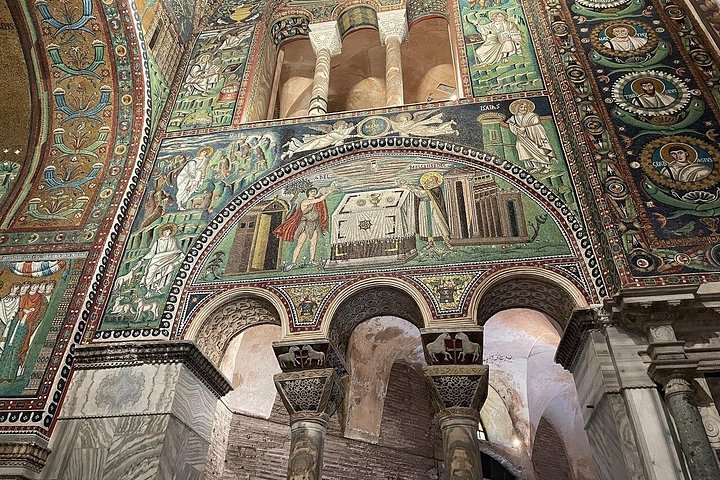
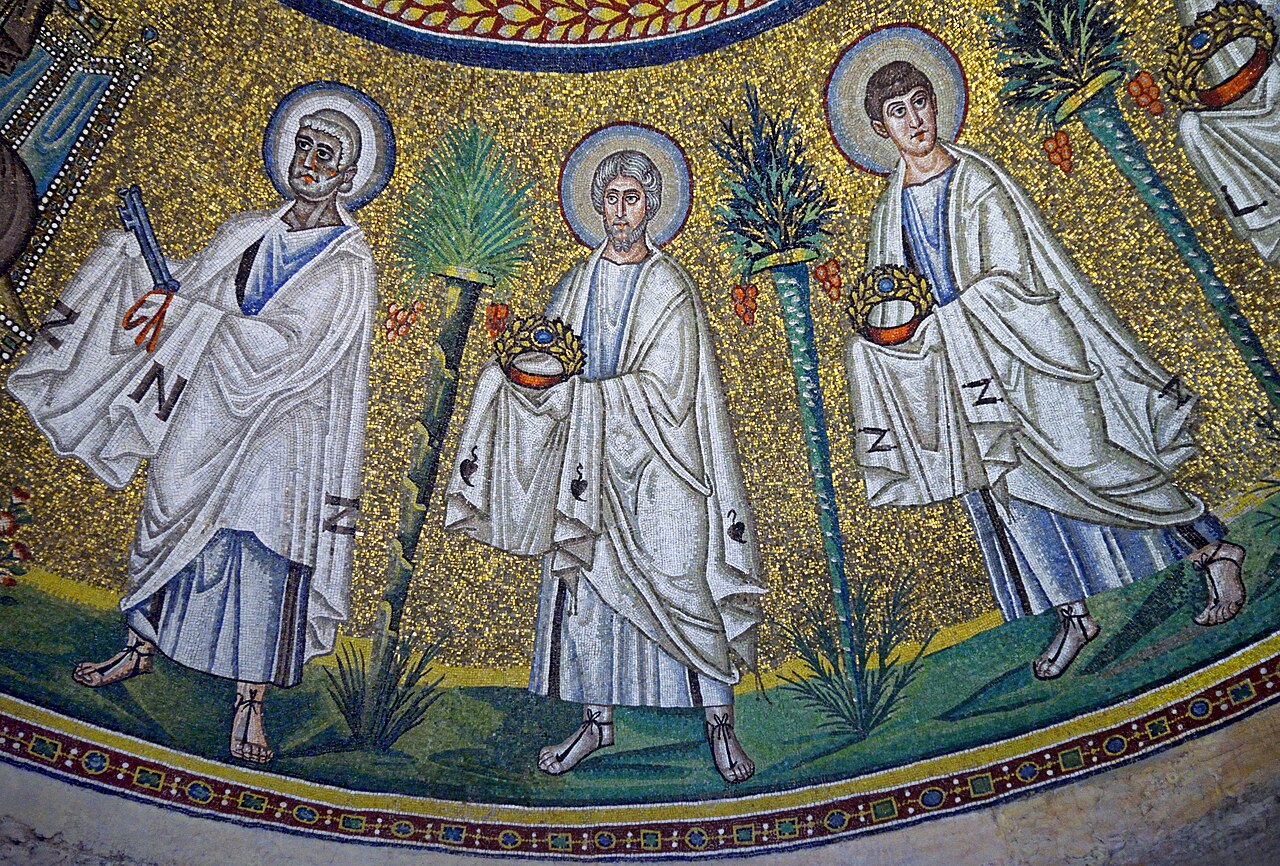
The chapel is reached from the museum rooms and feels like a miniature of the larger monuments. Four angels hold up a central monogram of Christ in the vault, set against a white and gold ground full of birds, flowers and vine scrolls, which gives the room a bright, almost springlike air. Above the entrance, a young beardless Christ stands as a warrior, trampling a lion and a snake, a rare image often read as a statement of Christian triumph over evil.
The chapel dates from the time of Theodoric, when the city's Catholic bishop built it as a private oratory. The scale is tiny, so only a few people fit at a time, and you leave with a clear memory of detail.
The museum rooms hold more treasures. There is a wonderful paschal calendar carved on a marble block, a fine collection of early Christian sarcophagus fragments, silver crosses, and a series of mosaic pieces from earlier buildings. The Maximian throne is displayed with enough space to walk around it, and the ivory carving, with its tiny, lively figures and rich borders, will reward a few minutes of close looking. Labels in English make it easy to follow without a guide.
It is part of the combined ticket and sits only a short walk from the Neonian Baptistery, so it fits naturally into the same morning. Allow about forty-five minutes. If you are interested in the story of how Ravenna's bishops built their city, this stop provides context that the grand basilicas do not. It is also usually quieter than the larger sites, which makes it a good choice in the busiest part of the day.
What to expect
The experience
A small museum in the old bishop's palace with the Maximian throne and a tiny mosaic-lined chapel.
Best time
Midday, when the larger churches are crowded and this stop is calm.
How long
40 to 50 minutes.
Tips
Spend time on the ivory panels and look for the young warrior Christ over the chapel door.
Quick picks
- Best for
- Curious travellers who like objects as well as mosaics.
- Families
- Better for older children; the throne and calendar make good talking points.
- Couples
- A quiet, cultured stop away from the crowds.
- Pair with
- Neonian Baptistery and the cathedral next door.
- Time needed
- About forty-five minutes.
Good questions
What is Maximian's throne?+
A sixth-century throne covered in carved ivory panels, made in Constantinople for Bishop Maximian. It shows scenes from the life of Joseph and from the Gospels.
What is special about the chapel?+
Its vaults and lunettes still carry original mosaics around 1,500 years old, including a rare image of Christ as a young warrior.
Is the museum included in the combined ticket?+
It is normally part of the multi-monument pass for Ravenna, which makes it an easy add-on.
Is it suitable for children?+
Yes for curious older children, though the displays are quiet and small in scale.
Are there English labels?+
Most key objects have English information, but an audio guide or tour adds depth.