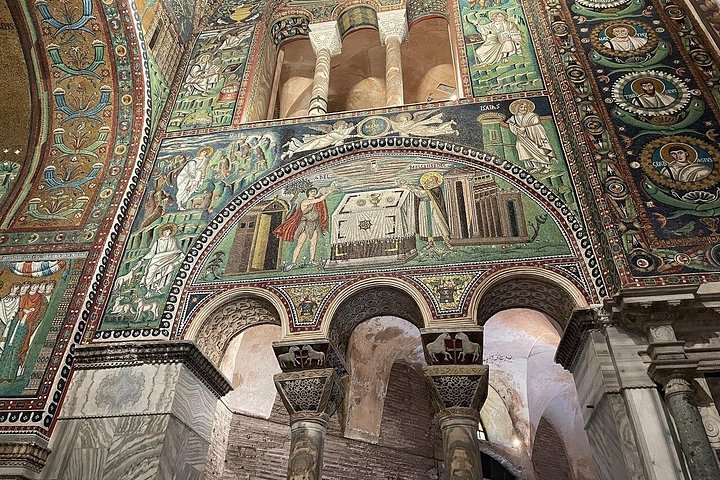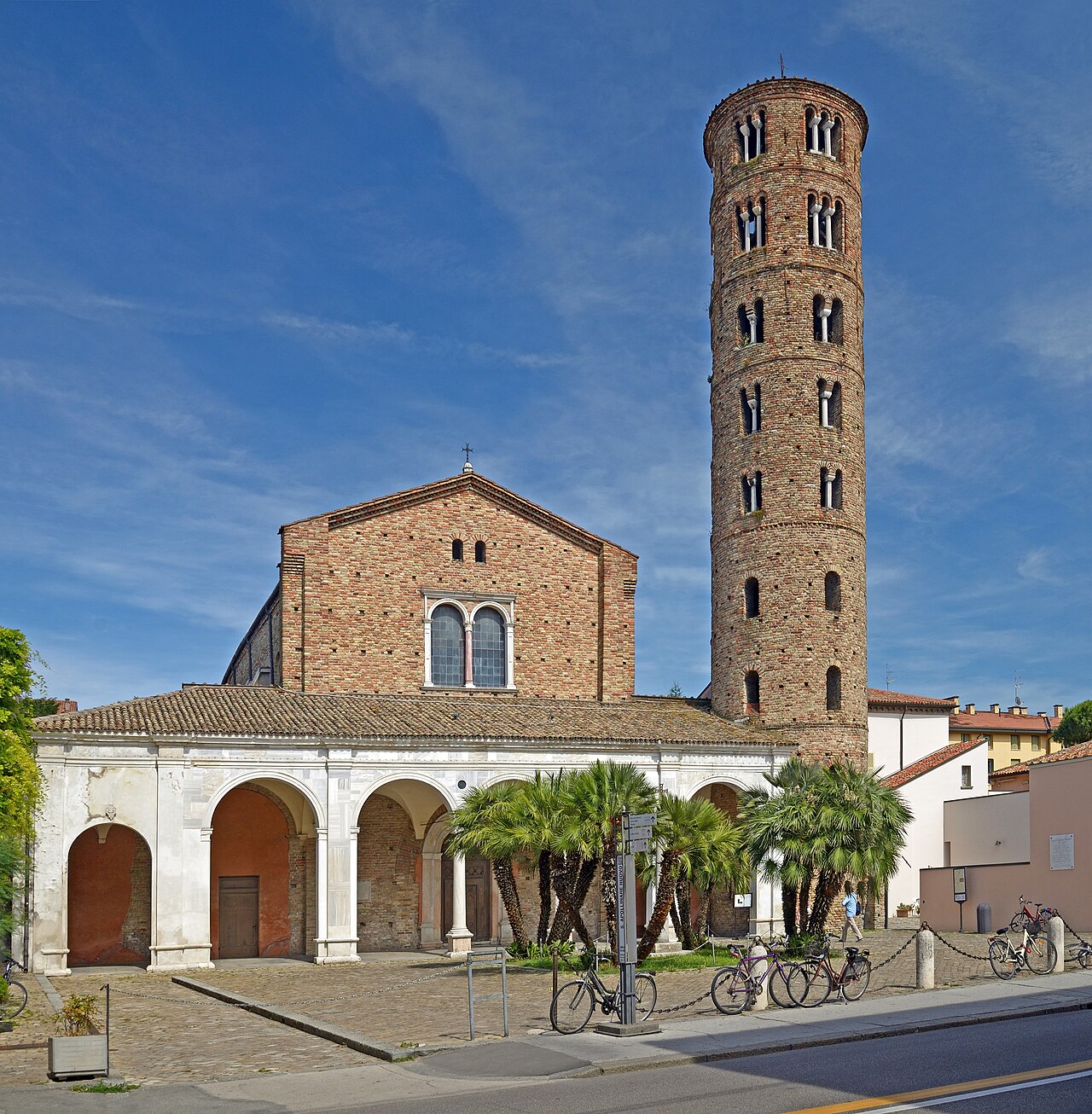
Sant'Apollinare Nuovo is the easiest of Ravenna's mosaic churches to read at a glance, and that is its great strength. Where San Vitale is compact and dazzling, this is a long, calm basilica with a timber ceiling and a double row of marble columns, and its walls become a picture book. Theodoric the Ostrogoth built it around the year 500 as his palace church, originally dedicated to Christ the Saviour and following the Arian creed. After the Byzantine conquest it was reconsecrated, renamed and later dedicated to Saint Apollinaris, and the decoration was altered to suit. The upper register shows scenes from the life of Christ, miracles on one side and the Passion on the other, in a clear narrative style. Below them, beneath the windows, are the two processions that make the church famous.
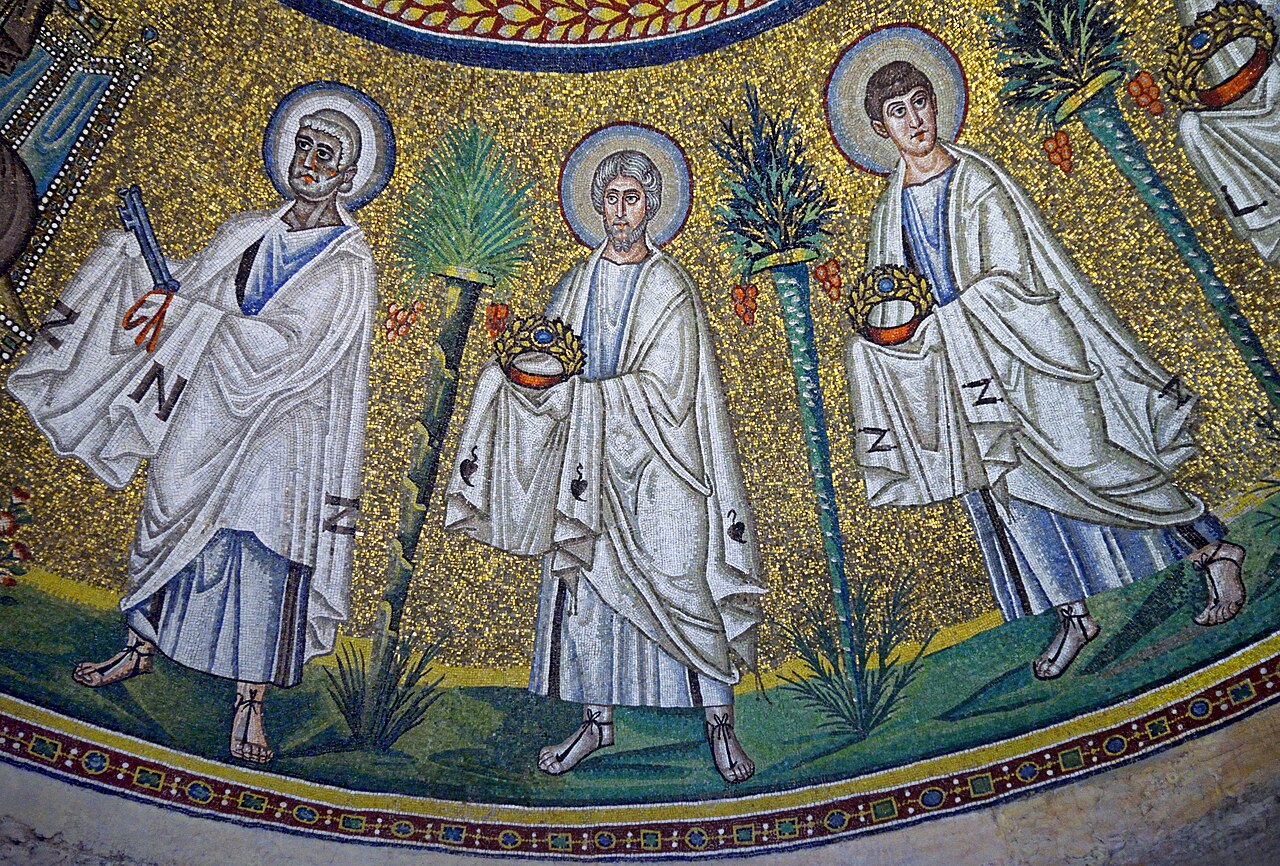
On one wall, a line of twenty-six saints and martyrs in white robes carry crowns toward Christ enthroned, setting out from a gold-fronted palace that is usually identified as the palace of Theodoric. On the opposite wall, a matching line of virgins advances from a stylised port city toward the Virgin Mary and Child, led by the Magi in a famous panel of brightly patterned trousers and Phrygian caps.
The port is Classe, Ravenna's harbour, depicted with towers, ships and arches. Look carefully at the columns along the colonnade: some show hands resting on the marble and bits of cloth where figures have been removed. When Justinian's church took control, images of Theodoric and his court were scraped off, and the traces are a quiet reminder of how history gets rewritten in mosaic.
This is a good place to slow down and let the story unfold. The nave is wide enough that groups spread out, and the long perspective down to the apse is one of the most photogenic views in the old town. The colour range runs from rich greens and purples to subtle gold, and the figures have a gentle, stately rhythm that holds your eye as you walk.
The basilica stands on a street a few minutes from the central square and is usually included in the combined ticket for Ravenna's mosaic monuments, so it fits neatly into a self-guided day alongside San Vitale and the Baptisteries. Many guided tours place it near the end of a morning route, when the context of the earlier stops makes the Arian-versus-Orthodox story easier to follow. Allow around thirty to forty minutes. If your time is tight, prioritise the two long processions and the view back from the apse.
What to expect
The experience
A walk down a long basilica nave, reading the mosaic processions of saints and the port of Classe on the upper walls.
Best time
Morning, when the light through the clerestory windows reaches the upper panels.
How long
30 to 40 minutes.
Tips
Look for the palace panel and the traces of removed figures on the columns. Binoculars help with the upper register.
Quick picks
- Best for
- Visitors who like clear storytelling and a calm space.
- Families
- The long procession is easy for children to follow, and the church is spacious.
- Couples
- A graceful, unhurried stop that suits slow wandering.
- Pair with
- San Vitale, the Arian Baptistery and the old centre cafes.
- Time needed
- Half an hour to forty minutes.
Good questions
Who built Sant'Apollinare Nuovo?+
Theodoric, king of the Ostrogoths, built it around 500 as the church of his palace. It followed the Arian creed at first and was later reconsecrated under Byzantine rule.
What are the long mosaic processions?+
On one wall, saints and martyrs walk toward Christ. On the other, virgins walk from the port of Classe toward the Virgin and Child, with the Magi shown in front.
Why are some figures missing between the columns?+
After the Byzantine takeover, portraits of Theodoric and his court were removed or replaced with curtains. Traces of hands remain on the marble.
Is it included in the combined ticket?+
Yes, it is normally part of the combined pass covering Ravenna's main mosaic monuments, so you can plan it into a self-guided day.
Can I visit it separately from San Vitale?+
Yes. It is a short walk away and can be seen on its own, although most people combine several monuments in one itinerary.