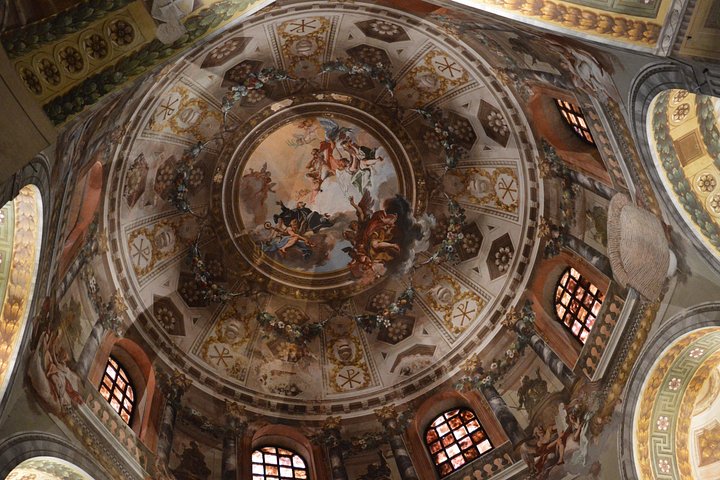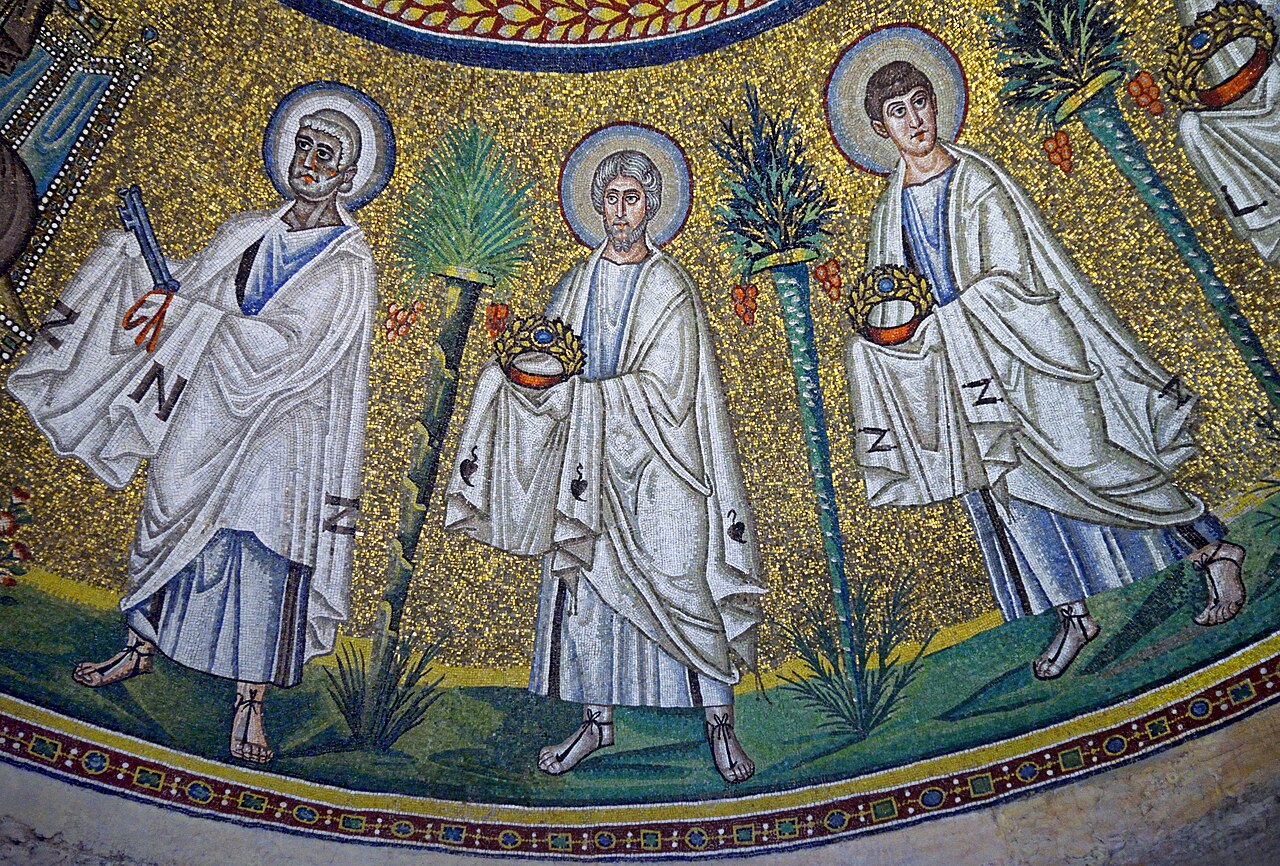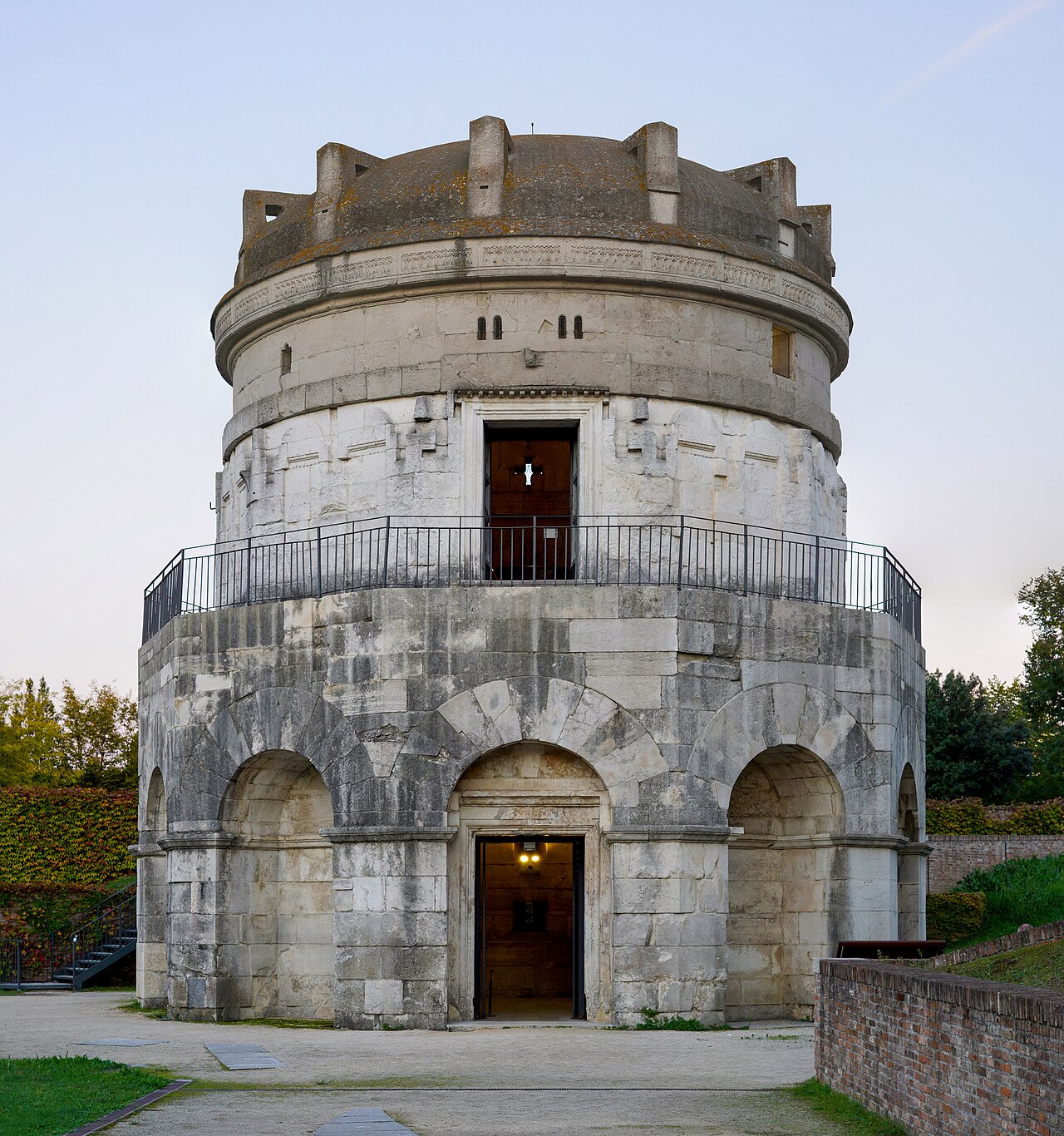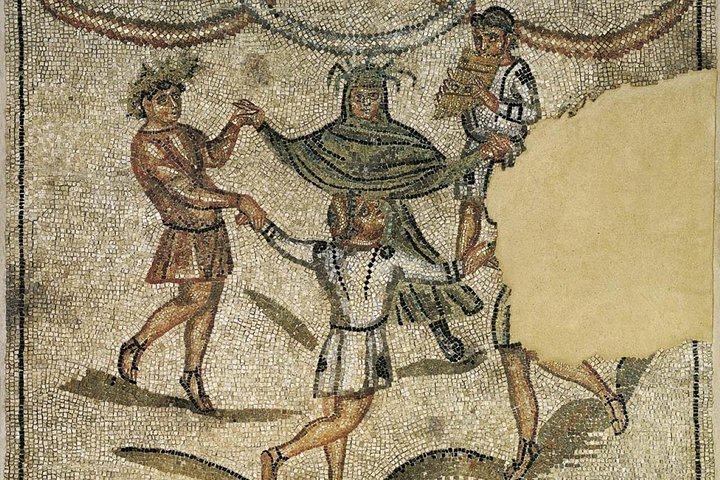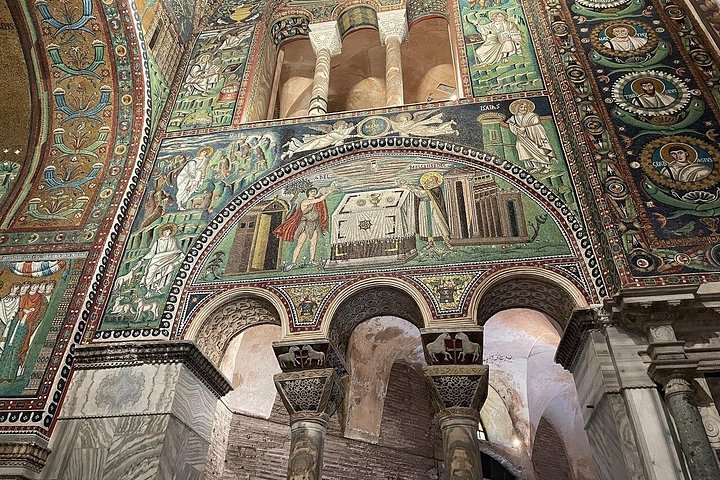
From the outside, the Mausoleum of Galla Placidia is an unassuming little brick cross, almost easy to miss beside the grander church of San Vitale. Step through the low door and the effect is startling. The small interior is lit by thin alabaster windows that throw a warm amber glow, and above you the vaults glitter with thousands of gold stars set in a night-blue sky, with a gold cross at the centre of the dome. It dates from around the 420s to 450s, making it the oldest of Ravenna's mosaic monuments and an unusually complete survival from the last decades of the Western Roman Empire. The mosaics are Roman in spirit, still using the classical vocabulary of vine scrolls, doves drinking from fountains and a youthful, beardless Good Shepherd, rather than the stiffer Byzantine manner that arrived a century later.
The building is named after Galla Placidia, sister of Emperor Honorius and regent for her son Valentinian III, who ruled from Ravenna in the fifth century. Despite the name, she was almost certainly not buried here; she died in Rome in 450, and the chapel probably began life as a small oratory attached to a lost church. Three large stone sarcophagi inside are traditionally linked to the imperial family, but the attribution is uncertain, which is part of the charm: this is a place that keeps its stories close.
Look for the lunette above the entrance, where Christ appears as a Good Shepherd with a gold cross and a halo, seated among sheep in a green landscape rather than on a throne. Opposite, a martyr with a cross and book walks toward a fire, usually read as Saint Lawrence. In the four arms of the cross, pairs of deer drink from the water of life, and the ceiling mosaic is dense with acanthus, garlands and star patterns that change in colour as the light moves.
Because the room is so small, visits are run in short slots, usually with a limit on how many people can be inside at once, and you will sometimes queue outside for a few minutes in busy periods. It is worth the wait. Many visitors find this tiny chapel more moving than the larger basilicas, precisely because the mosaics surround you at close range.
It is included in the combined ticket with San Vitale and other monuments, and several guided tours of Ravenna's mosaics open with this stop before moving on. If you can, visit near opening time, when you may have it almost to yourself.
What to expect
The experience
A short visit to a small cross-shaped chapel, with a night-blue starry vault, alabaster windows and three sarcophagi. Entry is usually in timed small groups.
Best time
First thing in the morning, before the groups arrive, or late afternoon when the light through the alabaster is amber.
How long
20 to 30 minutes, plus any wait outside.
Tips
Let your eyes adjust for a minute after you step in. Look up, then at the lunettes. Combine with San Vitale next door on the same ticket.
Quick picks
- Best for
- Travellers who love atmosphere over scale and want the oldest mosaics in town.
- Families
- Short and visual, which suits children well, though the space is small and quiet.
- Couples
- One of the most romantic interiors in northern Italy, especially in soft morning light.
- Pair with
- Basilica di San Vitale and the Archiepiscopal Museum, all in the same garden quarter.
- Time needed
- Half an hour.
Good questions
Is Galla Placidia actually buried here?+
Almost certainly not. She died in Rome in 450, and the sarcophagi inside cannot be firmly attributed. The building's name has stuck from tradition.
How old are the mosaics?+
They date to roughly the middle of the fifth century, which makes them the oldest in Ravenna's UNESCO group and among the oldest mosaic interiors in Europe.
Why is it so dark inside?+
Light enters only through thin alabaster panels, which gives the glow its amber tone and protects the tesserae. Give your eyes a minute to adjust.
Can I visit without a guide?+
Yes. Signs and the combined ticket are enough for a rewarding visit, although a guide helps with the symbolism of the Good Shepherd and the deer panels.
Is there a limit on visitors?+
Because the space is tiny, access is often controlled and you may wait outside in busy periods. Arrive early to avoid long queues.