Modern Riyadh is full of glass towers, but the story of the kingdom is told in mud brick, and a heritage trail is the best way to understand how a small oasis settlement became a capital. This guide links the main historic sights into a logical order, so that you move from the old city to the National Museum and then to Diriyah, where the first Saudi state began. You can do it in one long day, but two shorter days are more comfortable, especially if you want time for coffee and photographs. Start in the old centre. The Masmak Fortress is the natural first stop, a clay-and-mud-brick fort whose capture in the early twentieth century is a founding story of the modern kingdom. Its thick walls, wooden doors and watchtowers are easy to appreciate even if you only have an hour, and the displays inside explain the raid and the events that followed. Go with a guide if you can, because the history is much more vivid when someone tells it, and check opening hours before you set off, as they can change by season. The souq next door. Souq Al Zal is a short walk away and is one of the oldest markets in the city. Expect carpets, brassware, lanterns, spices, dates and traditional clothing, in lanes that can feel crowded and lively in the evening. Prices are often negotiable, so take your time, and be polite when you ask to photograph stalls or people. The walking tour of Old Riyadh that includes the fortress and the souq is an easy way to see both with context, and it is one of the most affordable guided options in the city. Murabba Palace. A short drive away, Murabba Palace was the home of King Abdulaziz and is now a museum. Its courtyards, rooms and displays give a sense of how the early kingdom was run, and the building shows the Najdi style at its most graceful. Combined with Masmak, it forms a compact royal-history morning. Wear modest clothing and expect security checks at some entrances. The National Museum of Saudi Arabia. The museum sets the whole region in context, from prehistoric rock art to the rise of Islam and the unification of the kingdom, in well-designed halls. A guided tour helps you cut through the volume of material, and allows two to three hours for a comfortable visit. It is also air conditioned, which makes it a good midday stop in warmer months. Pair it with lunch nearby before heading on to the afternoon. Diriyah in the late afternoon. At-Turaif, the UNESCO World Heritage Site on the edge of the city, is best seen as the light softens. Its palaces, mosque and walled lanes are built in sun-dried mud brick in the Najdi style, and the lighting after dark makes the walls glow. Check ticket and access rules before you go, as they change by season, and consider a tour with a guide who can explain the architecture and the story of the ruling family. The Bujairi Terrace restaurants beside it make a natural place for dinner, and Wadi Hanifah, the green valley below, is worth a stroll if you have energy left. Beyond the city: Ushaiqer. If you have an extra day and love architecture, Ushaiqer Heritage Village is a restored mud-brick settlement roughly two hours north-west of Riyadh. Its lanes, mosque and market square show traditional Najdi life in a quieter, more rural setting than Diriyah. A guided day tour with transport is the most practical way to go, as the roads are long and signage is limited. Suggested order. For a single full day: Masmak and Souq Al Zal in the morning, the National Museum late morning, a break at the hotel in the heat of the day, and Diriyah from late afternoon into the evening. For two days: devote the first to the old city and the museum, and the second to Diriyah and a food trail at Qasr Al-Hukm, which adds tastes to the history. Add Ushaiqer as a third day if you have time. Practical tips. Wear comfortable shoes, as there is plenty of walking over uneven ground. Dress modestly, carry water and a hat, and keep small change for the souq. The cooler months, from about November to March, are the most comfortable time for walking, and weekends, Friday and Saturday, are the busiest. Prayer times can briefly pause visits to some sites, so check schedules and allow flexibility. Stay somewhere central, such as Olaya, so that taxis to the old city and to Diriyah are quick, and book guides ahead during the winter season, when demand is high.
Riyadh guide
Old Riyadh and Diriyah Heritage Trail
A heritage-focused plan for Riyadh: Masmak Fortress, Souq Al Zal, Murabba Palace, the National Museum, At-Turaif in Diriyah and Ushaiqer village, with an order that works.
Mentioned in this guide
DoMasmak Fortress
The mud-brick fort in old Riyadh where Abdulaziz Ibn Saud retook the city in 1902, now a museum beside the Souq Al Zal quarter.
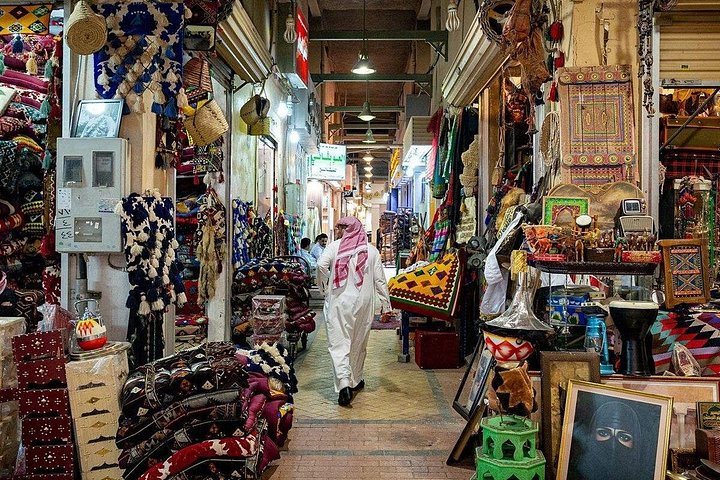
Souq Al Zal
One of Saudi Arabia’s oldest markets, a lively maze of shops in old Riyadh selling carpets, antiques, spices and traditional crafts, free to wander.
 Do
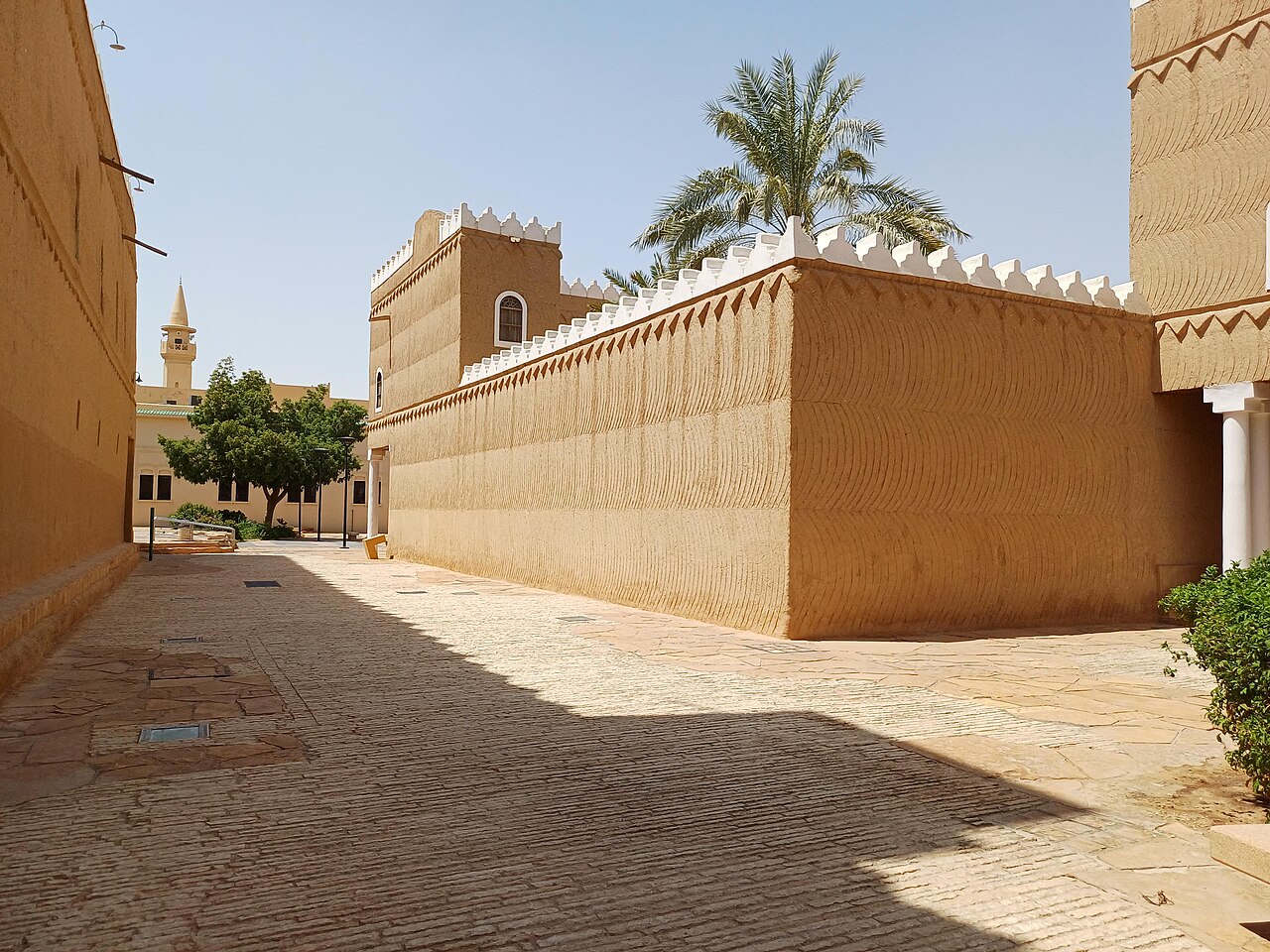
Murabba Palace
King Abdulaziz’s restored Najdi-style palace of the 1930s, set in the King Abdulaziz Historical Centre beside the National Museum.
 Do
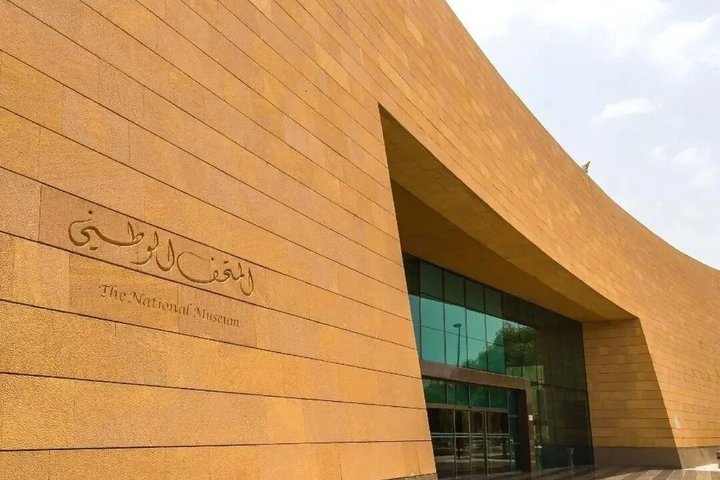
National Museum of Saudi Arabia
A large modern museum in the King Abdulaziz Historical Centre that walks through Arabian history from prehistory to the Islamic era and the founding of the kingdom.
 Do
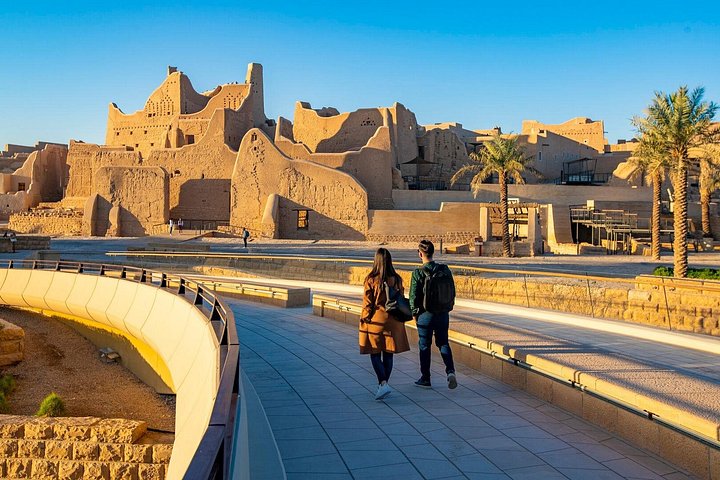
At-Turaif and Bujairi Terrace, Diriyah
The mud-brick birthplace of the first Saudi state, a UNESCO World Heritage Site on the edge of Riyadh, with the Bujairi Terrace restaurants and terraces beside it.
 Do
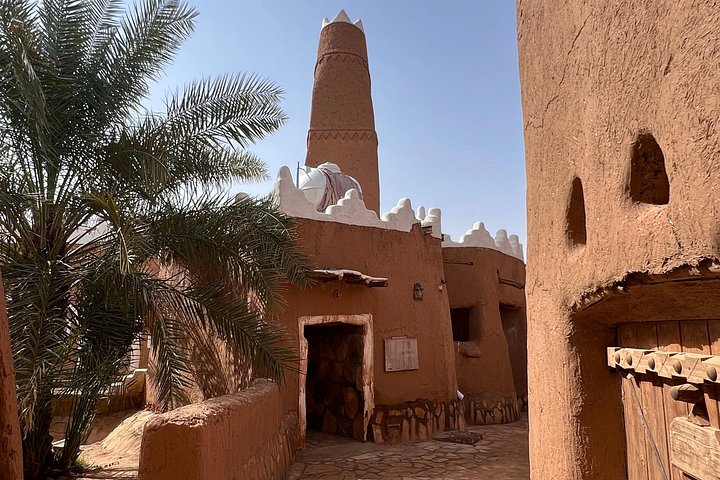
Ushaiqer Heritage Village
A restored mud-brick Najdi village in the Al-Washm region, a long day trip north-west of Riyadh through desert plateau and farmland.
 Stay
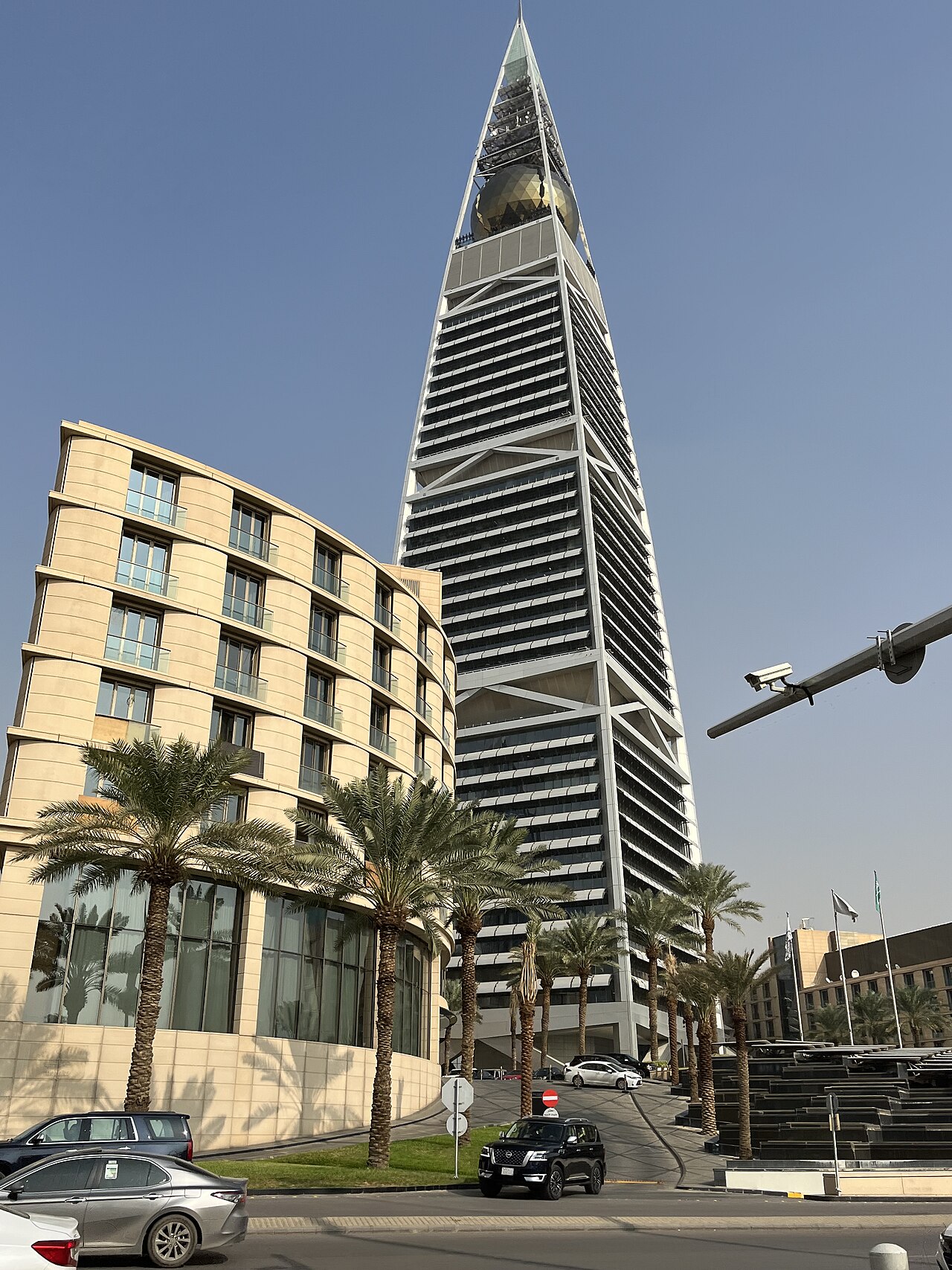
Mandarin Oriental Al Faisaliah, Riyadh
A five-star hotel at the base of Al Faisaliyah Tower in Olaya, with 325 rooms, two indoor pools, a spa and a short walk to the metro.
Four Seasons Hotel Riyadh at Kingdom Centre
A five-star hotel inside the Kingdom Centre complex on Olaya, with a spa, an outdoor pool, Café Boulud and the Sky Bridge in the same tower.
Jareed Hotel Riyadh
A small boutique hotel in the Hittin district, with 58 rooms, an outdoor pool, a spa and free valet parking, on the north-west side of the city nearer Diriyah.