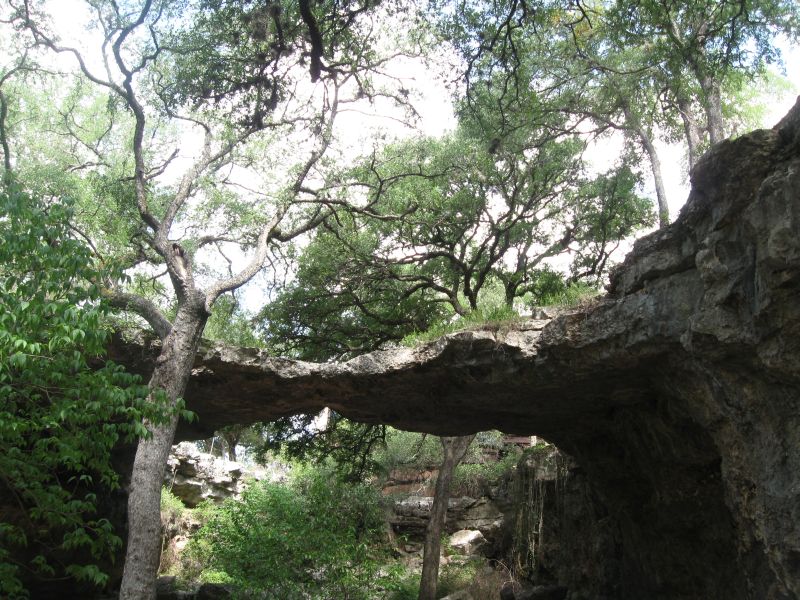
Phil Hardberger Park is one of the largest and most interesting parks on San Antonio's north side, with over three hundred acres of woodland, meadows and trails. It is built on land that was once a ranch and later a dumping ground, and it has been restored into a place for walking, biking, picnics and wildlife watching. Its signature feature is a land bridge that crosses a busy parkway, linking the two sections of the park and giving animals a safe route. The park is free to enter and is open daily, though hours and facilities can vary, so check the website before you go. It is a good counterweight to the dense history of downtown, with open space, shade and a sense of the Texas Hill Country edge.
The trails are the main attraction. Paths wind through oak woodland, grassland and restored habitat, and you can choose short walks or longer loops depending on time and energy. The land bridge is worth a stop, both for the structure and for the views. The urban ecology center offers education about native plants and wildlife, and the park includes play areas, dog areas and picnic spots. Bird watchers and photographers will find plenty to look at, especially in the morning and late afternoon when the light is soft and animals are active.
Practical tips
Bring water, sun protection and insect repellent, and wear sturdy shoes. In summer, go early in the morning or late in the day, since heat can be intense and shade is uneven. Check the park's rules on dogs and bikes, and watch for wildlife. The park is on the north side, so allow travel time from downtown, and plan parking, which is usually available at multiple entrances. After heavy rain, some trails can be muddy. Check the website for events, such as guided walks and nature programs.
The park suits families, runners, cyclists, dog owners and anyone who wants a break from city sightseeing. It pairs well with a meal in the north-side neighborhoods or a visit to nearby shops and cafés. If you are traveling with children, the play areas and the land bridge make for an easy outing.
For a full outdoor day, combine it with another green space, such as the Botanical Garden or Brackenridge Park, which gives a different flavor of the city's natural side. The park shows that San Antonio is not only history and tourism but also a modern city investing in public space.
For a better visit, pick a trail based on your energy and the time of day, and consider a loop that includes both the land bridge and a stretch of woodland. Carry a trail map or use the park's website to plan, as the layout can be confusing at first. If you are a birdwatcher, bring binoculars and go early, when activity is highest.
If you are visiting with children, ask about nature programs and play areas. Respect the park's rules on staying on trails, leaving wildlife alone and carrying out your trash, and you will help keep it a place worth coming back to. Bring a camera, since the mix of woodland and wide skies gives good photographs at almost any season.
What to expect
The experience
A self-guided visit to a large urban park with trails, a land bridge and an ecology center.
Best time
Early mornings and late afternoons, in spring and autumn.
How long
One to three hours depending on the trails you choose.
Tips
Bring water and sun protection, wear sturdy shoes and check the park's rules.
Quick picks
- Best for
- Walkers, families and nature lovers.
- Families
- Play areas and easy trails suit children.
- Couples
- A peaceful walk away from the crowds.
- Pair with
- The Botanical Garden or a north-side meal.
- Time needed
- Allow one to three hours.
Good questions
Is it free?+
Yes, entry to the park is free.
What is the land bridge?+
A bridge that carries trails and wildlife over a busy parkway, linking two sections of the park.
Where is it?+
On the north side of San Antonio, so allow travel time from downtown.
Can I bring a dog?+
Check the park's rules on dogs when you visit.
What is the best time to go?+
Early morning or late afternoon, in spring or autumn.