Georgian cuisine is a reason to visit in its own right, a generous, herb-heavy, cheese-rich tradition that sits between the Middle East and Eastern Europe and owes little to either. Tbilisi is the best place to eat it, with traditional restaurants, modern kitchens, bakeries and wine bars packed into a few kilometres. This guide explains the dishes to look for, the customs of the table and how to arrange food experiences that are worth your time.
Bread and cheese first
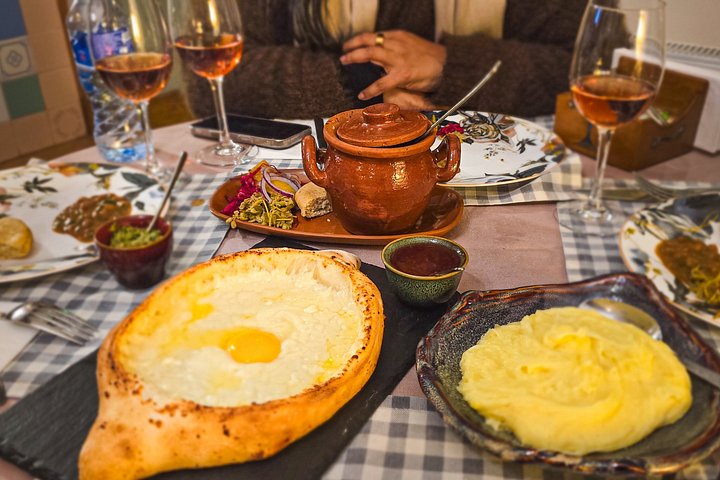
The two staples are bread and cheese, and they meet in khachapuri, the national dish. Imeruli khachapuri is a round, flat bread filled with melted cheese. Adjaruli khachapuri, from the Black Sea coast, is boat-shaped, filled with cheese and topped with butter and a runny egg, which you stir in and tear the bread into. Shoti, a long, canoe-shaped loaf baked on the walls of a round clay oven, is usually available hot in bakeries and is the best bread you will taste in the city. Georgian cheeses include sulguni, a stretchy, salty cheese, and imeruli, a milder fresh one.
Dumplings and grills
Khinkali are twisted dumplings, usually filled with spiced meat and a rich broth. Pick one up by its knot, bite a small hole, drink the broth and eat the rest, leaving the knot on your plate as a point of pride. Mtsvadi, skewers of grilled pork or lamb, and chakapuli, a spring stew of lamb with tarragon and sour green plums, are other classics. Chicken is served in satsivi, a cold walnut sauce, and in tabaka, pressed and fried with garlic.
Vegetables and starters
Vegetarians eat well in Georgia. Pkhali are minced vegetable pastes, often spinach, beetroot or aubergine, bound with walnuts and herbs. Badrijani nigvzit are fried aubergine rolls filled with walnut paste and topped with pomegranate seeds. Lobio is a stew of red beans, often served with cornbread, and ajapsandali is a stew of aubergine, peppers and tomatoes. Order a handful of these first and share them across the table.
Wine and the supra
Georgia is widely regarded as one of the world’s oldest wine regions, and its signature method is the qvevri, a buried clay vessel in which grape juice ferments with its skins, producing amber wines with texture and tannin. The tradition has international cultural heritage recognition. Look for Rkatsiteli and Mtsvane among the whites and Saperavi among the reds. A traditional feast, the supra, is led by a tamada, or toastmaster, who proposes a series of toasts, and it is polite to wait for the toast before drinking. Chacha, a strong grape spirit, often appears at the end. If you are invited to a supra, accept.
Where to explore
The old town has a concentration of traditional restaurants, while Sololaki and Vera are known for wine bars, creative kitchens and cafes. The Dezerter Bazaar, the city’s main market, is a good place to see produce, cheese, spices, churchkhela, the walnut-and-grape-juice candy strung like candles, and pickles. Small bakeries around the city sell shoti and cheese breads for a few lari. Ask your hotel host for a neighbourhood recommendation, because many of the best places are plain, family-run and not advertised.
Food experiences worth booking
A guided food walk is the quickest way to taste a wide range of dishes in one sitting, and the private food tour in the old town and Sololaki is built around about nine tastings. For an evening with dinner, wine and folk dance, the Georgian dinner and dance show is an easy choice for groups. If you want to do a day trip with wine, the Kakheti tour combines qvevri cellars with tastings. Book a table for any popular restaurant on a weekend, and mention dietary needs early.
Drinks beyond wine
Georgian lemonade, made with natural syrups in flavours such as tarragon and pear, is a refreshing non-alcoholic option, and the country has a long tradition of mineral water, including the springs of Borjomi. Coffee culture is strong, with many specialty cafes in Vera and Sololaki, and Turkish-style coffee is common in older places.
Practical tips
Portions are large, so order in rounds rather than all at once. Service charge is sometimes added to the bill, and if it is not, about ten percent is customary. Carry cash for markets and bakeries, ask for the wine by the carafe if you want to try local houses, and take a bottle home from a cellar if you like what you taste.