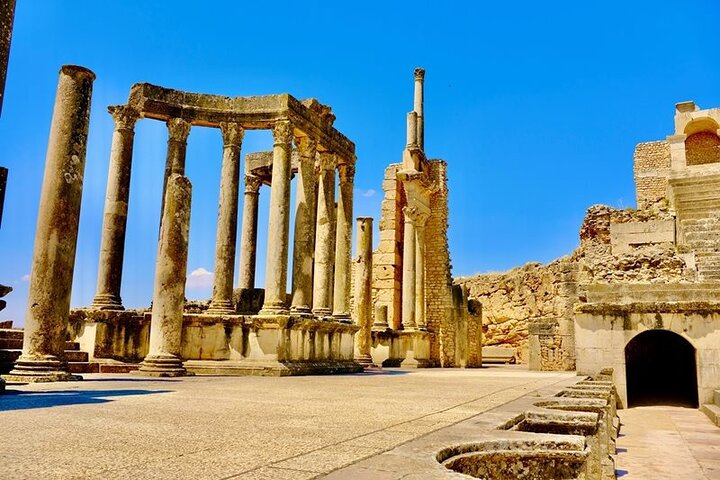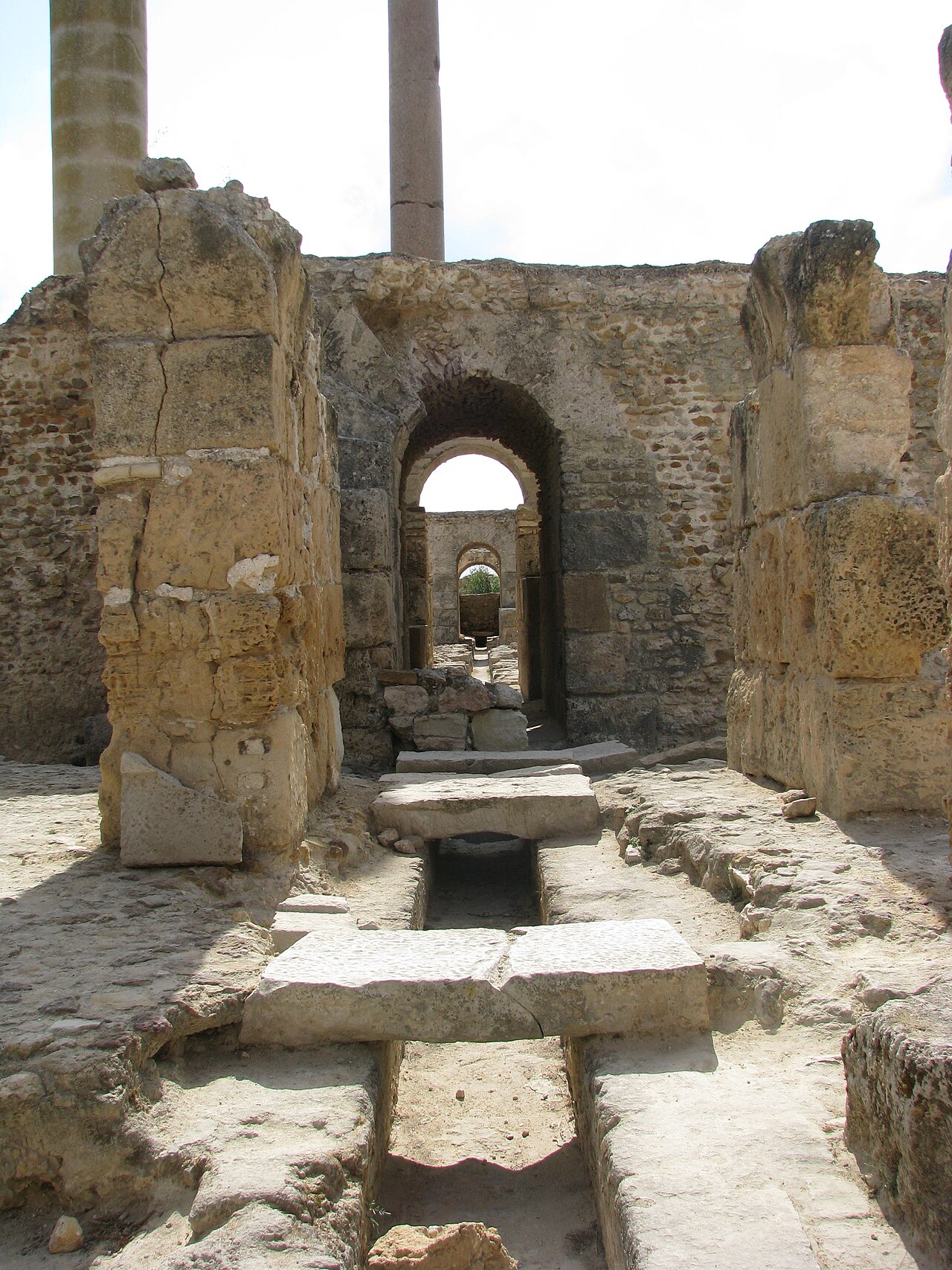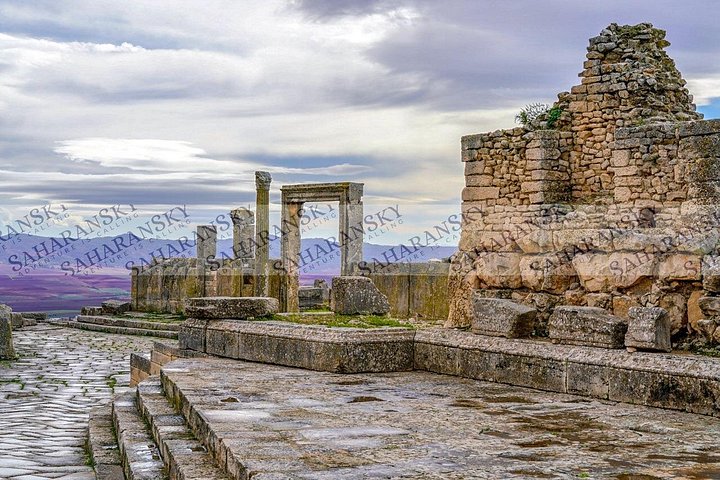
Bulla Regia is one of the most unusual Roman sites in North Africa, and the reason is simple: the people who lived here dug down. The town sits on a hillside near the modern city of Jendouba, in the fertile north-west, a region of cereal fields and cork oaks that was prosperous grain country in antiquity. Summers here can be fierce, so from the second century the richest families built a second house beneath the first, a full set of vaulted rooms arranged around a sunken courtyard, where the temperature stays comfortable even in July. You can still climb down the steps into these rooms, stand where a family once dined, and look up at the light falling through the open court. In several houses the underground floors keep their mosaics, and a few walls still carry traces of painted plaster. Nothing else in Tunisia, and very little anywhere in the Roman world, gives such a direct sense of how people actually lived. The best-known house is the House of Amphitrite, named for the mosaic of the sea goddess that decorates one of its underground rooms. Close by are the House of the Hunt, with its hunting scenes, and the House of the Fishing, and the layout of each is a pleasure to work out: ground-floor rooms for show, lower rooms for the hot months, and stairs, light wells and drainage arranged with real ingenuity. Above ground the site also has a theatre, a forum, a temple area and the Memmian Baths, a large bath complex with fine vaulting. The scale is modest compared with Carthage or El Djem, which is part of the appeal: the hillside is quiet, birdsong is more likely than crowd noise, and you can usually explore a house on your own for a few minutes.
Getting there and making a day of it: Bulla Regia lies roughly two and a half hours by road from Tunis, so it is a long day trip, and it almost always shares the day with Dougga, the hilltop Roman town further east. The usual route passes through the small Andalusian-influenced town of Testour, a good place for a coffee stop. A private or small-group excursion is the practical choice, because a driver and guide save you the problem of connecting the two sites, and a guide helps explain how the underground houses worked.
Start early. A departure around seven or eight in the morning lets you reach Dougga while the light is soft and arrive at Bulla Regia for a late lunch and an unhurried hour among the houses.
What to see and how to see it: begin with the House of Amphitrite to understand the layout, then walk to the House of the Hunt and the House of the Fishing. Take care on the steps, which can be worn and uneven, and bring a small torch or use your phone light in the darker rooms. The mosaics are best in the morning and the late afternoon, when lower light brings out the colours.
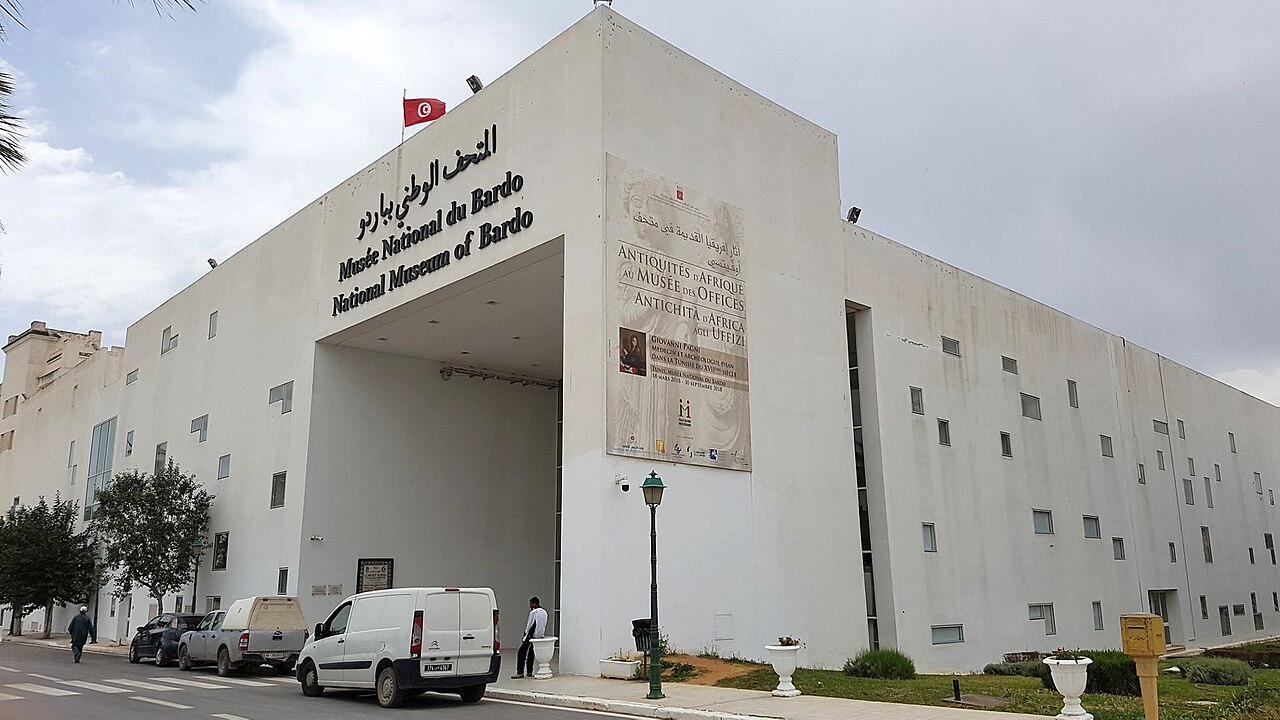
Allow around ninety minutes to two hours on site. A hat, water and sturdy shoes matter, because the upper part of the site is exposed and the ground is rough. Some of the finest mosaics from the area have been moved to the Bardo Museum in Tunis, so visiting both gives you the full picture of what the houses held. Opening hours change with the season and sites close on certain holidays, so ask your operator to confirm on the day.
Who it suits
History lovers, photographers and anyone who has already seen the big sites and wants something different. Older children who like climbing into hidden places tend to enjoy it more than adults expect. It is less suited to travellers with limited mobility because of steps and uneven ground. Spring and autumn are the most comfortable seasons, and the green hills are at their best after the winter rains.
What to expect
The experience
A guided walk through the ruined Roman town, climbing down into the underground houses, usually combined with a visit to Dougga on the same day.
Best time
Spring and autumn for comfortable walking; start early so you reach the site before midday heat.
How long
About two hours on site, within a full day of roughly four to five hours on the road in total.
Tips
Wear shoes with grip for worn steps, bring water and a hat, and use a phone torch in the darker underground rooms.
Quick picks
- Best for
- Travellers who want something different from the usual Roman ruins: houses you can walk down into.
- Families
- Older children usually love the steps and hidden rooms; the long drive is the hard part for younger ones.
- Couples
- A quiet, atmospheric day in the hills with a coffee stop in Testour on the way.
- Pair with
- Dougga on the same day, then the Bardo Museum back in Tunis to see mosaics from the region.
- Time needed
- A full day from Tunis.
Good questions
Why are the houses at Bulla Regia underground?+
The summers in this part of Tunisia are very hot, so wealthy Romans built a cool second residence beneath their main house. The underground rooms stay comfortable even in the middle of summer.
How far is Bulla Regia from Tunis?+
It is roughly two and a half hours by road, so most visitors go on a full-day excursion that also includes Dougga and often a stop in Testour.
Can I visit Bulla Regia and Dougga on the same day?+
Yes, and most tours do exactly that. It makes a long day, so start early and expect to spend about two hours at each site.
How long do I need at Bulla Regia?+
About ninety minutes to two hours covers the main houses, the baths and the theatre. Add time if you enjoy photographing mosaics.
Is Bulla Regia suitable for children or limited mobility?+
Older children tend to enjoy it. The steps are worn and the ground is uneven, so it is not ideal for anyone with limited mobility.