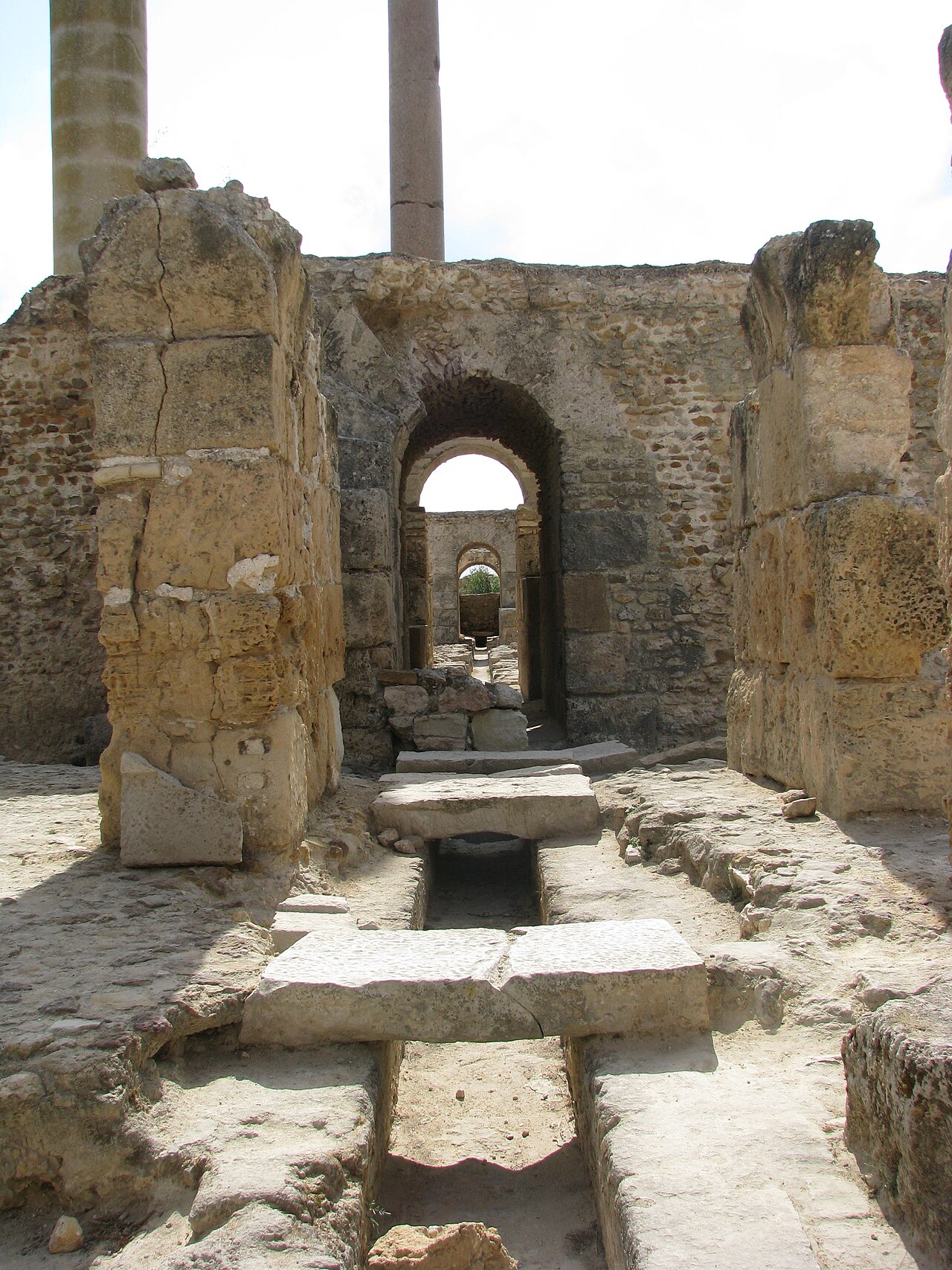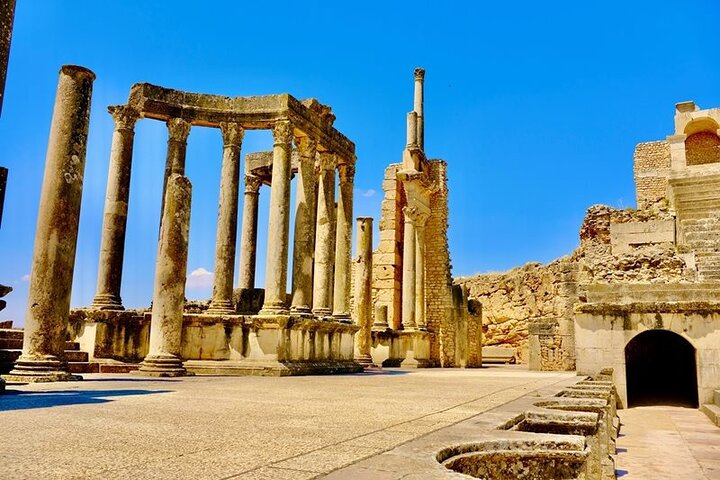
The ruins of Carthage are not a single site but a scatter of monuments spread across a leafy seaside suburb, and the distances between them are just long enough to be tiring on foot in the heat and just short enough to be perfect on a bicycle. A guided bike tour solves the problem. You ride at an easy pace along residential streets and quiet roads, stopping at the major sights to get off and explore: Punic and Roman remains, hillside viewpoints, the seafront and the villas and gardens that make this one of the most pleasant suburbs of Tunis. The guide explains the story as you go, from Phoenician Queen Dido and the rise of a maritime empire to the long wars with Rome, the destruction of the city and its second life as a Roman capital of Africa. The appeal is partly practical and partly atmospheric. On a bike you can cover far more of the area than a typical walking visit allows, and you experience Carthage as a living neighbourhood rather than a museum, with cafes, school children and old gardens between the ancient stones. The pace is relaxed, there are regular stops, and the sea air keeps it comfortable for most of the year. It is a good way to link the headline sights such as the Antonine Baths and the viewpoints with lesser-known corners that coach tours skip.
What to expect
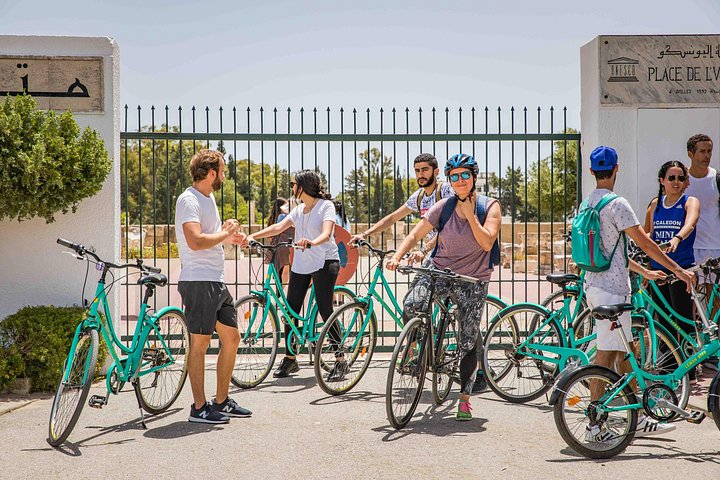
Tours of this kind usually run for a few hours, with a short briefing, bike and helmet fitting and a route that mixes flat stretches with a few gentle slopes. Exact routes and the sites visited vary by operator and season, so check the details when you book. Bikes are normally provided, along with helmets, and the group is small enough for the guide to talk to everyone.
Sites with entrance fees may require you to pay separately, so ask whether tickets are included. Streets in Carthage are generally calm, but expect some traffic at the main crossings and keep to the guide's instructions.
Getting ready
Wear comfortable clothes and closed shoes, bring sunscreen, a hat and water, and avoid trailing straps or loose scarves that could catch in the wheels. Morning tours are cooler and quieter, and late afternoon tours offer soft light for photographs. The ground can be uneven near some of the ruins, and you will be walking as well as cycling, so a reasonable level of fitness is helpful, although the pace is gentle. If you are not confident on a bike, say so in advance, so the guide can pick a suitable route.
Who it suits
Active travellers, anyone who finds archaeological sites tiring on foot, and small groups who want a more personal introduction to Carthage. It makes a good complement to a visit to the Antonine Baths and the Bardo Museum, and pairs naturally with a late afternoon in Sidi Bou Said, which is a short train ride or taxi away. Families with confident older children can enjoy it, though younger children may find the length and the roads demanding.
Because the group is small and the route is flexible, guides can often adjust the pace, add a coffee stop or skip a site if the weather turns hot, which makes it a forgiving way to spend a morning in a place with so much to see.
What to expect
The experience
A small-group guided ride through the Carthage suburb, with stops to explore Punic and Roman remains, viewpoints and the seafront.
Best time
Morning for cooler air and quiet streets, or late afternoon for soft light.
How long
Roughly three to four hours including stops.
Tips
Wear closed shoes and sun protection, bring water, and ask whether entrance fees are included in the price.
Quick picks
- Best for
- Active travellers who want to cover the scattered sights of Carthage without tiring walks.
- Families
- Works for confident older children; the routes are mostly quiet streets but include some crossings.
- Couples
- A relaxed ride through gardens and ruins with sea air, ending with a coffee or tea in Sidi Bou Said.
- Pair with
- The Antonine Baths, the Bardo Museum and an evening in Sidi Bou Said.
- Time needed
- A half day.
Good questions
Do I need to be fit for a bike tour of Carthage?+
A basic level of fitness is enough. The pace is gentle with regular stops, though there are some gentle slopes and you will also walk around the ruins.
Are bikes and helmets provided?+
Bikes and helmets are normally provided. Confirm when you book, and tell the operator if you need a particular size.
Which sites does the tour visit?+
Routes vary by operator and season, but they generally link the main Punic and Roman remains, viewpoints and the seafront. Check the itinerary when you book.
Are entrance fees included?+
It depends on the operator, so ask before you book. Some sites charge separately at the gate.
What is the best time of day?+
Morning for cooler weather and quiet streets, or late afternoon for softer light and photographs.