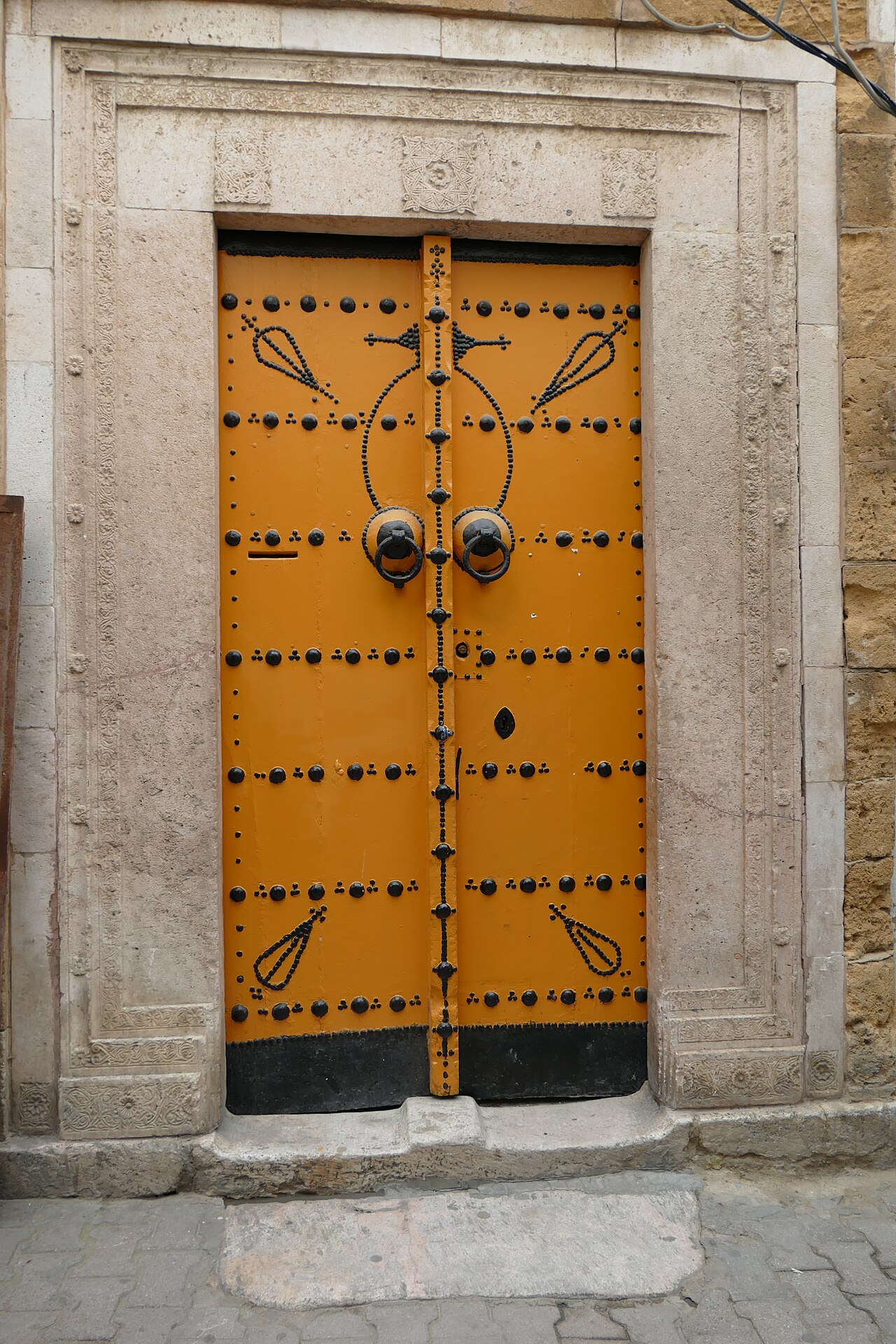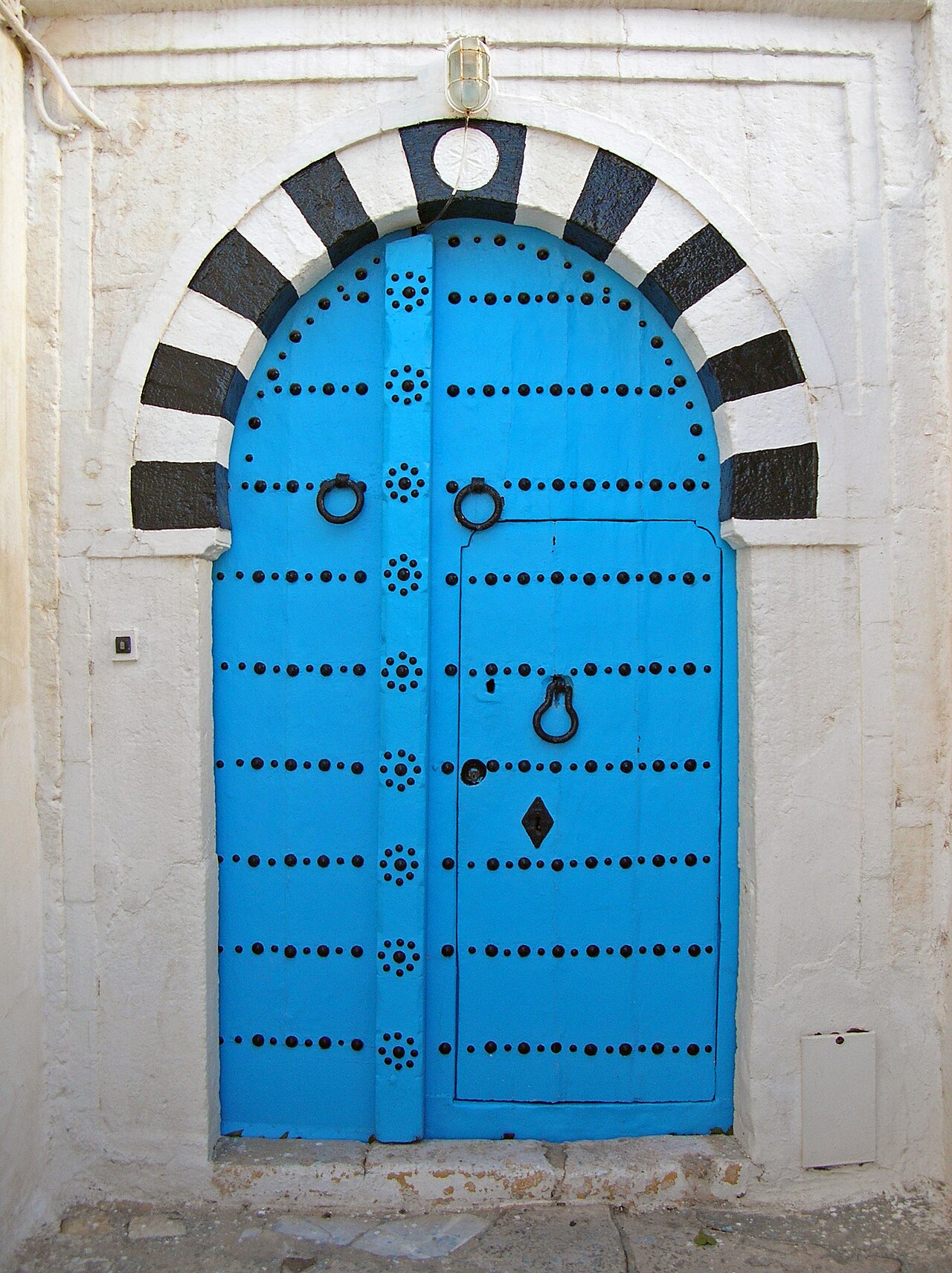
Kairouan was founded in the seventh century as a military camp and base for the Arab armies advancing across North Africa, and it grew quickly into a centre of learning, trade and religion. Today it is regarded as one of the holiest cities in the Islamic world for Tunisians and for much of the Maghreb, and its medina is a UNESCO World Heritage Site. The great landmark is the Great Mosque, also known as the Mosque of Uqba after the commander who founded the city. It is among the oldest mosques in the Islamic world, a sober fortress of ochre walls with a massive square minaret, a vast paved courtyard and a prayer hall supported by hundreds of columns, many of them reused from Roman and Byzantine buildings. The proportions and the quiet of the courtyard are what stay with most visitors. Around the mosque, the walled medina is a calmer and more traditional place than the medina of Tunis. Lanes of whitewashed houses with blue and green doors lead past small workshops, carpet sellers and brass workers. Kairouan has long been associated with hand-knotted rugs, and shops show how the patterns are made. Food is part of the visit too: the city is famous for makroudh, a diamond of semolina pastry filled with dates and soaked in syrup, sold fresh from bakeries all over the old town. Other sights include the Aghlabid Basins, large circular reservoirs from the ninth century that fed the city, the Mosque of the Three Doors with its carved facade, and the Zawiya of Sidi Sahab, a tiled shrine often called the Barber's Mosque.
Practical visiting
Kairouan lies roughly two hours south of Tunis, so a day trip is long but entirely possible, and it is usually combined with El Djem and sometimes Monastir or Sousse on a private tour. A driver and guide make the day far easier, because they handle parking, explain what you are seeing and know the quieter lanes.
Non-Muslim visitors are generally able to see the courtyard of the Great Mosque and look into the prayer hall from the doorways, but the prayer hall itself is for worshippers, and access hours and arrangements change, so ask your guide to confirm on the day. Dress modestly, with shoulders and knees covered and a scarf for women, and remove your shoes where asked.
Making the most of it
Arrive in the morning, when the courtyard is quiet and the light is good on the minaret. Walk the medina on foot and stop for fresh makroudh and mint tea. If you are shopping for a carpet, take your time, compare several shops and treat the opening price as a starting point.
Prices vary widely with size, knot count and age, and a guide you trust is worth more here than anywhere. The Aghlabid Basins and the Barber's Mosque are quick stops that fit between the main sights. In summer the heat can be intense by midday, so plan the medina for the morning and take lunch indoors.
Who it suits
Travellers interested in Islamic architecture and culture, and anyone who wants to see a different Tunisia from the Mediterranean coast. It rewards patience more than speed, and a slower pace with a guide is better than a rushed circuit. If time allows, an overnight in the region, perhaps near Sousse or Monastir, makes the logistics easier and lets you pair Kairouan with the amphitheatre at El Djem without a very early start.
What to expect
The experience
A guided visit to the Great Mosque courtyard and the walled medina, with stops at the Aghlabid Basins and a pastry shop, usually combined with El Djem on a private tour.
Best time
Morning, when the courtyard is quiet and the heat is manageable; spring and autumn are most comfortable.
How long
Three to four hours in Kairouan itself, within a long day of about four hours on the road.
Tips
Dress modestly, carry a scarf, ask your guide about mosque access on the day, and buy makroudh warm from a bakery.
Quick picks
- Best for
- Anyone interested in Islamic heritage and a quieter, more traditional medina than Tunis.
- Families
- Fine for older children; the drive is long and the courtyard visit needs modest dress and quiet behaviour.
- Couples
- A slow day of lanes, tilework and pastries, best with a private guide.
- Pair with
- El Djem amphitheatre on the same day, or an overnight near Sousse or Monastir.
- Time needed
- A full day from Tunis, or an overnight.
Good questions
Why is Kairouan important?+
It was founded in the seventh century and became one of the great centres of Islamic learning in the Maghreb. Its Great Mosque is among the oldest in the Islamic world and the medina is a UNESCO World Heritage Site.
Can non-Muslims enter the Great Mosque of Kairouan?+
Visitors can generally enter the courtyard and look into the prayer hall from the doorways, but the prayer hall is for worshippers. Hours and arrangements change, so ask your guide on the day and dress modestly.
How far is Kairouan from Tunis?+
Roughly two hours by road. Most visitors go on a full-day tour that also includes El Djem and sometimes Monastir.
What is Kairouan famous for?+
Its Great Mosque, hand-knotted carpets, brasswork and makroudh, a date-filled semolina pastry sold in bakeries throughout the medina.
Is Kairouan better as a day trip or an overnight stay?+
A day trip works but is long. An overnight in the region lets you combine Kairouan and El Djem at an easier pace.