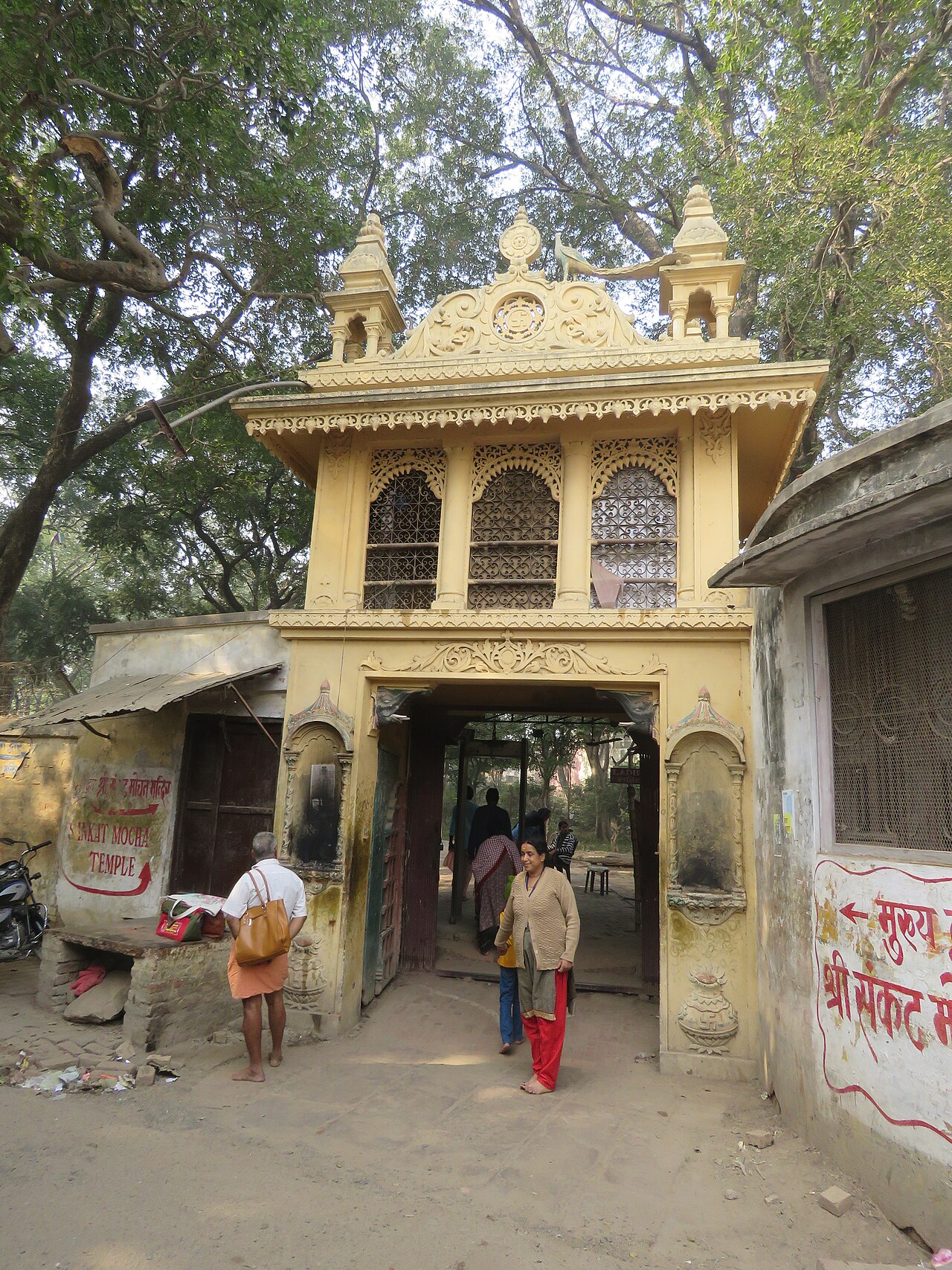
Sankat Mochan is one of the most loved temples in Varanasi, a place where residents come not as tourists but as part of an ordinary weekly routine. The temple is dedicated to Hanuman, the monkey god of strength and devotion, and its name means the reliever of troubles. According to the Incredible India tourism page, it was established in the early sixteenth century by Goswami Tulsidas, the poet who wrote the Ramcharitmanas, after he is said to have had a vision of Hanuman here. The image is unusual because it faces the shrine of Rama, the god Hanuman served, so the two are always in each other's sight. The temple stands in the southern part of the city, a short ride from Assi Ghat and close to the campus of Banaras Hindu University, and it is surrounded by greenery and the sound of bells and chanting that feels calmer than the dense lanes around Kashi Vishwanath. Daily hours on the tourism page run from early morning to late evening. Tuesdays and Saturdays are the days most associated with Hanuman, and on those days the queue grows and the aarti draws large crowds. The usual offering is besan ke ladoo, the sweet gram flour balls sold at the gate, which are blessed and handed back to worshippers as prasad. The temple is also known for the Sankat Mochan Sangeet Samaroh, a festival of classical music and dance held each April, which brings leading artists to the city for several nights.
Why visit? Because it shows living Varanasi at its warmest. Where Kashi Vishwanath is vast, regulated and often tense with security and queues, Sankat Mochan is intimate, devout and relaxed. You will see families, students on their way to exams, and elderly devotees reciting verses of the Hanuman Chalisa, and the monkeys that live in the surrounding trees are part of the atmosphere. If you want a place where you can sit for ten minutes, watch daily worship and feel welcomed without being sold anything, this is among the best choices in the city.
How to do it
Go early in the morning or around the evening aarti, and expect more people on Tuesday and Saturday. Remove your shoes before the temple area and leave bags and anything valuable at your hotel, because phones, cameras and large items are often restricted at the gate and a locker or shoe keeper may be needed. Dress modestly, with shoulders and knees covered, and hold the ladoo prasad in your right hand if you accept one.
Keep food and bags closed near the monkeys, which are used to snatching offerings. It combines naturally with a morning at Assi Ghat and with Tulsi Manas Temple and Durga Temple, which are a short ride away, so many visitors group the three into one southern-city morning.
Who it suits
Spiritual travellers, anyone interested in the Ramcharitmanas and Tulsidas, music lovers who time a trip around the April festival, and visitors who want a lower-pressure temple than the main shrine. It is not a heritage monument to be photographed from every angle, so respect worshippers and ask before taking pictures of people.
Entry is free, and the main costs are a rickshaw or taxi and whatever you spend on offerings. Follow the instructions of the staff at the gate, and if you are unsure what is permitted, ask politely at the entrance or at your hotel.
What to expect
The experience
A free, working temple of Hanuman in the south of the city, with daily aarti, prasad of besan ladoo and a lively local congregation.
Best time
Early morning or the evening aarti, with the biggest crowds on Tuesdays and Saturdays.
How long
About an hour including the walk in and any queue.
Tips
Leave bags and valuables at your hotel, dress modestly, remove shoes, and keep prasad closed around the monkeys.
Quick picks
- Best for
- Travellers who want to see everyday devotion rather than a monument, and anyone drawn to Tulsidas and the Ramayana tradition.
- Families
- Children usually enjoy the monkeys and the sweets, but the Tuesday and Saturday crowds can be tight for strollers.
- Couples
- A warm, atmospheric stop in a calmer part of the city, best paired with a walk at Assi Ghat.
- Pair with
- Tulsi Manas Temple and Durga Temple nearby, or Assi Ghat for breakfast.
- Time needed
- One hour, or half a morning with the neighbouring temples.
Good questions
Who built Sankat Mochan Temple?+
The Incredible India tourism page credits Goswami Tulsidas, the author of the Ramcharitmanas, with establishing the temple in the early sixteenth century.
Which days are busiest?+
Tuesdays and Saturdays, which are especially associated with Hanuman. Expect longer queues and bigger aarti crowds on those days.
What is the prasad?+
Besan ke ladoo, sweet gram flour balls that are offered at the shrine and then shared as blessed food.
Can I take my phone inside?+
Rules on phones, cameras and bags can change at the gate. The simplest approach is to leave bags and valuables at your hotel and carry only what you need.
Is there a music festival?+
Yes, the Sankat Mochan Sangeet Samaroh is a classical music and dance festival held each April, and it draws well known artists to the city.