Verona eats like the countryside that surrounds it. The city sits between the vineyards of Valpolicella, the rice fields of the Veronese plain and the cold, clear water of Lake Garda, and the traditional cooking of the old town draws on all three. Menus lean on rice, polenta, pasta made with whole-wheat flour, slow-cooked meat and cheese, and almost everything is better with a glass of the local red. This guide explains what to order, when to eat it and how the rhythm of an Italian meal works, so you can walk into any osteria in the centre with confidence.
Start with the rice
Risotto is more at home here than in most of Italy, and the local Vialone Nano rice is famous. The dish to try is risotto all’Amarone, rice toasted in butter and finished with Amarone wine, which turns it a deep purple-brown with a rich, slightly bitter finish. It is the single best way to taste Valpolicella without leaving the table. Many places also serve risotto with radicchio, with local sausage or with seasonal vegetables, and the portions are usually sized as a generous first course.
Pasta and potatoes
Verona’s signature pasta is bigoli, thick whole-wheat spaghetti pressed through a mould. You will see it dressed with a slow-cooked duck ragù, known as *bigoli con l’arna*, and in a Lenten version with a sauce of anchovy and onion. Gnocchi are the other staple, light potato dumplings served with butter and Monte Veronese cheese or with a meat ragù, and the city holds a long-running carnival tradition built around them. Near Lake Garda, look for the hand-folded filled pasta of Valeggio sul Mincio, called tortellini di Valeggio, which is a good reason to book the Lake Garda day trip with a lunch stop.
The heavier traditions
If you visit between autumn and spring, try pastissada de caval, a stew of horse meat marinated in red wine with onion, cloves and cinnamon. It is a genuine local classic and not for everyone, so ask the waiter to describe it first. The other great cold-weather dish is bollito misto, a platter of boiled meats traditionally served with pearà, a peppery sauce made from breadcrumbs and bone marrow. It is old-fashioned comfort food, usually on the menu in the cooler months and often as a Sunday lunch. From the lake comes luccio in salsa, poached pike in a sauce of olive oil, capers and anchovy, normally served with grilled polenta.
Cheese, cured meats and polenta
Monte Veronese, the cheese of the Lessinia hills, appears fresh and mild or aged and sharp, and it is excellent on a board with local salumi and a spoonful of mostarda. Polenta, soft or grilled, goes with nearly everything. A mixed board of cheese and cured meats and a glass of wine is a perfectly good light dinner at an old-style wine bar.
Wine, without the jargon
Four names cover most of what you will drink. Valpolicella is a light, fruity red. Ripasso is the same wine refermented on the skins of Amarone grapes, with more body. Amarone della Valpolicella is the powerful dry red made from dried grapes, best with aged cheese, braised meat or at the end of the meal. Soave, from the hills east of the city, is the crisp white, and Bardolino, from the shore of Lake Garda, is a pale and easy red. Ordering a glass of the house wine is usually a safe and inexpensive choice. If you want to see where it comes from, the Amarone tasting tour takes you into the cellars of Valpolicella.
Sweets and baking
Pandoro, the tall golden star-shaped Christmas cake dusted with icing sugar, was born in Verona, and bakery windows fill with it from late autumn. Its older cousin, nadalin, is a denser star-shaped cake that goes back centuries. Year round, look for almond biscuits, a flat almond cake called torta russa, and the baci di Giulietta, small almond and hazelnut shortbread sandwiches sold as Juliet’s kisses. They make an easy edible souvenir.
How an Italian meal works
Lunch usually runs from around midday to mid-afternoon and dinner starts later than in northern Europe, often after half past seven. Many restaurants add a small cover charge per person, called the coperto, which pays for bread and the table and is not a tip, so check the menu if you want to know. Tipping is modest: rounding up or leaving a few euros for good service is plenty. Water is ordered by the bottle, still or sparkling, and an espresso at the bar is cheaper than one at a table on the big squares.
The aperitivo habit
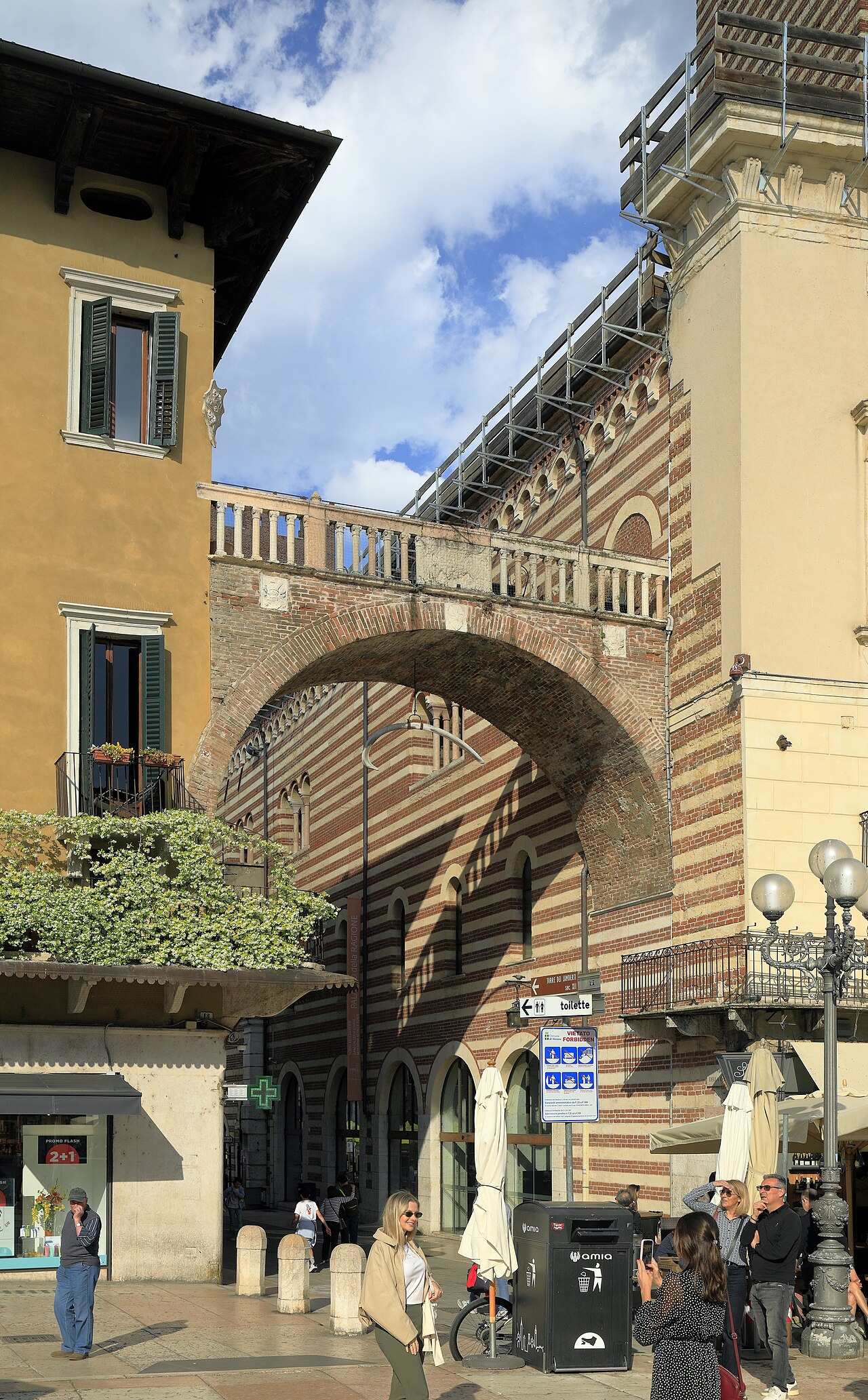
Between about five and eight in the evening, locals gather for an aperitivo, a drink with a few snacks. In Verona that often means a spritz or a glass of Valpolicella or Soave on or near Piazza delle Erbe, and the Liston on Piazza Bra is the classic spot with a view of the Arena. Prices are higher on the main squares than in the side streets, so walk a minute or two away for something cheaper and more local.
Learning it in one afternoon
If you are short of time, the guided food and wine tour is the easiest way to taste several of these dishes in one outing. It covers the old town on foot, so it also doubles as an orientation walk on your first day. Pair it with a morning at the Piazza delle Erbe market area and you will understand a good deal of the city’s food culture before the first dinner.