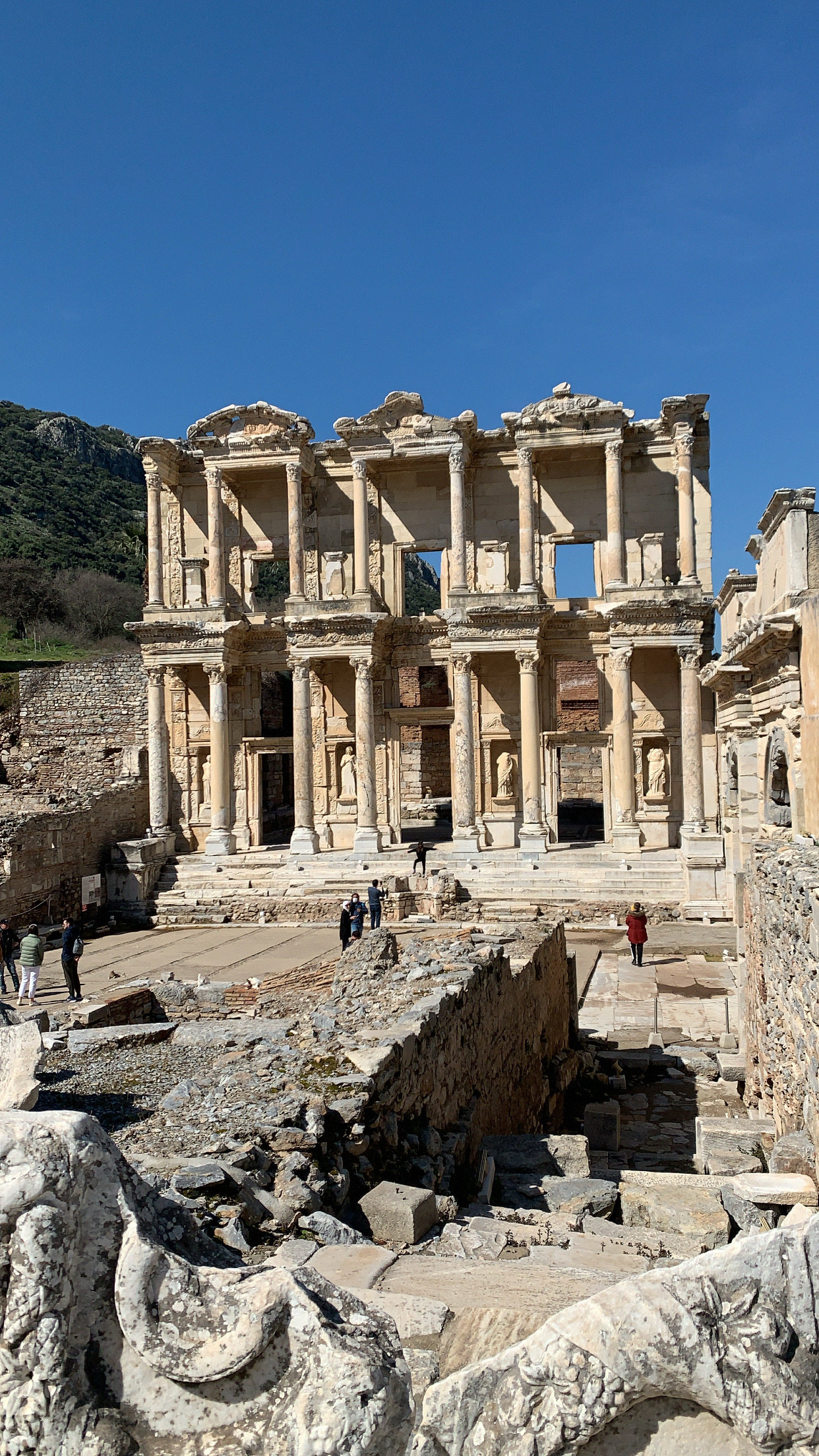
Ephesus matters to many visitors not only as a Roman city but as one of the places where early Christianity took shape. The area holds sites linked to Saint Paul, Saint John and the Virgin Mary, and beside them stood the Temple of Artemis, one of the Seven Wonders of the Ancient World. This guide explains how these places fit together and how to visit them in a sensible order, whether you come as a pilgrim, a history reader or simply a curious traveller.
The setting: a city of Artemis
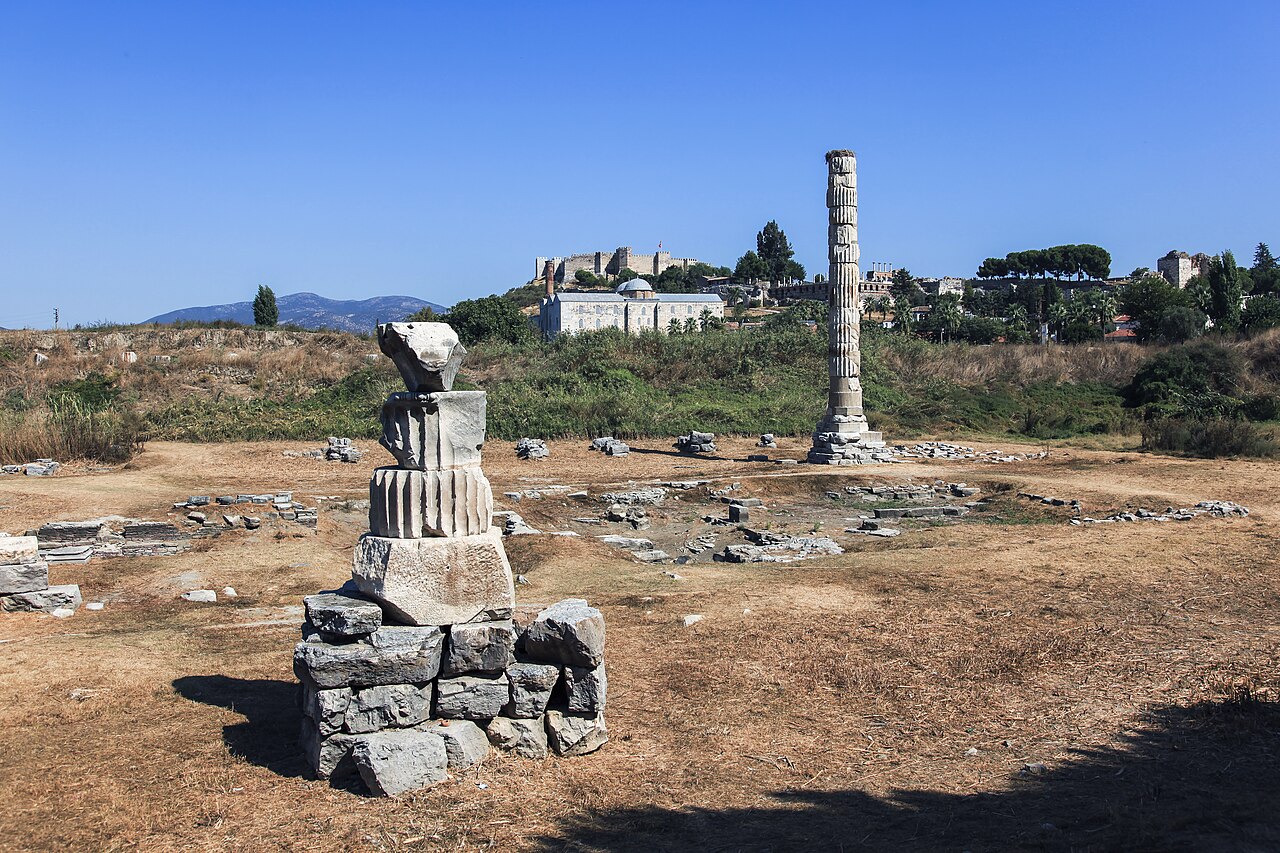
Before Christianity arrived, Ephesus was known for its cult of Artemis, and the vast temple outside the city drew pilgrims from across the Mediterranean. Today only a single reconstructed column stands in a field near Selçuk, but the scale of the foundations tells you how large the temple once was. The conflict between the old cult and the new faith appears in the New Testament, in the account of a riot led by silversmiths who sold images of the goddess. That story is usually placed in the Great Theatre, which you can still sit in at Ephesus.
Saint Paul at Ephesus
Paul spent a long period in the city, and the Letter to the Ephesians is addressed to its community. Walking the marble streets at Ephesus, past the Library of Celsus and down to the theatre, is the closest most visitors come to his world. The city was also a stop for other early figures, and later councils met here, so the layers of history are thick.
The Basilica of St John
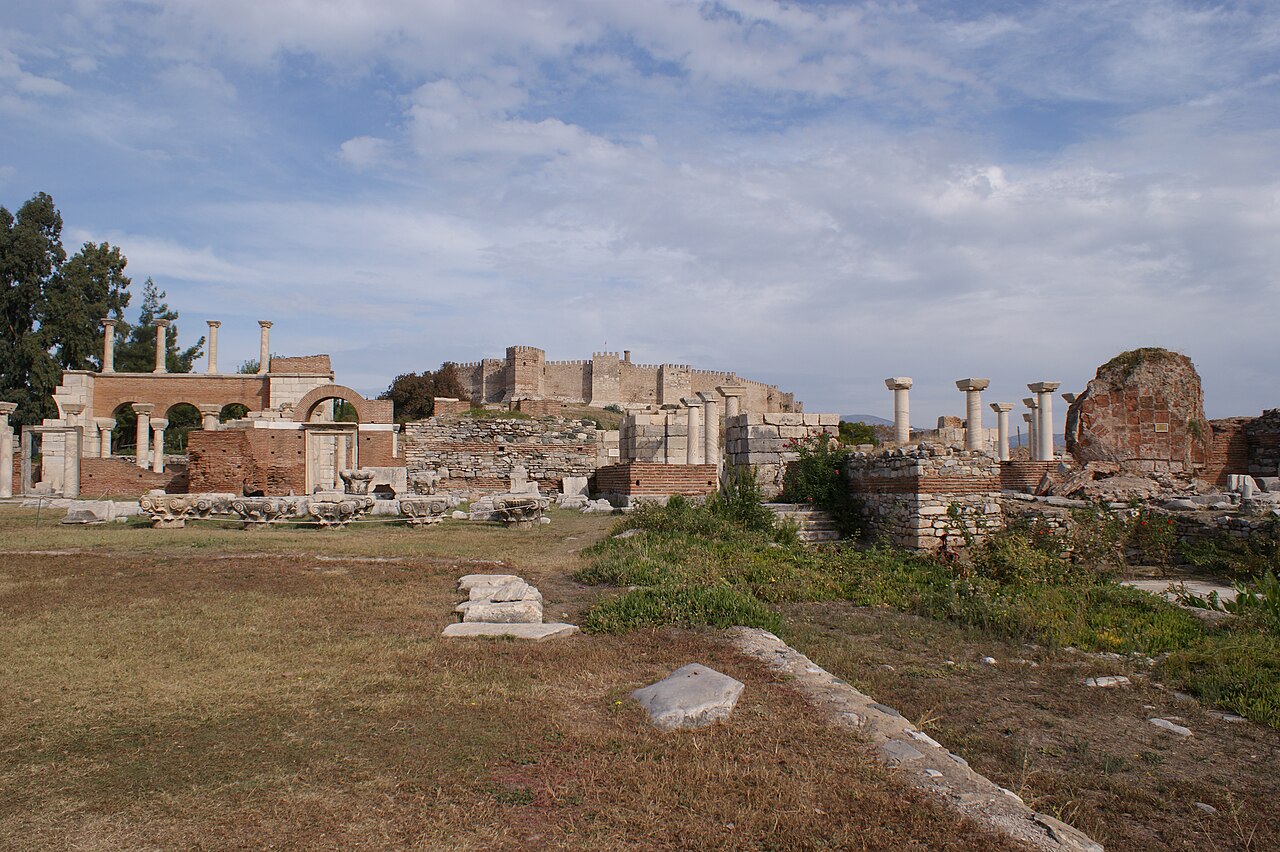
Tradition holds that John the Evangelist lived in Ephesus in his later years and was buried on the hill of Ayasuluk, above modern Selçuk. In the sixth century the emperor Justinian built a large basilica over the tomb. The church is ruined now, but the plan can still be read, the tomb is marked with a marble slab, and the hilltop looks over the plain and the Ephesus site. It combines well with the Ephesus Museum in town and the castle on the same hill.
The House of the Virgin Mary
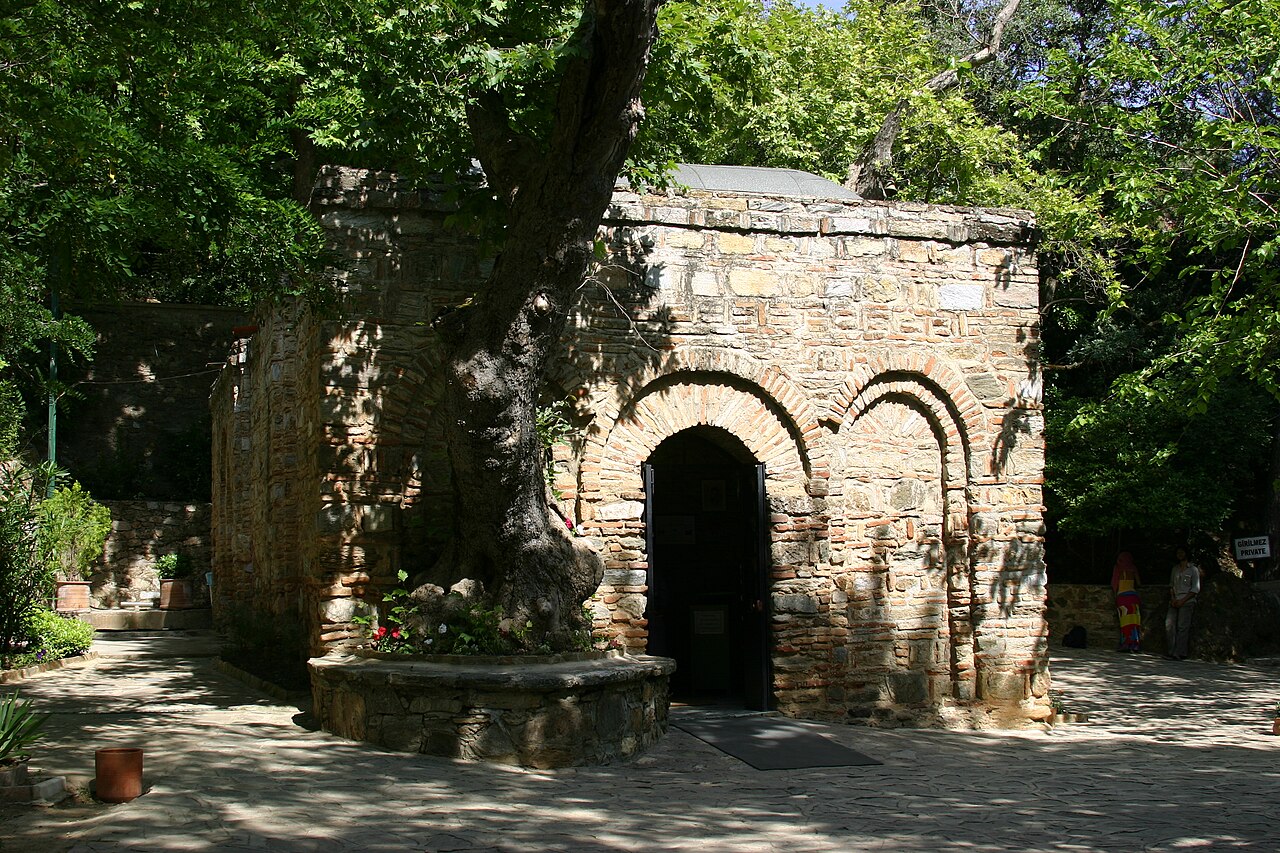
A small stone chapel in the pines above Ephesus is revered as the place where Mary spent her last years, a tradition rooted in the belief that John brought her to the city. The site is a place of quiet prayer for Christians and is also visited by many Muslims, who honour Mary. Visitors are asked to dress modestly and to keep the atmosphere calm. The grounds include a spring and a wall where people leave written wishes.
The Seven Sleepers
A local legend tells of seven young men who sheltered in a cave to escape persecution, slept for generations and woke to a changed world. The story appears in both Christian and Islamic tradition, and a cave site on the slope of Mount Pion is associated with it. The ruins are simple, but the story gives a human angle to the hillside.
A route that works
Start at Ephesus in the morning to see the theatre and the main street, then continue to the House of the Virgin Mary while the day is still cool. In the afternoon go to Selçuk for the Ephesus Museum, the Basilica of St John and the lone column of the Temple of Artemis. If you want the Seven Sleepers, add it to a morning visit, as it is close to the main site. A guide who knows the New Testament passages adds a great deal, and several tours are built around exactly this theme.
Choosing a guide or tour
Biblical-themed tours usually cover Ephesus, the House of the Virgin Mary and the Basilica of St John in a single day. Ask whether the price includes entrance fees, since the Terrace Houses and some other sites have separate tickets. A small group suits the more contemplative stops, while a private guide can adapt the pace and the readings.
Respect and practicalities
The Virgin Mary's house and the basilica are places of worship and memory for many people, so lower your voice, cover shoulders and knees, and follow the rules about photography. Bring water and a hat for the open sites, wear shoes with grip, and allow more time than you expect, because stories reward a slow visit.