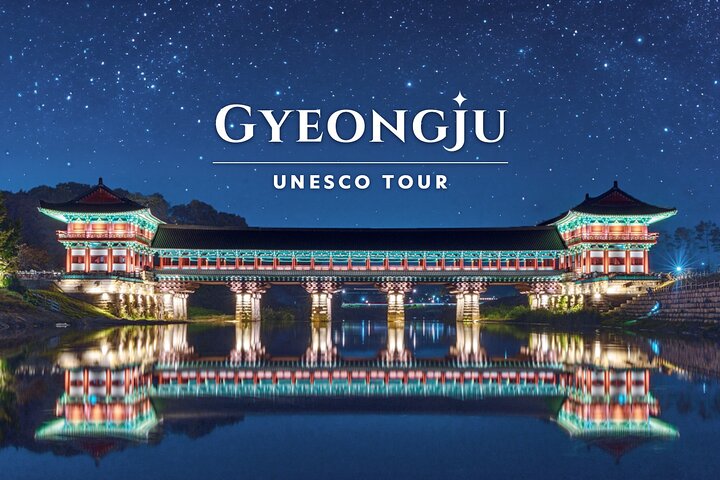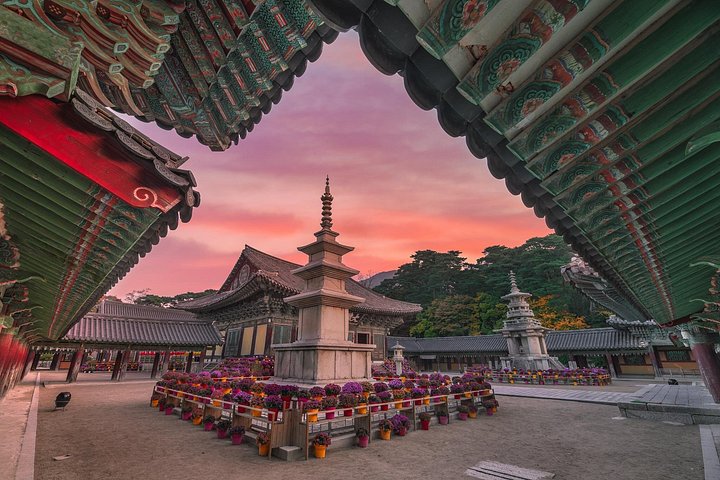
Gyeongju is a year-round destination, but the experience changes noticeably with the seasons. Most of the sights are outdoors, so weather matters more than in a museum-led city. Here is how each season feels and how to plan around it.
Spring: blossoms and fresh green
Spring is one of the most popular times to visit. In early April cherry trees bloom around Bomun Lake and near Bulguksa, and the lakeside path and temple approach fill with visitors. Mild days and bright light make it ideal for walking Namsan and the palace ruins, and the open grounds of the old temple sites are often planted with flowers. Expect crowds at weekends and during the blossom peak, so aim for early mornings or weekdays, and book hotels well ahead. Evenings are cool, so carry a light jacket.
Summer: hot, humid and green
Summer is hot and humid, with a rainy spell that can interrupt outdoor plans. It is the least comfortable season for climbing Namsan or walking the open tomb park in the middle of the day. If you visit, start early, rest in the heat of the afternoon and plan evenings for the lake, the tomb park and Wolji Pond, when the temperature drops and the lights come on. The seasonal water parks and outdoor pools at the resorts operate in this period. Shade is available in Gyerim Forest and in the temple grounds, so build your itinerary around it, and carry water.
Autumn: the best colour
For many travelers, autumn is the season of Gyeongju. From late October into mid or late November the maples, ginkgo and zelkova trees turn red and gold, and the temple courtyards, the tomb park, the forest and the lakeshore are all at their most photogenic. Days are mild and bright, evenings are cool, and the air is dry. The trade-off is crowds, especially at Bulguksa on weekends and at Hwangnidan-gil in the evening, and the fact that darkness falls early, so plan Wolji Pond for late afternoon. Weekday mornings are much calmer. Book hotels and tours early, particularly near the temple and in the old city.
Winter: cold, clear and quiet
Winters are cold but often dry and sunny, and the crowds are thin. The tomb mounds under frost, the bare branches of the forest and the stone of the observatory are striking in the low light. Some seasonal attractions close or run shorter hours, daylight ends early and trails on Namsan can be icy, so wear shoes with grip. Winter evening illuminations at the pond and the theme park add colour, and hotels often offer better rates on weekdays. Dress in layers, and enjoy a hot meal and a warm cafe between sights.
Shoulder seasons
Late April to May and the first half of October sit between the peaks. Temperatures are comfortable, trees are green or just turning, and hotel rates and queues are usually kinder than during blossom or foliage weeks. These months suit travelers who want good walking weather without the pressure of a headline season, and they are a strong choice for combining the temples with a day on Namsan or a long afternoon at Bomun Lake.
What stays the same
Many sights follow a weekly pattern, with a closing day for the museum and shorter hours in the cooler months, so check the schedule for the day you plan to visit. Bulguksa and Seokguram close earlier than the city sights in the evening, and Seokguram in particular is best visited first thing. The old city is easy to walk in any season, and indoor options such as the museum and hanok cafes give you a fall-back when the weather turns.
Choosing your month
Pick April or late October to mid November for colour and the most comfortable weather, accepting that you will share the sights. Pick May, early October or the winter months if you value space and lower prices. Pick midsummer only if you are prepared for heat and rain, and keep your days short. For the quietest experience, travel on a weekday and arrive at the main temple when the gates open. Whichever month you choose, an evening stroll beside the pond or the tombs is lovely, and one that you can enjoy in almost any season. Pack comfortable walking shoes, and remember that a light rain jacket is useful in nearly every month.