Gyeongju is not a big-city food capital, but it is a very pleasant place to eat. Meals here tend to be simple, seasonal and served in settings that match the history: a courtyard restaurant, a hanok cafe, a bakery with a queue at the door. The pleasure is in the rhythm of the day more than in a single famous dish, so plan your meals around the sights and leave room for snacks.
Start with the local bread and sweets
Gyeongju is known for small baked treats filled with red bean paste, sold from bakeries in the old city and packed in boxes for visitors to take home. Try one warm from the oven as a morning snack before you head to the tombs. You will also find barley-based sweets, rice cakes and traditional confections in the shops around the tomb park. They travel well, so buy a box on your last afternoon rather than your first.
Courtyard set meals
The classic Gyeongju lunch is a set meal of rice, soup and many small side dishes, often served in a hanok courtyard or a restaurant with low tables. A popular local style is a leaf-wrap meal, where you wrap rice, grilled meat or other fillings and a dab of sauce in fresh leaves. Many restaurants specialise in one dish, so look for a short menu and a busy dining room. Portions are generous and meant for sharing, and solo travelers may find it easier to order at lunch, when single-serving sets are more common.
Hwangnidan-gil and the hanok cafes
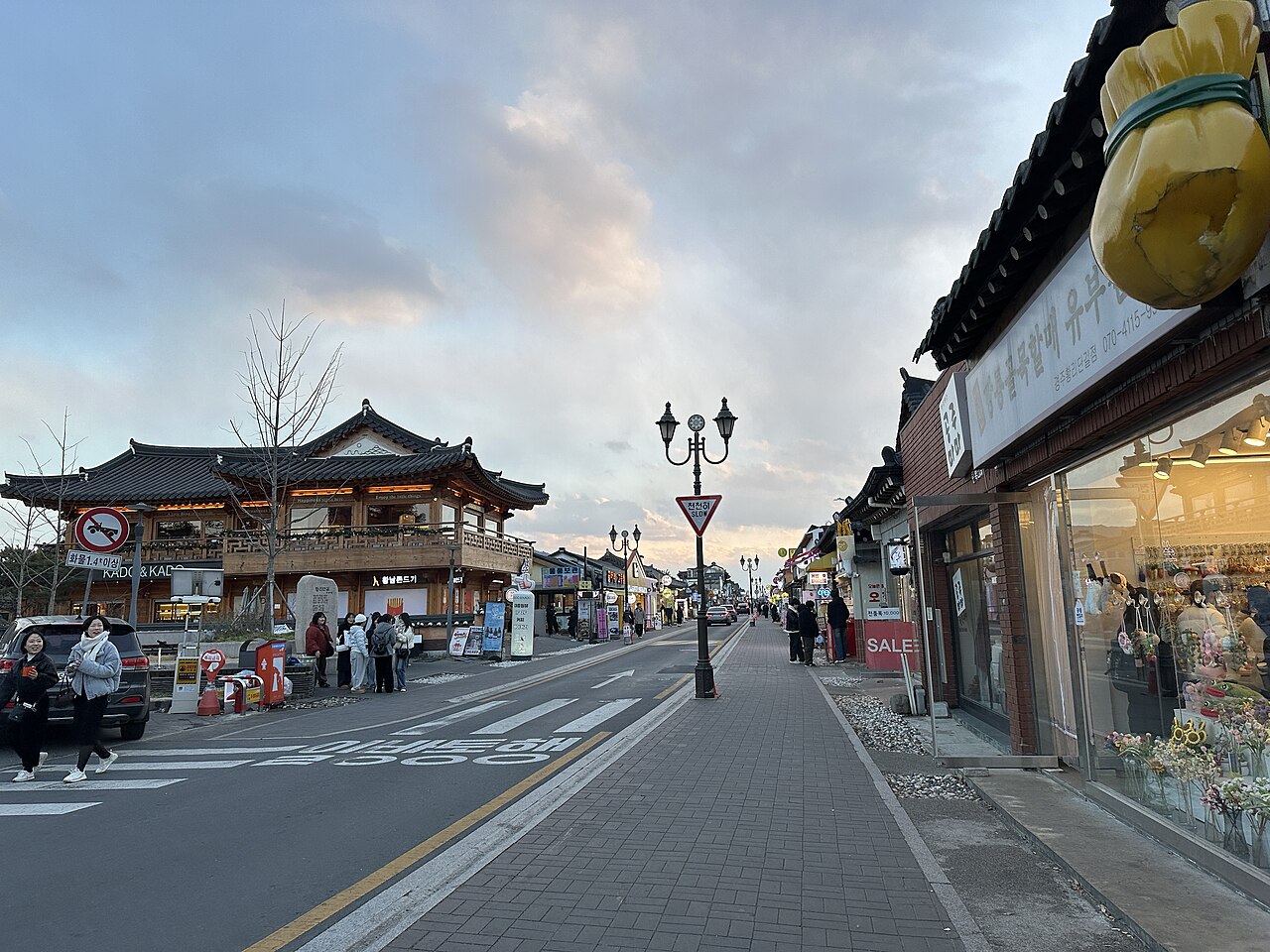
The lanes around Hwangnidan-gil are where Gyeongju eats and drinks in the evening. Old tiled houses have become cafes, noodle shops, wine bars and dessert stops, and the best way to enjoy them is to walk, look and choose on impulse. Cafe seating in a hanok courtyard is a highlight on a cool autumn afternoon, particularly with a hot tea or a seasonal dessert. Expect queues at the famous places at weekends, and go early in the evening if you want a seat. Many kitchens close earlier than you might expect, especially on weekdays, so plan dinner before it gets late.
Traditional drinks
Rice wine and other traditional drinks are served at many restaurants, and tea houses offer calm, quiet stops after a day of walking. If you are curious, ask staff what is made locally, and try a small bottle or a tasting rather than a full round. Korean drinking culture is social and generous, so pace yourself, pour for others before yourself and accept a glass with both hands as a courtesy.
Dining at Bomun Lake
The lake district is a different world: hotel restaurants, buffets, bakeries and lakeside cafes. The large resorts serve breakfast buffets and a range of cuisines, and a few independent restaurants sit within walking distance. Prices are generally higher than in the old city, and some smaller places close early, so check hours if you are staying here and want a late dinner. A short taxi ride back to Hwangnidan-gil is easy and rewarding, and many visitors split their evenings between the two areas.
Eating near the big sights
Bulguksa and Seokguram have simple restaurants and cafes by the car parks, serving noodles, tofu dishes and snacks. Namsan has few shops, so bring water and a snack. At Yangdong Folk Village, a handful of village cafes and restaurants serve simple meals, and it is wise to eat before or after rather than rely on them at peak times. Many markets and bakeries sell portable snacks, which are ideal for a picnic at Wolji Pond or the museum garden.
Practical tips
Carry some cash for small stalls, even though most restaurants take cards. Tell staff about dietary needs in advance, as vegetarian dishes can still include fish stock or meat. Tipping is not expected. Peak lunchtimes between noon and one are crowded, so eat a little early or late. In autumn, seasonal ingredients such as chestnuts, persimmons and mushrooms appear on menus and in desserts, so ask what is in season. Finally, if you are travelling with a group, share several dishes and order in rounds, which lets you taste more and waste less. Leave room for dessert, because a hanok cafe at dusk is one of the best ways to end a day in Silla's capital.