Gyeongju rewards a slow visit. The big names can be seen in a single hurried day, but three days lets you match the sights to the right time of day, walk instead of ride and eat well in between. The plan below groups the city by area so you spend less time in taxis and more time looking. Swap days around to suit the weather, and keep the first morning flexible if you are arriving by train.
Day one: temples in the hills and an evening by the lake
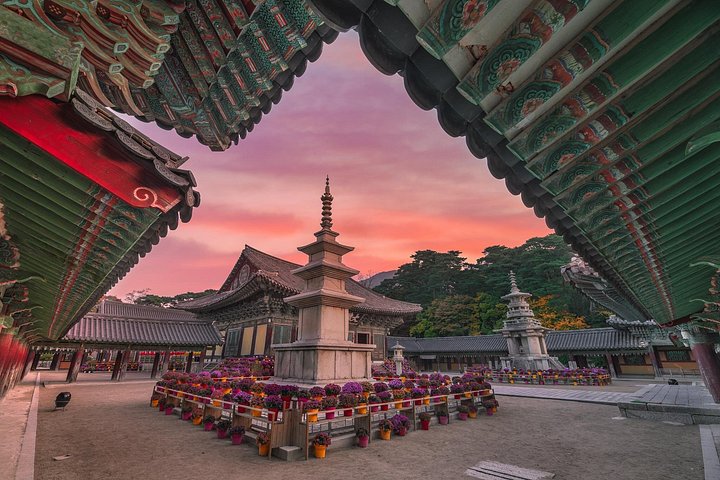
Start early at Bulguksa Temple, when the stone terraces are quiet and the light is soft. Allow about ninety minutes for the twin pagodas, the staircases and the halls, then continue up the mountain to Seokguram Grotto, which closes earlier in the day than the temple, so do not leave it until the afternoon. Have lunch near the car park or back in town, then spend the afternoon at a gentler pace. If you are staying at Bomun Lake, walk the shoreline path at sunset, with a drink at a lakeside cafe. If you are in the old city, take a taxi back and rest before dinner on Hwangnidan-gil. The aim of day one is to see the headline sights while your energy is highest.
Day two: the old city on foot
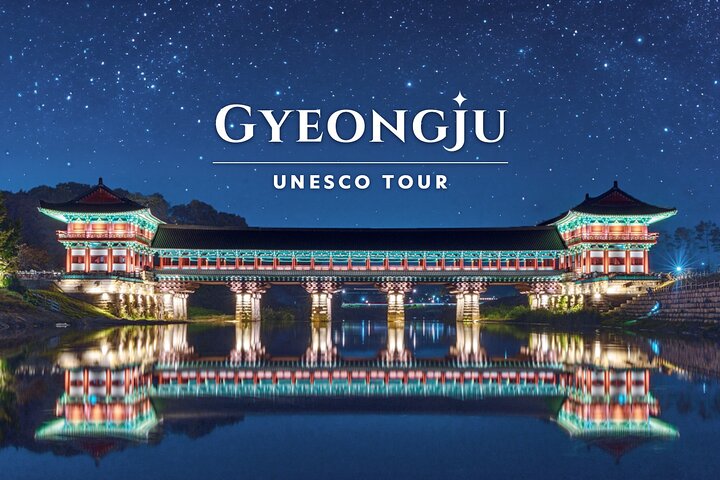
This is the walkable heart of Gyeongju, and it works best at an unhurried pace. Begin at Daereungwon, the tomb park, and step inside Cheonmachong to see the reconstructed burial chamber. Walk on to Cheomseongdae, the seventh-century observatory, which sits in a garden of seasonal flowers and is free to see. From there the path leads through the quiet trees of the Wolseong palace site and Gyerim Forest, an easy, shaded stretch that is especially lovely in autumn. Cross toward the Gyeongju National Museum and give it ninety minutes or so, enough to see the gold crowns and the Silla bells without museum fatigue. Have a late lunch, then finish the afternoon at Donggung Palace and Wolji Pond, timing your arrival for the last hour of daylight so you can watch the pavilions light up. Dinner and dessert on Hwangnidan-gil complete the day.
Day three: Namsan, quieter ruins and a spare hour
Spend the morning on Namsan, the sacred mountain south of the city. A gentle valley walk, such as the forest route near the Samneung royal tombs, takes two or three hours and brings you past carved Buddhas and stone pagodas without a hard climb. If you have more energy, choose a longer route up to a hermitage site, but start early and carry water. On the way down, stop at Poseokjeong, the stone channel where Silla nobles floated wine cups, which takes under an hour. In the afternoon, visit the Hwangnyongsa Temple Site, a vast open field of foundation stones that shows how large the lost capital once was. If you still have time, Yangdong Folk Village is a longer outing to the north, with its thatched and tiled houses, and is best done as a half-day by taxi or on a tour.
Where to sleep
For three days, consider splitting your stay. Two nights in the old city around Hwangnidan-gil put the tombs, cafes and restaurants at your door, and a night near Bulguksa or Bomun Lake gives you a calm start to day one. If you prefer one base, choose the old city if you like walking and atmosphere, or a Bomun resort if you have children or a car. Our where-to-stay guide compares the options.
Moving around
Buses and taxis are easy and affordable, bicycles are popular on the flat ground in the centre and the main sights in the old city are within a short walk of each other. Bulguksa and Seokguram need a bus, a taxi or a tour, and Yangdong is best by taxi. If you prefer not to arrange anything, a private guided day on day one can cover the temples and give you a good overview of the story before you explore on your own.
Make it your own
Families can swap part of day three for Gyeongju World. Couples might hold back an evening for a long dinner and a second night walk to Wolji Pond. History lovers can add the Hwangnyongsa museum and Bunhwangsa. In autumn, give the temple and the forest a second visit on a weekday morning, when the colour is at its peak and the crowds are thin. Whatever you choose, leave an hour or two unplanned, because Gyeongju is a city where the best moments often come from stopping to look at one more mound, one more pagoda, one more courtyard.