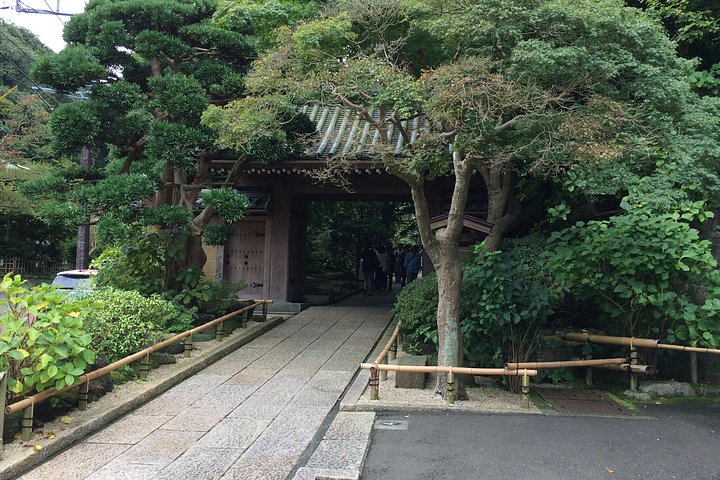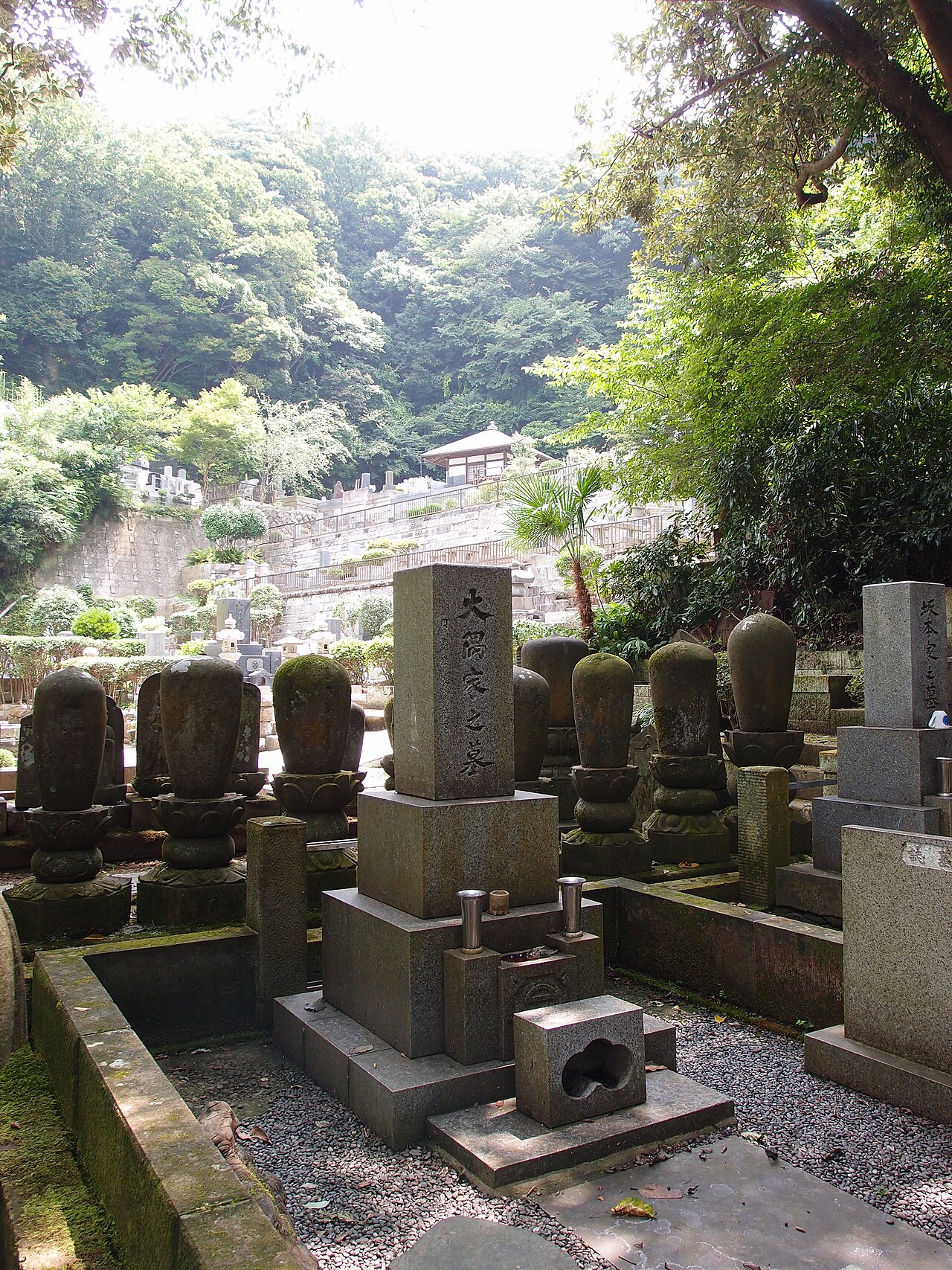
Sugimoto-dera is traditionally regarded as the oldest temple in Kamakura, with a foundation story that reaches back to the eighth century, long before the shoguns arrived. It stands on a wooded slope in the east of town, reached through a gate and up a short flight of ancient stone steps whose surface is soft with moss. At the top, a thatched hall houses three Kannon statues, each eleven-faced and each said to have been carved by a different master. Visitors remove their shoes, step into the dim hall and glimpse the figures in the half light, an experience that feels closer to a village temple than a tourist attraction. A small entry fee is paid at the gate.
The charm of Sugimoto-dera lies in its age and its quiet. Moss covers the steps, the roof, the stone lanterns and the old trees, and in damp weather the colour deepens to an almost luminous green. Visitors are asked to keep to the marked path, since the moss is delicate and the stones can be slippery.
Up the steps, the thatched Kannon hall has a deep, cool interior that smells of incense and old wood, and shoes come off at the door. The temple is also the first stop on the Kamakura Kannon pilgrimage, a traditional circuit of temples that pilgrims still walk.
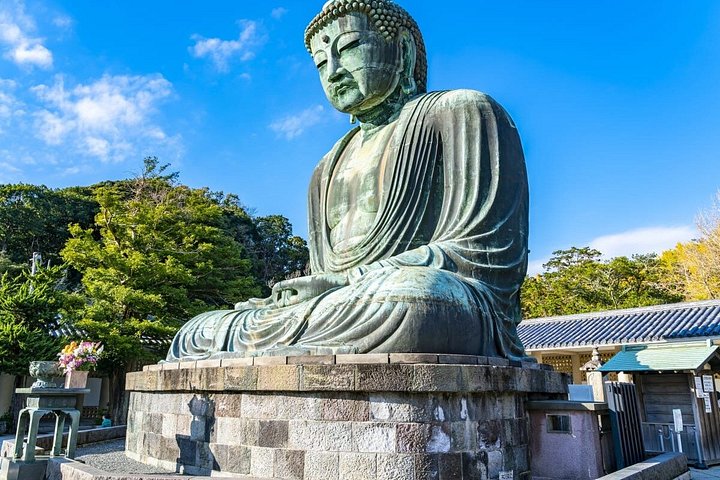
Because it is a little off the main routes, Sugimoto-dera is never crowded in the way the Great Buddha can be. It rewards slow walking, and a visit takes thirty to forty-five minutes. In autumn the leaves around the stairway turn red and gold, in spring the garden greens up and in winter the quiet is almost complete. Rain adds atmosphere, but be careful on the steps. A small hall and shop sell charms and seal stamps for visitors who collect them.
Reaching it takes a bit of planning. From Kamakura Station, a bus runs east along the road to a stop close to the temple, or you can walk for around twenty-five minutes through quiet residential streets. The walk passes small shrines and old houses, and it connects naturally with Hokoku-ji, the bamboo garden, a short distance further along the same valley. A day plan that combines Sugimoto-dera, Hokoku-ji and a matcha break in the bamboo garden is one of the most pleasant on the east side of town.
Bring coins for the entrance and for offerings, wear shoes that are easy to take off and expect a few steps up and down. Hours vary by season, so check current information before you go. Photography rules differ between the grounds and the hall, so respect posted signs. A guided walk on the quieter side of Kamakura can explain the history of the pilgrimage and the legends of the statues and make the visit richer.
Combine the visit with a slow walk through the surrounding streets, where small shrines, craft shops and cafes sit among the houses. The district feels very different from the station area, with far fewer crowds and a gentler pace, and it is a good place to see everyday Kamakura life. A late morning here followed by lunch near the bamboo garden makes a relaxed itinerary.
What to expect
The experience
A quiet self-guided visit to an ancient hillside temple with a mossy stairway and a thatched Kannon hall.
Best time
Weekday mornings, or after rain when the moss is at its greenest, taking care on the steps.
How long
Thirty to forty-five minutes.
Tips
Wear shoes that slip off easily, keep to the marked path, bring coins for the entrance and combine with Hokoku-ji.
Quick picks
- Best for
- History lovers and visitors who want a quiet alternative to the big temples.
- Families
- Pleasant for older children, but the steps are uneven and slippery when wet.
- Couples
- A peaceful, photogenic stop on the way to the bamboo garden.
- Pair with
- Hokoku-ji and Tsurugaoka Hachimangu.
- Time needed
- About forty-five minutes plus travel time.
Good questions
Is Sugimoto-dera really Kamakura's oldest temple?+
Tradition says it was founded in the eighth century, which would make it the oldest in town.
How do I get there from Kamakura Station?+
Take a bus east along the road to a nearby stop, or walk for about twenty-five minutes.
Can I walk on the moss steps?+
Keep to the marked path and follow signs, because the moss is delicate and slippery.
What is inside the main hall?+
Three eleven-faced Kannon statues, seen in the dim light of a thatched hall.
Is it worth combining with Hokoku-ji?+
Yes. The bamboo garden is a short walk away, so the two make a good half day.