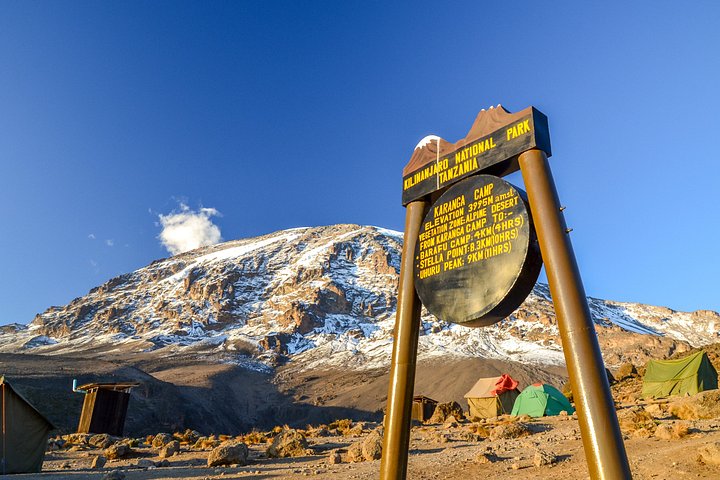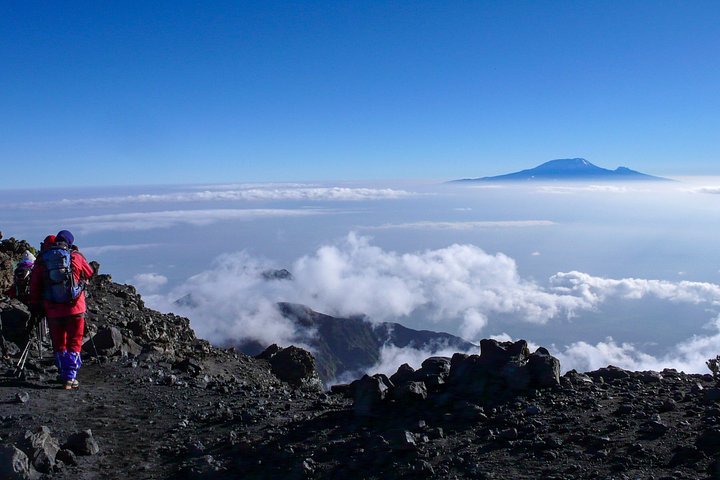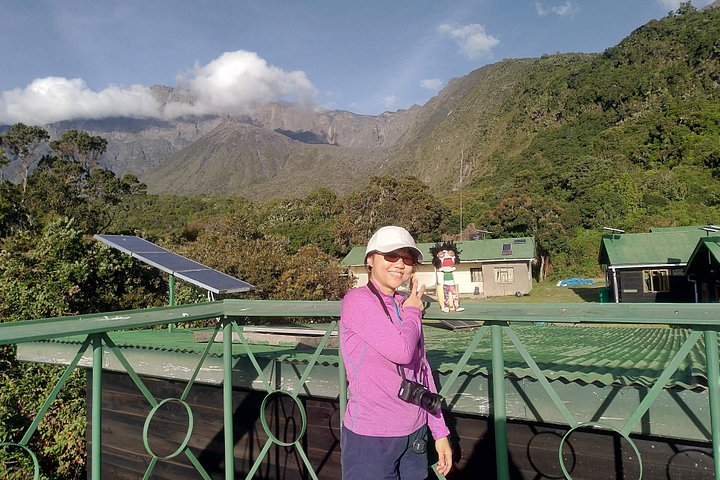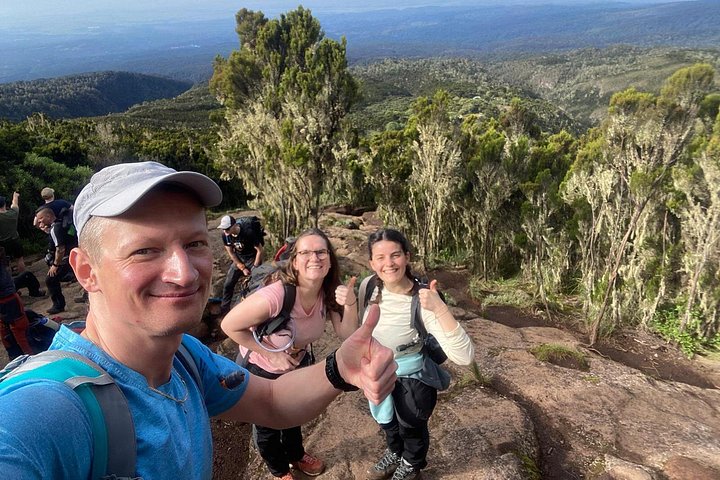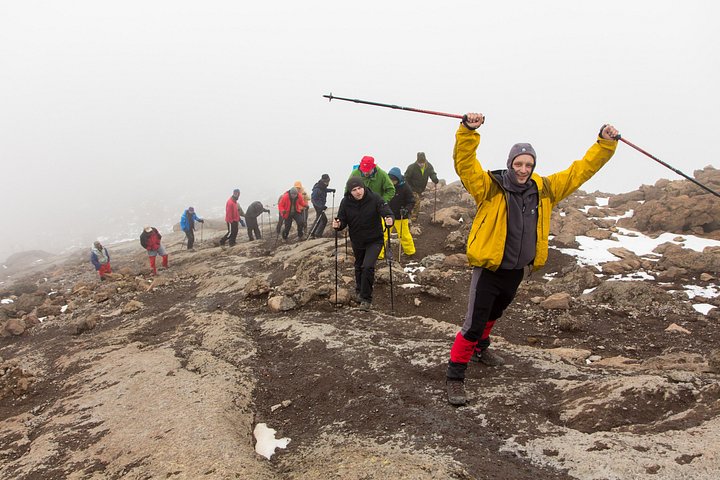
Mount Kilimanjaro rises to 5,895 metres at Uhuru Peak and is the highest mountain in Africa. It is also one of the few giant peaks in the world that a fit, determined walker can climb without ropes or technical skills, which is why tens of thousands of people attempt it every year. The mountain is a dormant volcano made of three cones, Kibo, Mawenzi and Shira, and the summit is on the rim of Kibo's crater. Almost every climb starts and ends near the town of Moshi, which is where this guide begins.
What a climb actually involves
A climb is a multi-day guided trek, not a single hike. National park rules require you to go with a licensed guide, and your operator provides a team that usually includes a lead guide, assistant guides, a cook and porters who carry tents, food and your main bag. You walk with a daypack, sleep in tents or, on the Marangu route, in huts, and eat meals prepared on the mountain. The days are long but steady, and the hardest part is summit night, when you start around midnight and walk for many hours in the cold and dark to reach the top at sunrise.
Altitude is the real challenge
The mountain is not technically difficult, but the air at 5,000 metres holds far less oxygen than at sea level, and altitude sickness affects fit and unfit climbers alike. The best protection is time. Routes that are longer and climb high but sleep low give your body a better chance to adapt, which is why seven or eight days is generally recommended over five or six. Walk slowly, drink plenty of water and tell your guide at once if you get a headache, nausea or dizziness. Talk to a doctor before you go about medication and any health concerns.
Choosing a route
The main routes are Machame, Lemosho, Marangu, Rongai, Umbwe and the Northern Circuit, and each has a different character. Machame is the most popular and scenic, Lemosho is slower and quieter, Marangu is the only hut route, Rongai approaches from the dry north, Umbwe is steep and direct, and the Northern Circuit is the longest and quietest. Our route guide compares them in detail. For a first climb, most people do well on Lemosho, Machame with seven days or the Northern Circuit.
How many days to allow
Plan on at least eight to nine days in Tanzania for a seven-day climb, counting a night in Moshi before and after. Add more if you want a safari, a village stay or a rest day. Fly out the day after you come down, not the same day, in case the descent runs late. If you want to test your legs before the big climb, try a day hike on the Arusha pages or a trek on Mount Meru, which is also a good acclimatization step.
What it costs and what is included
Prices vary widely, and the cheapest offers often leave out essentials. Ask whether park fees, camping or hut fees, rescue fees, transfers, meals, tents, mattresses and crew wages are included. Ask how many porters and guides travel with your group, how porters are paid and treated, and what safety equipment the crew carries, such as a pulse oximeter and emergency oxygen. Tips for the crew are customary and are usually handed over at the end.
Booking and timing
Book several months ahead for the busy seasons, January to early March and June to October, which have the best weather. The rainy months, April, May and November, are quieter and cheaper but wetter. Private climbs, listed here as their own entries, let you choose exact dates and a personal pace at a higher price.
Your base in Moshi
Most climbers sleep in Moshi the night before the trek, meet their guide, sort kit and hire anything they have missed. Our hotel pages list places in Moshi and near the Marangu and Machame gates. Book an airport transfer in advance if you land late, and keep a spare day in your itinerary for delays.
Before you go
Train with long hill walks and stairs carrying a daypack for several months. Break in your boots, pack in layers, and bring a warm sleeping bag, gloves, a hat and a head torch. Check current entry rules, vaccination advice and travel insurance that covers trekking to 6,000 metres. Then take it slowly, because the Swahili phrase pole pole, slowly slowly, is the best advice anyone will give you on the mountain.