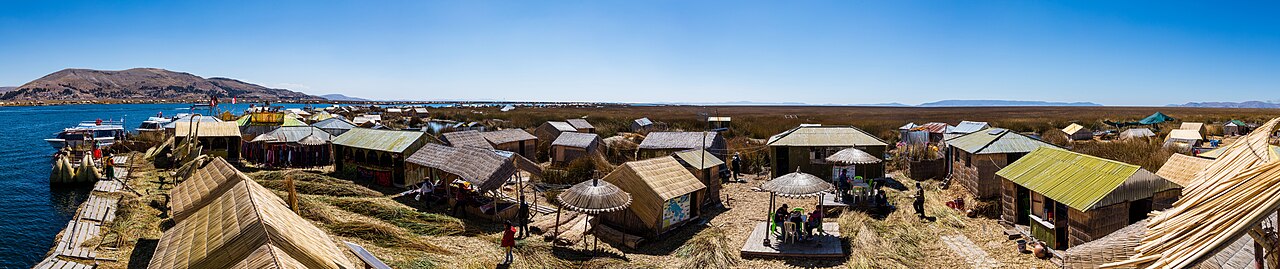
Puno's tour offices offer dozens of island trips, and many look similar on paper. This guide explains the real differences, so you can pick the one that fits your time, energy and curiosity. In short, the Uros are the quick introduction, Taquile and Amantani are the real farming islands and the peninsulas and kayak routes are for travelers who want quiet.
The half-day Uros trip
This is the simplest option, about three hours from the harbor. You see one or two reed islands, learn how they are built and ride a reed boat. It suits travelers with limited time, small children or little energy, and it works well before an afternoon at Sillustani. The trade-off is that the busiest islands feel commercial.
The full-day Uros and Taquile tour
The most popular choice, it adds Taquile, a Quechua farming island with textiles, terraces and views. The day is long, with several hours on the water, a climb to the plaza and a trout lunch. Speedboats are quicker, while slower boats are cheaper and give a longer ride. It is a good option if you only have one day for the lake and want to see more than the reed islands.
The two-day Amantani homestay
Most travelers who have the time say this is the best way to see the lake. The trip includes the Uros on the first morning, an afternoon and night with a family on Amantani, a sunset climb and an evening of music, then Taquile on the second day. It costs more in time, but gives a much richer sense of island life. Expect cold nights, simple rooms and home-cooked meals.
Quieter alternatives
If you dislike crowds, consider Luquina, a village stay on the shore with smaller groups, or Llachon and the Capachica peninsula, which pioneered community tourism with beaches, terraces and family-run lunches. Both feel less staged than the main circuit. An overnight on the Uros Islands themselves, after the day boats leave, is another way to see them in a different light.
Active options
Kayaking to the Uros takes you through reed channels in a small group and avoids the motorboat crowds. Sunrise and sunset paddles are especially atmospheric. Cycling along the shore toward Chucuito offers a land-based perspective. Both need moderate fitness and some tolerance for the altitude.
Speedboat or slow boat
Slower boats are cheaper and give time to relax and watch the lake, but the crossing to Taquile can take about three hours each way. Speedboats cut the time and leave more minutes on the island, but they are noisier and wetter, and you may feel the wind. Choose according to your tolerance for long boat rides, and ask whether the price includes entry fees and lunch.
Choosing a good operator
Look for small groups, English-speaking guides if you need them, clear information on what is included and respect for the communities. Be wary of very cheap tours that cram many stops into one day, and ask how homestay families are chosen, since fair rotation spreads income. Read recent traveler reviews and confirm pickup times the night before.
Etiquette
Ask before photographing people, carry small soles and buy crafts directly. Bring a small gift for homestay hosts if your guide suggests it, and follow local customs, such as not walking against the flow around sacred sites. Leave no trash and bring a refillable bottle to reduce plastic. The islands depend on visitors who treat them as homes, not stages.
A simple decision guide
With a few hours, choose the half-day Uros trip. With one day, choose Uros and Taquile. With two days and a taste for simple living, choose the Amantani homestay. If you dislike crowds, choose Luquina, Llachon or a kayak outing. If you are traveling with young children or have trouble with altitude, stay with the half-day Uros trip and add Sillustani. If you have already seen the Uros, go straight to Taquile or Amantani. And if you can spare three days, combine a homestay with a quieter peninsula for a more complete picture of life on the lake.
A note on timing
Start early, since mornings are calmer on the water and the light is clearer for photographs. Confirm pickup times the night before, bring cash and carry layers. If weather or wind affects crossings, operators may adjust the route, so keep your plans flexible and your sense of humor close at hand.