Mumbai is easiest to love at street level. The big sights are scattered and the traffic is heavy, but the old city is compact, and its richest layers lie in a handful of neighbourhoods that reward a slow walk with a good guide. This guide explains how to choose between the heritage walks and rides on offer, how they fit together and how to get the most from each one.
Start with the geography
The original Bombay was a cluster of seven islands, later joined by reclamation, and the oldest and most walkable parts lie at the southern tip. Colaba, the southernmost district, was a separate island linked by a causeway. North of it, the Fort district grew around the old British fort and became the commercial and civic heart, and beside it Kala Ghoda holds the museums and galleries. Marine Drive curves along the western shore, and on the ridge of Malabar Hill, further north, lies the ancient Banganga Tank. Each area has its own character, and each has its own walk.
Colaba: churches, cinemas and communities
The Colaba heritage walk is the best place to begin, especially if you are staying nearby. It leaves the Causeway’s crowds behind and takes you through quiet streets with the Afghan Church, the Cathedral of the Holy Name, the Parsi housing colony of Cusrow Baug and the curved Art Deco front of the Regal Cinema. The guide explains the fishing-village origins of the district, the British garrison and the many communities that settled here. It takes about three hours and is best done in the morning in the cooler months from November to February.
Fort and Kala Ghoda: the Victorian city
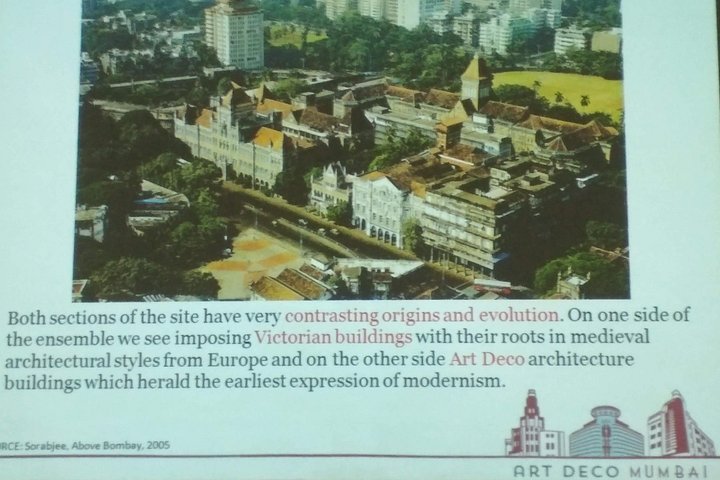
The Fort district heritage walk covers the great civic buildings of the nineteenth century, including the Gothic railway terminus and the university and court buildings, and shows how Bombay became a major port and commercial city. The Art Deco walk goes deeper on the 1930s buildings along Marine Drive and Oval Maidan, which together make up one of the largest collections of Art Deco architecture in the world. Together these walks give a vivid account of the city’s architecture, and they are a good use of an early morning before the heat and the traffic build.
By bicycle at dawn
If you want to cover more ground, the South Mumbai heritage bicycle tour is a lovely alternative. Roads are almost empty in the first hours of daylight, the air is cooler and the light is soft, and the ride links Colaba, Fort and the waterfront in about three hours. It is easy and flat, and it gives you the layout of the south of the city in one go. It is a particularly good choice for active travellers and for anyone with jet lag who is awake early anyway.
Banganga: a medieval corner on Malabar Hill
For a very different atmosphere, take a taxi to Walkeshwar and the Banganga Tank. The sacred water tank, ringed by temples and stone steps, is one of the oldest places in Mumbai, and the walk around it is quiet and absorbing. Go early or near sunset, dress modestly, wear shoes you can slip off and be respectful of people at prayer. Combine it with the Hanging Gardens and the Jain temple on the hill, then continue to Haji Ali Dargah and Marine Drive for sunset.
Jewish heritage and other communities
Mumbai’s story is also a story of communities. The Jewish heritage tour introduces the Bene Israel and Baghdadi Jews, visits historic synagogues where access allows, and explains the legacy of the Sassoon family. It combines well with a Parsi meal, which offers a similar view of another small community that shaped the city. Together these experiences show why Mumbai has long been one of Asia’s great cosmopolitan ports.
Practical tips
Book morning departures, because the light is better, the temperature is lower and the streets are quieter. The best season is November to February, and you should avoid the heaviest monsoon rain from June to September. Wear comfortable shoes and light clothes, carry water and a hat, and dress modestly for religious sites. Keep valuables out of sight and stay alert at crossings. Many tours run in the early morning, so plan to eat afterwards at one of the old Irani cafés. Stops can change with the guide and with access on the day, so confirm the route when you book.
Putting it together
A good three-day plan might pair a Colaba walk with an Elephanta ferry on the first day, a bicycle ride and the Fort walk on the second, and Banganga, Haji Ali and a Parsi dinner on the third. For a shorter stay, choose one walking tour and one ride, and spend the rest of your time at the Gateway of India, the CSMVS museum and Marine Drive. Whichever you choose, the heritage walks are the best way to turn Mumbai from a blur of traffic into a city with stories.