Nagasaki's cooking is the product of centuries as Japan's window on the world. Chinese, Portuguese and Dutch influences blend with local seafood, and the results are unlike food elsewhere in the country. The covered shopping arcades of the city centre, such as Hamanomachi, are the best places to find it, and a walking food tour through them introduces the classics with a local guide. The signature dishes are champon, a rich noodle soup, and sara udon, crisp noodles with a thick vegetable sauce. Castella, the golden sponge cake introduced by Portuguese traders, and kakuni manju, a bun filled with braised pork, round out the sweet and savoury sides.
A good tour starts in a shopping arcade, where family shops have sold sweets, fish paste and pickles for generations. The guide explains what each speciality is, and you taste samples. Castella shops are a highlight: the cake is moist and dense, sweet with a caramelised base, and best fresh from the oven or paired with green tea.
Main dishes follow. Champon is typically a bowl of thick noodles in a milky pork and seafood broth, with cabbage, squid and kamaboko. Sara udon is the crisp version, topped with a glossy sauce. Another local favourite is Turkish rice, a plate of pilaf, pork cutlet and napolitan spaghetti that is unique to Nagasaki. Ask the guide for tips on the best places to return to.
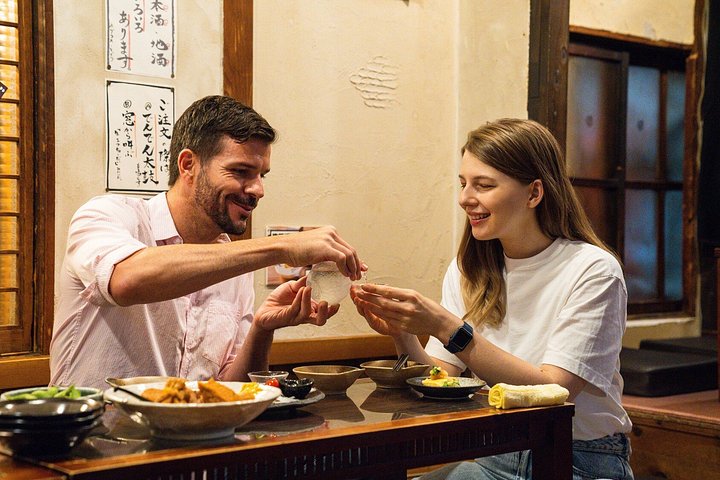
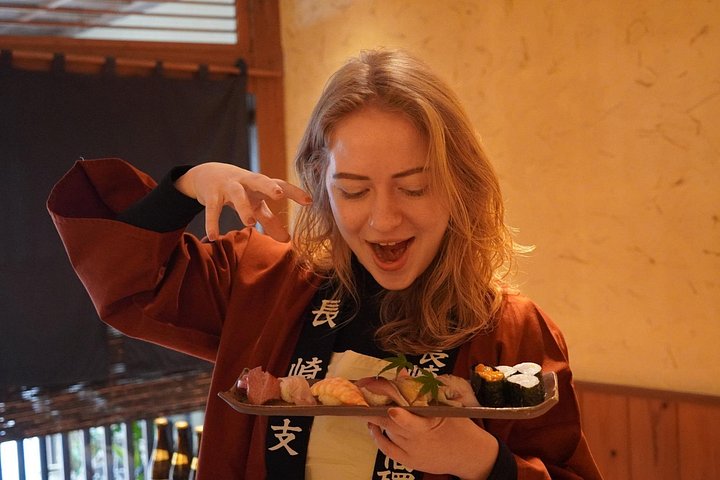
Tours typically run for about three hours and finish with a seated meal. Wear comfortable shoes and bring an appetite. If you have dietary restrictions, such as shellfish allergies or vegetarian diets, let the operator know in advance, as local dishes rely on seafood and pork stock. The arcades are covered, so rainy days do not spoil the plan. Afterwards, wander the nearby streets or take a tram to Dejima.
Other dishes are worth looking for. Shippoku cuisine is a banquet style that arranges Japanese, Chinese and western dishes on a shared table, once served to foreign guests and still available at traditional restaurants. Kakuni manju is a soft white bun filled with braised pork, sold from stalls and takeaway counters, and perfect for walking. Kasutera comes in several varieties, including versions flavoured with green tea and chocolate.
Nagasaki also has excellent seafood, from horse mackerel to sea bream, plus Goto udon, a thin hand-pulled noodle made with camellia oil. Ask the guide about seasonal specials such as oysters from nearby bays in winter. If you visit a castella shop, buy a small box to take home, because the cake keeps well and makes a good gift.
Use the tour as a map for your own meals later. Ask the guide to recommend a favourite champon shop, a quiet cafe for castella and tea, and a good place for an evening drink, and write down names, since signs are often in Japanese. Hamanomachi and the arcades also hold department stores, bookshops and bakeries, so allow a little free time before or after.
The tour suits all ages, though very young children may tire of the walking. If you are travelling with a group that includes picky eaters, mention it in advance. Prices are mid-range, and the experience often replaces a meal, so skip a big breakfast beforehand.
What to expect
The experience
A guided walking tasting through the city's covered shopping arcades.
Best time
Late morning to lunch, when shops are open and busy.
How long
About three hours.
Tips
Come hungry, flag allergies in advance and keep small cash for extras.
Quick picks
- Best for
- Travellers who want to understand Nagasaki through its food.
- Families
- Good for children who enjoy noodles and cake.
- Couples
- A relaxed, tasty shared experience.
- Pair with
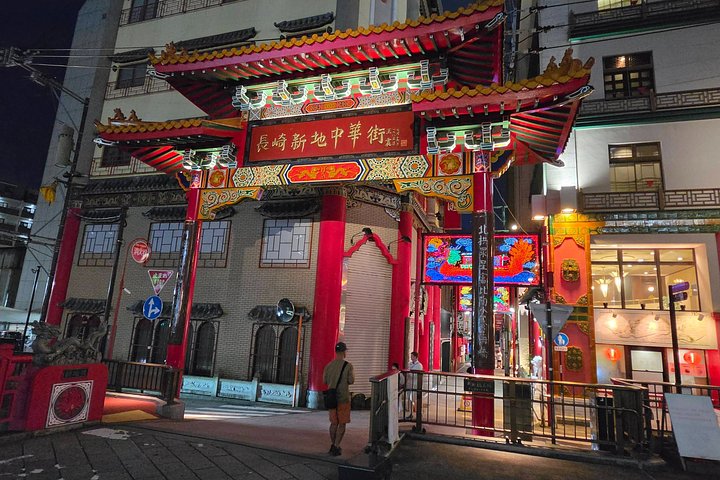
- Chinatown, Dejima and the tram.
- Time needed
- Three hours.
Good questions
What is champon?+
A noodle soup of pork, seafood and vegetables created in Nagasaki.
What is castella?+
A moist sponge cake introduced by Portuguese traders.
Is the tour indoors?+
Mostly, in covered arcades.
Can vegetarians join?+
Options are limited; ask the operator.
Where does it start?+
In the city centre arcades; details are given at booking.