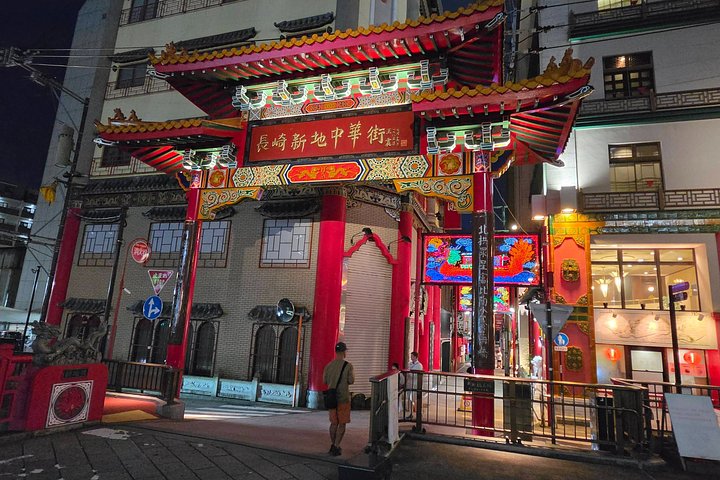
Shinchi Chinatown grew from a Chinese trading community that settled near the harbour in the seventeenth century. Today it is a lively quarter of a few streets lined with restaurants, shops, sweets stalls and gates in traditional red, and it is counted with Yokohama and Kobe as one of Japan's three Chinatowns. It is the best place to try Nagasaki's most famous noodle dishes. Food is the draw, and a guided food tour with an optional visit to the nearby Confucius Shrine helps first-timers choose. Expect pork buns, sesame dumplings, fried snacks and hearty bowls of champon, a noodle soup of seafood, pork and vegetables created to feed Chinese students, and sara udon, thin crispy noodles under a thick sauce.
The street layout is a cross of two main lanes, with smaller alleys full of shops and kitchens. During the Lantern Festival around the Chinese New Year period, thousands of lanterns turn the streets into a glowing display, with parades, dragon dances and performances. Outside festival time the quarter is calmer, but still atmospheric in the evening.
A food tour is a good way to taste widely. Guides explain how Chinese cooking merged with local ingredients and show you family-run counters that are easy to miss. Tours usually run for around two to three hours and end with a sit-down dish. Say if you have allergies; seafood, pork and wheat are everywhere.
The Confucius Shrine and its small museum stand a short walk away and show a different side of the Chinese community. The area is within walking distance of Dejima, Megane Bridge and the shopping arcades, so it fits into a relaxed day of wandering. Come hungry, carry some cash for stalls that do not take cards, and visit at lunchtime or early evening when the shops are busiest.
Do not miss the story behind the dishes. Champon was reportedly invented in the late nineteenth century by a restaurant owner in the neighbourhood who wanted to feed hungry Chinese students cheaply, using whatever seafood and pork was on hand. Sara udon grew from the same kitchens. Today restaurants compete on broth and sauces, and locals have strong opinions about which is best.
Look for chalkboards with the daily specials and try small portions in several places rather than a large meal in one. Around the quarter you can also find shops selling Chinese tea, dried goods and traditional sweets, as well as the famous almond-flavoured mooncakes. The red and gold gates glow in the evening, so plan at least one walk after dark.
Timing and practicalities
Restaurants tend to be busiest at noon and between six and eight in the evening, so arriving slightly before or after those peaks gets you a seat faster. Many places close one day a week, often Monday or Tuesday, and some close between lunch and dinner. If you want to attend the Lantern Festival, expect crowds, book accommodation early and plan to arrive in the afternoon to see the lanterns come on at dusk.
Public toilets are near the main gates. Credit cards are accepted in larger restaurants, but cash is helpful at stalls. Bring a small bag for takeaway sweets and keep the streets clear for the parades.
What to expect
The experience
A guided food walk through Chinatown with an optional Confucius Shrine visit, or an independent stroll and meal.
Best time
Lunch or early evening; the Lantern Festival season for spectacle.
How long
Two to three hours.
Tips
Bring some cash, share dishes and mention allergies early.
Quick picks
- Best for
- Food lovers who want to taste champon and sara udon.
- Families
- Good for children, with lively streets and easy snacks.
- Couples
- A fun, atmospheric dinner stop, especially at lantern time.
- Pair with
- Dejima, Megane Bridge and Mount Inasa.
- Time needed
- Two to three hours.
Good questions
What should I eat in Chinatown?+
Champon, sara udon, pork buns and sesame dumplings are the classics.
When is the Lantern Festival?+
It is held around the Chinese New Year period in late winter. Check dates each year.
Is the quarter big?+
No, it is compact and easy to walk in under an hour without eating.
Is a tour worth it?+
A tour helps you taste several dishes and learn the history.
Where is it?+
Near Shinchi-Chukagai tram stop, a short walk from the harbour.