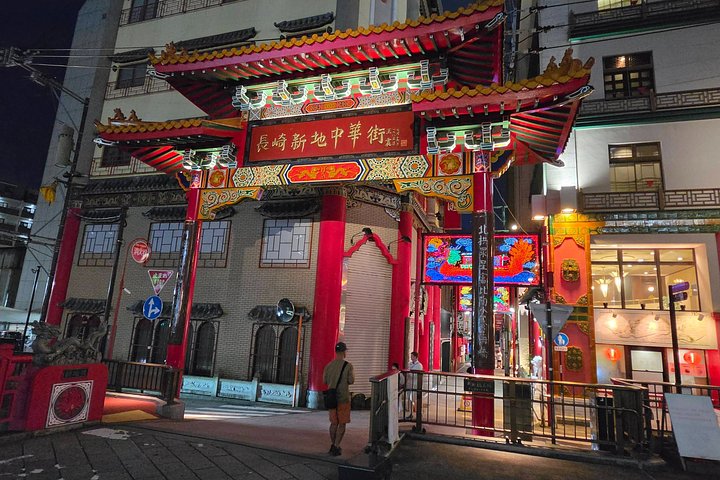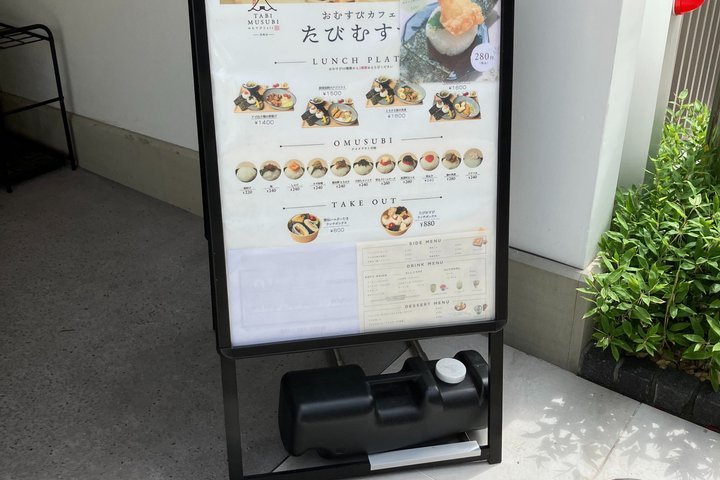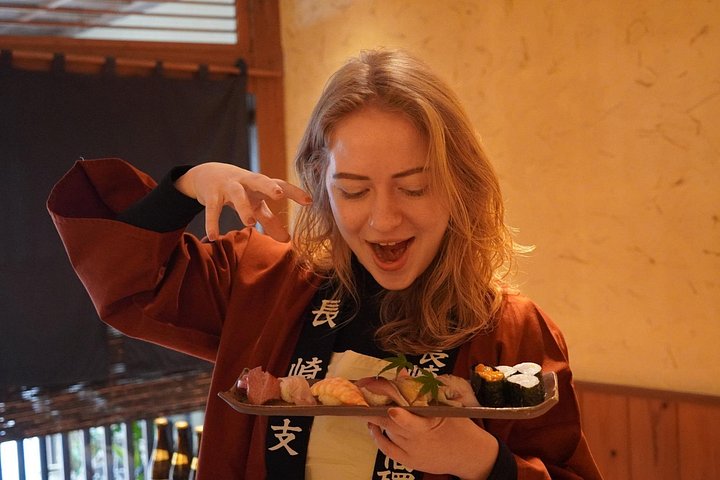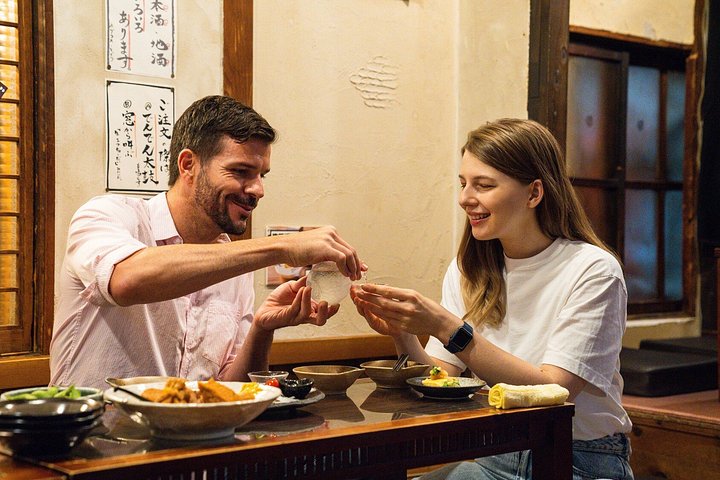
After dark, Nagasaki's entertainment districts fill with small bars and izakaya, where regulars drink shochu and share plates of grilled fish, pork and local vegetables. A hopping tour takes you through the back streets with a guide, stopping at several venues for a taste of each. It is a friendly way to eat widely and meet locals. You choose the area, such as the downtown Shianbashi district, and the guide arranges a mix of venues, from standing bars to cosy counters. Nagasaki's food is a blend of Japanese, Chinese and Portuguese influences, and the dishes reflect that history.
Expect to try sashimi, tempura, grilled skewers and regional specialities such as kakuni, a braised pork belly that appears in many izakaya. The guide helps you order, explains etiquette and recommends drinks, including sake, shochu and local beers. Non-drinkers can choose tea or soft drinks.
Tours usually last around three hours and include several stops. Group sizes are small, so conversation is easy. Many venues are tiny, with limited seating, and cash may be required for extras. Tell the guide about dietary needs in advance, because seafood, pork and soy are everywhere.
Come hungry and wear comfortable shoes. Evenings are best for the atmosphere, and you will end in the heart of the city with a good sense of where to return. Because Nagasaki's nightlife is concentrated, it is easy to continue on your own afterwards, or to walk to Mount Inasa the next evening. Book early in busy seasons.
The scene is part of what makes Nagasaki feel different from other Japanese cities. Because of its long history of trade, bars here serve dishes with Chinese, Portuguese and Dutch touches, and it is common to find a bar that specialises in just one thing, such as oden, yakitori or local fish. Guides know which owners welcome visitors and which counters have English menus. A good tour also teaches izakaya habits: order a first drink together, share plates, and expect a small table charge that is part of the culture.
Standing bars are cheap and lively, while cosy counters seat only six or eight, so booking a guide saves queuing. If you are visiting in summer, look for beer gardens on rooftops, and in winter for hot pot. Finish with a late-night bowl of ramen or champon if you still have room, then ride a tram or walk back to your hotel.
A few etiquette tips will help. Do not tip, as service is included and tipping can confuse staff. Say kampai before the first sip, pour drinks for others before your own, and keep voices moderate in the small rooms. If you cannot finish a dish, say so politely rather than leaving a large amount.
Public transport ends earlier than in Tokyo, so check the last tram and train times, or plan a short taxi ride back. If you have a late-night craving, convenience stores and ramen counters are open. The tour finishes in the central district, close to many hotels, which makes the walk home simple.
Ask your guide about the history of the street you are on. Shianbashi and the nearby Hamanomachi district have been entertainment quarters since the Edo period, when ships' crews and traders from many countries looked for food and company after weeks at sea. Many shopfronts and recipes still carry traces of that international past, and the guide can often point out a tiny bar that has stayed in one family for generations.
What to expect
The experience
A small-group evening walk through several local bars and eateries with a guide.
Best time
Evenings, when the streets are lively.
How long
About three hours.
Tips
Share dietary needs in advance, bring cash and pace your drinks.
Quick picks
- Best for
- Adults who enjoy local food and a social night out.
- Families
- Better for adults and older teens.
- Couples
- A fun, shared evening.
- Pair with
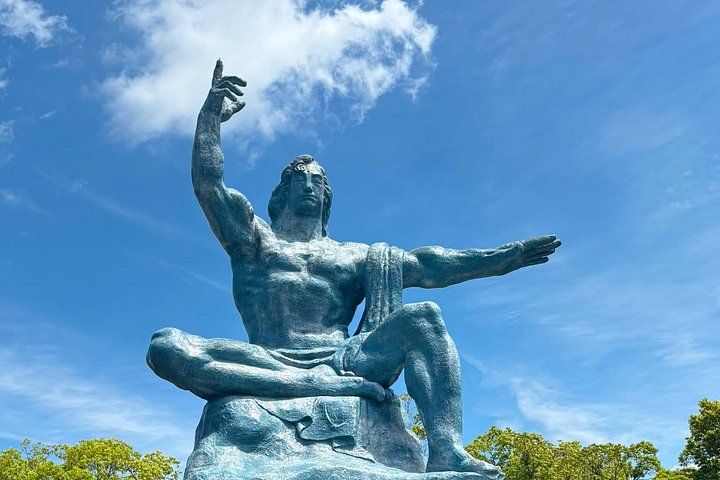
- A morning at the Peace Park or an evening view at Mount Inasa.
- Time needed
- An evening.
Good questions
What will I eat?+
A mix of local small plates, seafood and regional dishes.
Can I choose the area?+
Yes, you can usually pick the district.
Is alcohol required?+
No, soft drinks and tea are available.
Are dietary needs handled?+
Tell the guide in advance; seafood and pork are common.
How long is it?+
Around three hours.