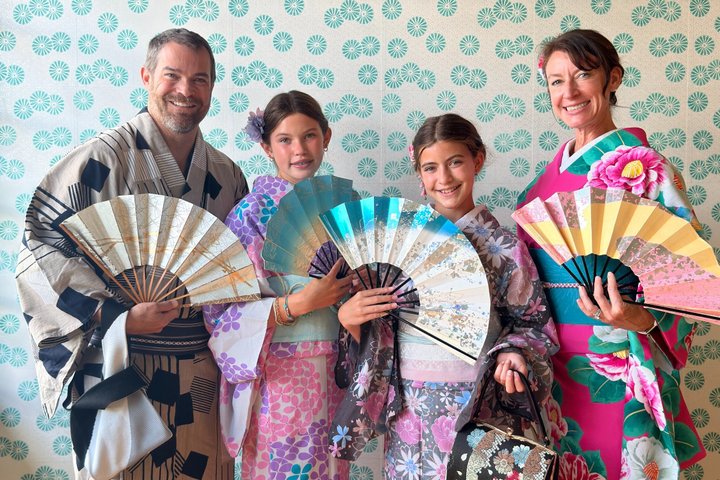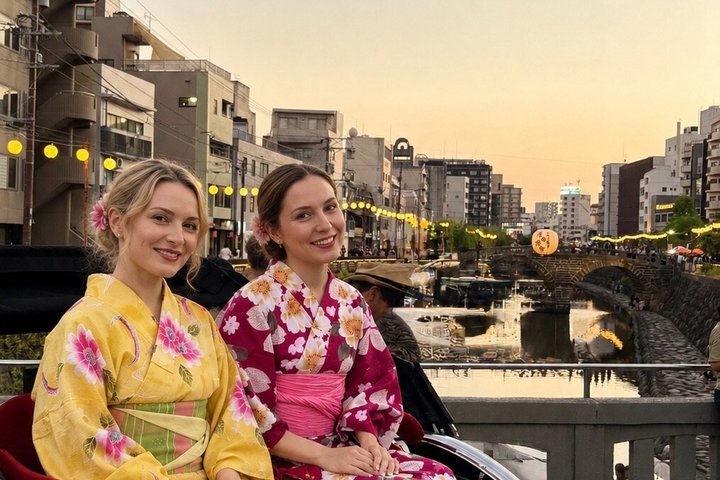
Megane-bashi, the Spectacles Bridge, spans the Nakashima River in central Nagasaki and is named for the pair of arches that reflect in the water to form eyeglasses. It was built in the 1630s by a Chinese monk and is often described as the oldest stone arch bridge in Japan. Look for the heart-shaped stones set in the walls, a favourite photo spot for couples. The river path continues past a series of stone bridges and cafes, linking the bridge with temples and traditional streets. Walking here is relaxed and photogenic, and the area is a favourite for a kimono experience, in which a studio dresses you and photographs you on the bridge.
The best way to see the bridge is from the riverbank paths on both sides. In calm water the double arch reflects perfectly. The river has been rebuilt after floods in the past, and the bridge itself has been repaired and reinforced. Nearby, smaller bridges cross in succession, so a walk along the banks takes you under several arches in under half an hour.
Beyond the water, the streets feature Buddhist temples, the Teramachi temple district and traditional shops. Cafes offer tea and Nagasaki sweets, and in the evening lights give the water a warm glow. A kimono photo experience arranges dressing, hair and a short guided photo walk, and works best in dry weather. Book in advance in spring and autumn.
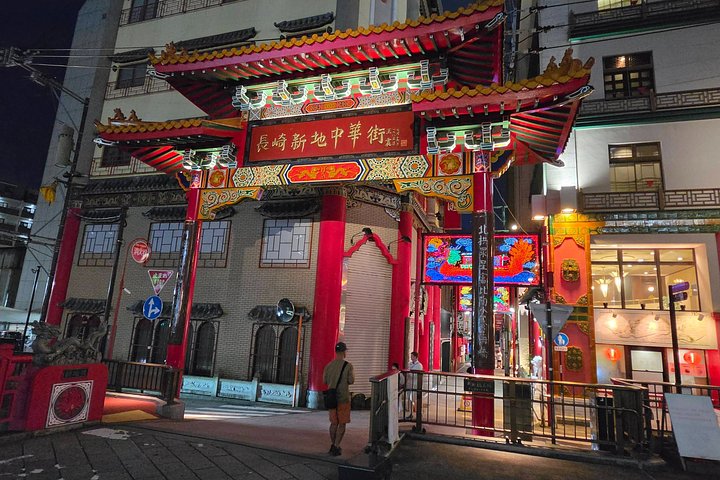
Megane Bridge is a short walk from Chinatown, Dejima and the shopping arcades, so it is easy to combine. Plan about an hour for a stroll and photographs, more with a tea stop. Morning light is gentle, and the area is calmer on weekdays. If the river is high after heavy rain, enjoy the view from the bank and take care on the stone steps.
History enriches the stroll. The bridge was built by Mokusu Nyojo, a Chinese Zen monk who served as abbot of the Kofukuji temple nearby, one of the Obaku-style Zen temples that reflect the town's Chinese heritage. In 1982 a great flood damaged the bridge and several others on the river, and they were restored with the original stones where possible.
Along the river you will also find the Teramachi district, where many temples line the hillside, and the Sofukuji temple with its vivid red gate. A walk of an hour or two links all of these and ends close to the shopping arcades for lunch or tea. Spring cherry blossoms and autumn leaves add colour to the water.
To get the best photographs, try a few different angles. The classic view is from the downstream bank on a calm morning, when the water is still and the reflection forms the full pair of circles. Another perspective is from the steps alongside the bridge, where you can see the stone patterns up close. In the evening the bridge is lit and the reflection glows, making it a lovely place for a quiet walk after dinner.
Take care after rain, when steps near the water become slippery, and if the river is high, watch for closures. Cafes with riverside terraces are good for a break, and the nearby arcade offers shelter if the weather turns.
What to expect
The experience
A free riverside walk with an optional kimono dressing and photo session at the bridge.
Best time
Morning for soft light and fewer people.
How long
One to two hours.
Tips
Take care on wet steps, book kimono time in advance and bring a camera.
Quick picks
- Best for
- Photographers and couples who enjoy a gentle walk.
- Families
- Easy for children, with short distances.
- Couples
- Look for the heart-shaped stones.
- Pair with
- Chinatown, Dejima and Teramachi temples.
- Time needed
- One to two hours.
Good questions
Why is it called Spectacles Bridge?+
The two arches and their reflection look like a pair of glasses.
Is it really the oldest stone arch bridge?+
It is widely described as the oldest in Japan.
Where are the heart-shaped stones?+
Set in the bridge walls; look closely from the bank.
Can I wear a kimono there?+
Yes, studios offer dressing and photo sessions.
Is the area free to visit?+
Yes, the bridge and river path are free.