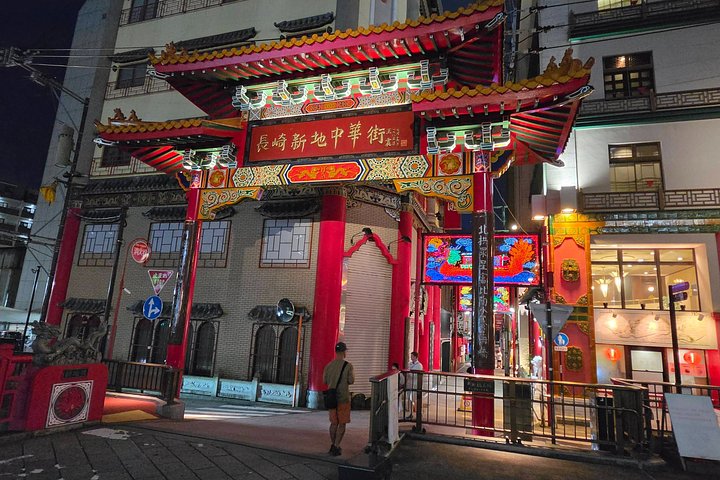
Nagasaki is small enough that almost anywhere central works, but each area has its own character and trade-offs. The city sits in a narrow valley running down to the harbour, with trams along the valley floor and neighbourhoods climbing the surrounding hills. Choosing a base comes down to what you value most: train access, food, views or quiet.
Near Nagasaki Station
The station area is the practical choice for travellers on a tight schedule. It is the hub for trams, regional trains, airport buses and highway buses, so arrivals and departures are simple. Hotel New Nagasaki and the JR Kyushu Hotel are both close to the station, and the Twenty-Six Martyrs Memorial is a short walk uphill. The surrounding streets have plenty of restaurants and convenience stores, though the area feels more functional than atmospheric. It is best for early trains, day trips to Sasebo and Huis Ten Bosch, and shorter stays.
Shinchi Chinatown and the harbour
If food is your priority, stay near Chinatown. The Dormy Inn Nagasaki Shinchi Chinatown Hot Spring puts you beside the noodle shops and lantern streets, a short walk from Dejima and Megane Bridge, with a public bath to ease tired legs. The tram stop nearby links you to the Peace Park and Glover Garden. The area is lively in the evening, so request a higher floor if you prefer a quiet night.
The hillside foreign settlement
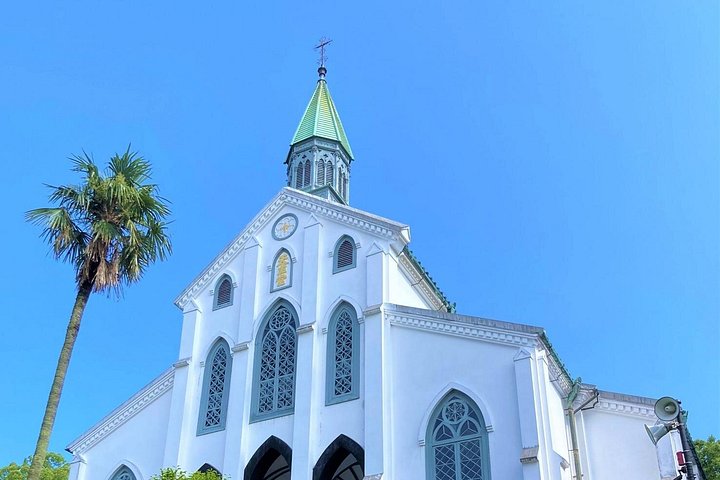
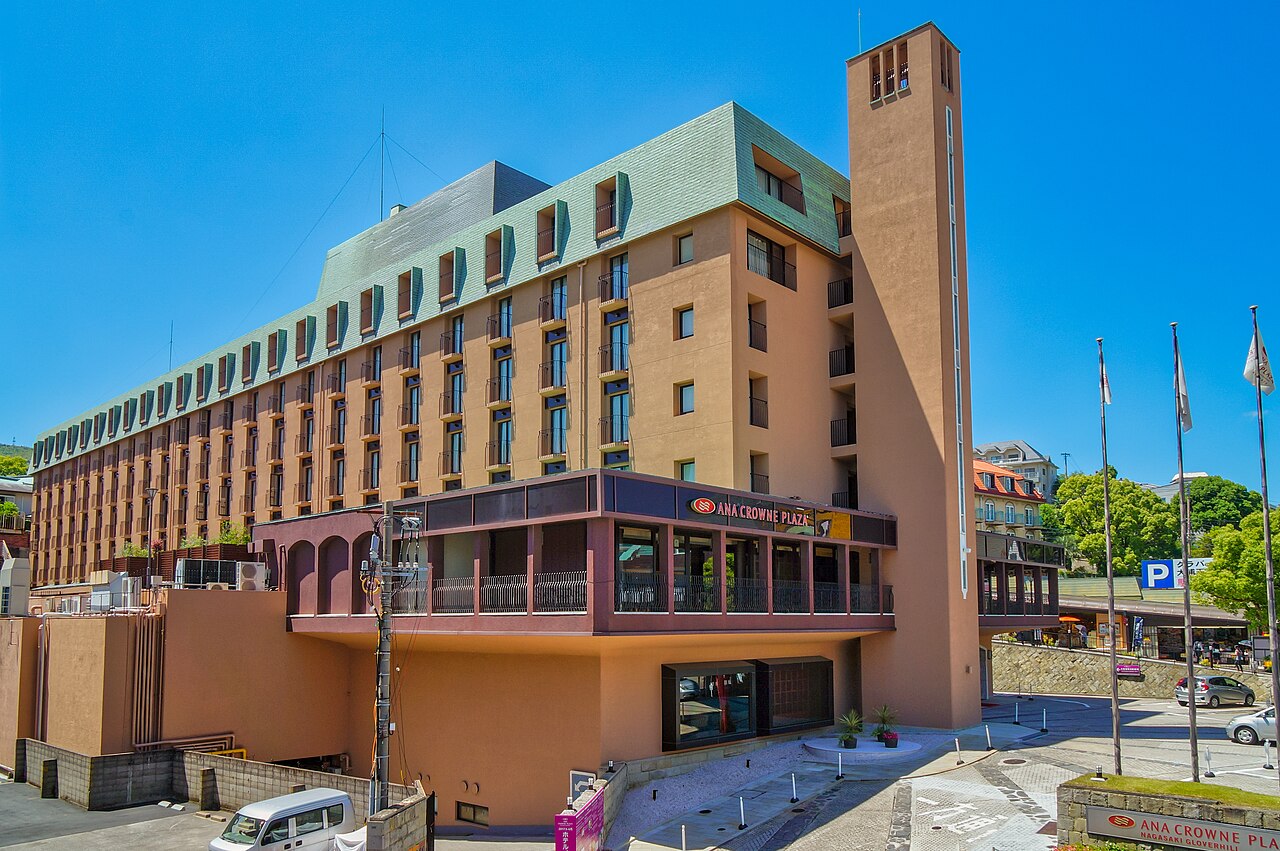
For views and a sense of history, choose the slopes of Minami-Yamate, where the Crowne Plaza ANA Nagasaki Gloverhill looks over the harbour and sits a short walk from Glover Garden and Oura Church. The streets are quiet, the scenery excellent and sunrise over the water memorable. The trade-off is hills, so you will rely on short taxi rides or a walk down to the tram stop, and heavy luggage can be a nuisance.
Near the Peace Park
There are fewer hotels in Urakami, but staying near the Peace Park suits travellers who want to visit early before groups arrive. Most visitors prefer to stay downtown and ride the tram north in the morning, which is quick and cheap.
Unzen for a hot spring night
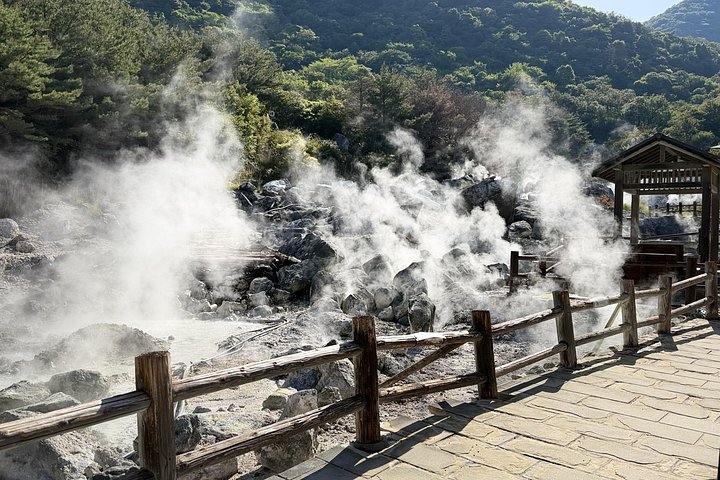
For a change of pace, spend a night or two in Unzen, in the mountains on the Shimabara Peninsula. Unzen Fukudaya offers a classic ryokan stay with mineral baths and multi-course dinners, Hoshino Resorts KAI Unzen is the more refined luxury choice, and the Unzen Kyushu Hotel is a relaxed resort-style option with western rooms. The journey takes around two hours from the city, so treat it as a separate stage of your trip rather than a quick detour.
Sasebo for Huis Ten Bosch and the islands
If your focus is the north of the prefecture, the Toyoko Inn Sasebo Ekimae is a simple budget stay by Sasebo Station, convenient for the theme park, the shopping arcade and boat trips among the islands. It is outside Nagasaki city, so it works best as a base for a separate leg.
Budget and booking tips
Prices rise during Golden Week, the summer holidays, the Lantern Festival and the autumn festival season, so reserve early for those dates. Weekdays are cheaper than weekends in most hotels, and booking a room with breakfast can save time if you are catching an early tram. Japanese hotel rooms are compact, so families should look for larger room types, and anyone with big suitcases should ask about luggage forwarding. If you are visiting cruise-ship ports such as Nagasaki and Sasebo, check ship schedules and book near the station.
Our suggestion
For a first visit of two or three nights, base yourself near the station or Chinatown for convenience and food, and consider one splurge night on the hillside or in Unzen. Travellers with only one night will do best near the station, where early starts and late returns are easiest.
Choosing by traveller type
Couples tend to prefer the hillside for views and quiet or Unzen for a hot spring night, families usually do best near the station where trams, shops and trains are all close, and solo travellers will find the station and Chinatown hotels easy and sociable. Travellers who plan to eat out every night should lean toward Chinatown and the downtown arcades, since late dinners are easier to find there. Anyone arriving by cruise ship should check the distance between the pier and the hotel, and think about a transfer. Light sleepers should ask for rooms away from tram lines, and those who need step-free access should confirm lifts and entrances, because several older buildings have steps and the city's slopes make some routes tiring.
Facilities worth checking
Public baths are common in Japanese city hotels and add real comfort after a day of walking, but not every property has one. Breakfast quality varies, so compare whether local dishes are included. Coin laundry is useful on longer trips, and luggage forwarding services let you send suitcases ahead to the next city, which is handy if you are heading to Fukuoka or Hiroshima by train.