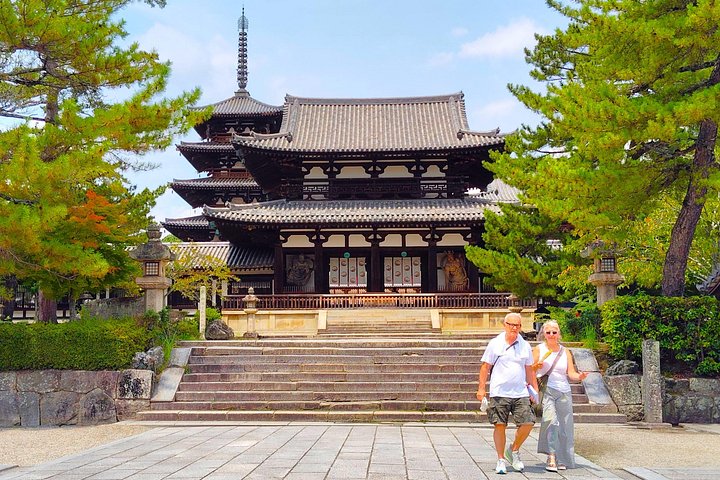
Horyu-ji is one of Japan's most important temples and, according to the Nara tourism pages, the oldest existing wooden structure in the world. It was founded by Prince Shotoku and completed around 607, which makes it older than Nara itself, and its buildings have survived a thousand years of earthquakes and storms. The temple stands in the quiet village of Ikaruga, west of the city, and is split into two precincts. The Western Precinct, the Saiin, holds the Kondo, or Golden Hall, and the five-storied pagoda, two of the oldest wooden buildings anywhere. The Eastern Precinct, the Toin, is built around the octagonal Yumedono, or Hall of Dreams. The Great Treasure Hall displays sculpture and artifacts, including the Baekje Kannon, a tall and slender statue of great beauty, and the Tamamushi shrine. The temple belongs to its own World Heritage listing, Buddhist Monuments in the Horyu-ji Area, separate from the monuments in Nara city.
What to see
The Western Precinct is the heart of the visit, and walking its covered cloister, with the Kondo and pagoda inside, is a rare chance to be near buildings from the dawn of Japanese Buddhism. Look at the pillars, which swell gently in the middle, and at the carved details that echo the architecture of the Asian mainland. The Great Treasure Hall displays the temple's sculpture, and the Baekje Kannon is the star. Then walk east along the approach to the Yumedono and its quiet courtyard.
The guided option
The booking link here is for a guided Horyu-ji tour, a worthwhile choice because the temple is spread out and its labels are brief. A guide can explain the early Buddhist symbolism and the story of the buildings' survival and keep you moving between the two precincts. Confirm the meeting point, the language and whether the temple entry fee is included before booking.
Planning the visit
From Nara, take the JR line to Horyuji Station, which is a short ride of around a quarter of an hour, then either walk about twenty minutes or take a short bus ride to the temple gate. Hours and admission vary by season and the temple shortens its day from early November, so check its pages before you travel and aim to arrive in the morning.
Allow two to three hours for both precincts and the treasure hall. The grounds are flat but large, with gravel paths, and there is little shade in summer, so bring water. Pair it with a lunch in Ikaruga village before returning to Nara.
What to expect
The experience
A self-guided or guided walk through two precincts, the Western Precinct with the Kondo and pagoda and the Eastern Precinct with the Yumedono, plus the Great Treasure Hall.
Best time
Morning, when the grounds are quiet and you have time to return to Nara or lunch in Ikaruga.
How long
Two to three hours for both precincts and the treasure hall.
Tips
Check the season's hours before you travel because the day shortens from early November, bring water, wear comfortable shoes for gravel and consider a guide for the early Buddhist symbolism.
Quick picks
- Best for
- History and architecture lovers who want to see the oldest wooden buildings in the world.
- Families
- Older children who like history will enjoy it, but the grounds are large and quiet.
- Couples
- A calm, scholarly day trip away from the Nara crowds.
- Pair with
- A lunch in Ikaruga village and an afternoon back in Nara Park.
- Time needed
- Allow half a day including the train.
Good questions
Why is Horyu-ji so important?+
It was founded by Prince Shotoku around 607 and holds some of the oldest wooden buildings in the world. It is also home to early Buddhist sculpture of great beauty.
How do I get there from Nara?+
Take the JR line from Nara to Horyuji Station, then walk about twenty minutes or take a short bus ride. The whole journey takes under an hour.
How long should I allow?+
Plan two to three hours for both precincts and the treasure hall, and half a day including travel. Add lunch in Ikaruga if you want to slow down.
What is the Yumedono?+
It is an octagonal hall in the Eastern Precinct, built to honour Prince Shotoku. It is one of the most distinctive buildings in the temple.
Is a guide needed?+
Not essential, but helpful because labels are brief and the history is rich. The booking link is for a guided tour.