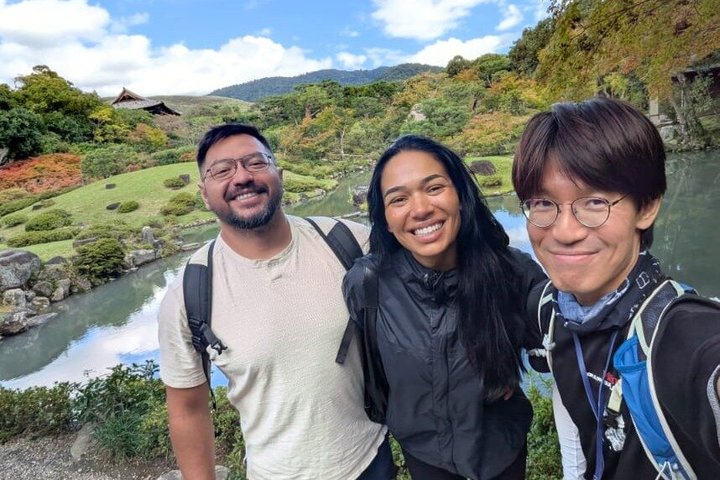
Isuien is a traditional Japanese stroll garden of ponds, tea houses and mossy paths, and its great trick is borrowed scenery. The designers framed the hills of Mount Wakakusa and Mount Kasuga, and the great roof of Todai-ji's Nandaimon gate, so that they appear to belong to the garden itself, with the grass slopes seeming to flow into it. It was built by a wealthy Nara merchant who lived on the grounds, and the state later designated it a place of scenic beauty. Today it is one of the loveliest quiet places in the city, with moss, maples and ponds that are particularly beautiful in late autumn. The grounds also contain the Neiraku Museum, which houses a collection of art. Admission is higher than for most Nara sights, but it covers both the garden and the museum and brings you into a space where you can slow down, sit on a veranda and have tea.
What to see
The garden has two parts, a front garden of older design and a rear garden laid out later with ponds, paths and small bridges. The views from the tea houses are the highlight, and the borrowed-scenery view of the Todai-ji roof appears most clearly from the rear garden. Maples colour in November, and early morning light on the water is lovely. The museum is small and best enjoyed after the garden, rather than before.
The guided option
The booking link is for a guided garden tour with a matcha tea experience, and it suits visitors who want the borrowed-scenery idea and the tea house custom explained. Tea in the garden is one of the nicest ways to spend an hour in Nara. Check the tour details for whether the garden entry fee is included, how long the session runs and where you meet.
Planning the visit
The garden is about a fifteen-minute walk from Kintetsu Nara Station, or a short walk from the loop bus stop at Kencho-higashi, and there is no car park. It opens at half past nine and closes in the late afternoon with last entry half an hour earlier, and it is closed on Tuesdays, or the next day when Tuesday is a national holiday, and during maintenance periods in late December to mid-January and the last third of September.
Allow about ninety minutes. The paths are uneven, with stepping stones in places, so wear flat shoes. A neighbouring garden, Yoshikien, is next door and often admits overseas visitors at a reduced rate or for free, so ask on arrival.
What to expect
The experience
A self-guided stroll through a front and rear garden of ponds, tea houses and mossy paths, with a museum on the grounds and an optional guided tour with matcha.
Best time
Early morning or late afternoon, and in November for the maples; avoid Tuesdays when it is closed.
How long
About ninety minutes with a tea stop.
Tips
Check it is not a Tuesday, bring cash for the entry fee, wear flat shoes for stepping stones and ask next door about Yoshikien entry for overseas visitors.
Quick picks
- Best for
- Garden lovers and anyone who wants a quiet counterpoint to the busy temples.
- Families
- Pleasant for children who can walk calmly, though ponds and stepping stones need watching.
- Couples
- One of the most romantic corners of Nara, especially with tea on a veranda.
- Pair with
- Todai-ji, Nara Park and the Nara National Museum, all a short walk away.
- Time needed
- Allow about ninety minutes.
Good questions
When is Isuien closed?+
It is closed on Tuesdays, or the following day if Tuesday is a national holiday. It also closes for maintenance from late December to mid-January and during the last third of September.
How much does Isuien cost?+
Adult entry is above the usual Nara temple price, and it covers the garden and the Neiraku Museum. Students and children pay less.
What is borrowed scenery?+
It is a design technique that frames distant hills and buildings so they seem part of the garden. Here it brings in Mount Wakakusa and the roof of Todai-ji's gate.
Does the tour include tea?+
The booking link is for a garden tour with a matcha tea experience. Check the booking page for exactly what is included.
How do I get there?+
It is about fifteen minutes on foot from Kintetsu Nara Station, or three minutes from the Kencho-higashi loop bus stop. There is no car park.