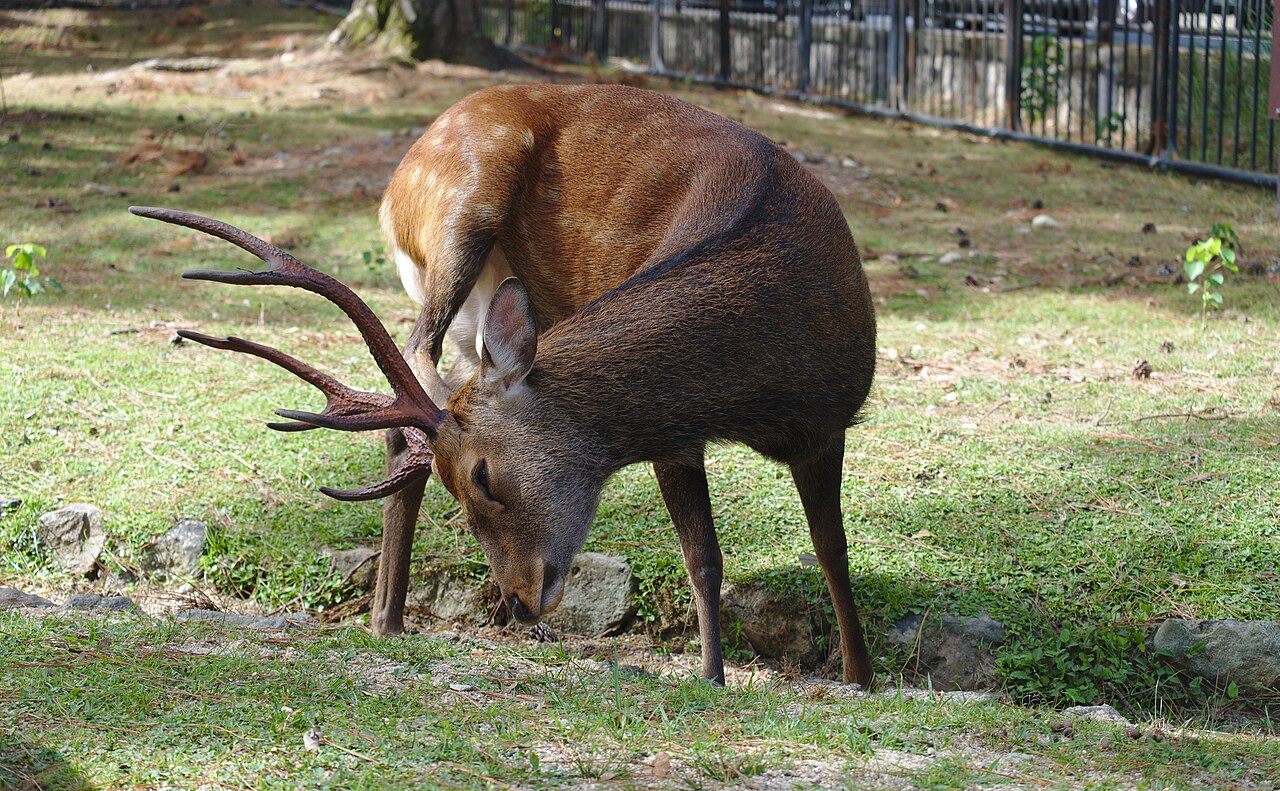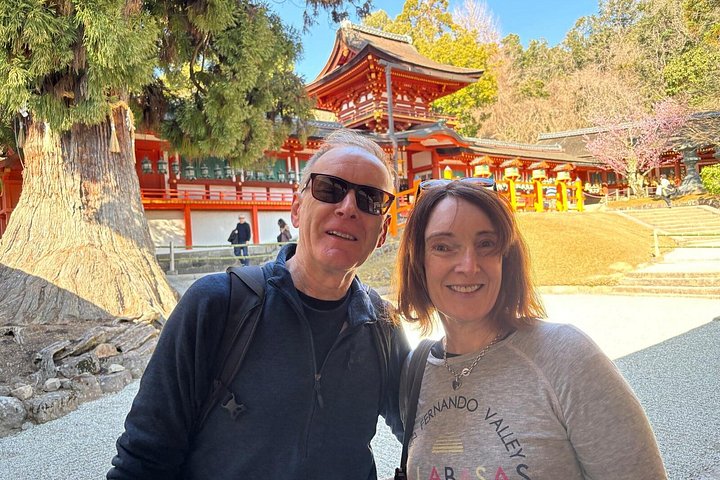
Kasuga Taisha was founded in the eighth century as the family shrine of the powerful Fujiwara clan, and it has been rebuilt and renewed many times in the traditional style, which explains its bright vermilion colour and its cypress-bark roofs. It stands in the shade of the old forest on Mount Kasuga, which has been protected for more than a thousand years, and the long approach from Nara Park runs under ancient cedars past hundreds of stone lanterns furred with moss. Inside the precinct a covered cloister is hung with bronze lanterns donated by worshippers over the centuries, and the shrine is celebrated for the sheer number of lanterns it holds, said to be about three thousand in total. Twice a year, in early February and mid-August, they are all lit at once in the Mantoro festivals, a spectacle that draws crowds after dark. The deer you meet on the approach are considered messengers of the gods who protect the shrine, which is why they are cared for in the park. Kasuga Taisha belongs to the Historic Monuments of Ancient Nara World Heritage listing.
What to see
The shrine is free to approach and walk around the outer area, but a paid entry takes you into the inner cloister to see the main sanctuary and the hall of hanging lanterns at close quarters. The Fujinami-no-ya hall holds many lanterns that are lit to create a flickering, hushed atmosphere, and visitors can walk the lantern-lined cloister toward the middle gate. Photography rules apply inside, and the shrine does not allow drones, smoking or pets. Close by, the Man'yo Botanical Garden is known for its wisteria, which blooms in spring.
How the guided option works
The booking link here is for a private guided tour of the shrine of about ninety minutes, which also touches on Nara Park, and it suits travellers who want the history, the lantern symbolism and the Shinto customs explained. Private tours are priced per group, so they work best for families or a small party. Confirm the meeting point and what is covered before you book, and ask whether the inner cloister fee is included or paid on the day.
Planning the visit
Kasuga Taisha is about a thirty-minute walk through the park from Kintetsu Nara Station, or you can take a bus part of the way. The shrine opens in the morning and closes in the late afternoon, with the inner cloister receiving visitors for a shorter window, so arrive early.
Plan an hour to ninety minutes, plus the walk. The paths are gravel and uneven, and the approach is shaded and cool, so wear comfortable shoes and a layer. In autumn, the maples near the approach make this one of the prettiest corners of Nara.
What to expect
The experience
A walk along a lantern-lined forest approach to a vermilion shrine, with an optional paid entry to the inner cloister and an optional private guided tour.
Best time
Early morning for quiet paths and soft light, or in the festival weeks of early February and mid-August when the lanterns are lit.
How long
About ninety minutes including the approach and the inner cloister.
Tips
Wear shoes with grip for uneven paths, carry cash for the inner cloister fee, respect the no-drone and photography rules and keep your distance from the deer on the approach.
Quick picks
- Best for
- Travellers who want atmosphere and forest calm rather than big halls.
- Families
- Pleasant for children who like walking among deer, though the inner shrine is quiet and best for older children.
- Couples
- Peaceful and photogenic, especially on the shaded lantern path in early morning.
- Pair with
- Nara Park, Todai-ji and Isuien Garden, all within walking distance.
- Time needed
- Allow about two hours including the walk from the station.
Good questions
Do I have to pay to enter Kasuga Taisha?+
The approach and outer precinct can be visited freely, while the inner cloister with the main sanctuary and hanging lanterns charges a modest fee. The fee is small and worth paying for the lanterns.
When are the lanterns lit?+
All of them are lit together during the Mantoro festivals in early February and mid-August, after dark. On ordinary days only a few are lit, and the main spectacle is the sheer number of them.
How far is it from Nara Station?+
It is about a thirty-minute walk from Kintetsu Nara Station through Nara Park, and the walk is pleasant. Buses cover part of the route for tired legs.
Is the tour a private tour?+
Yes, the booking link is for a private tour of around ninety minutes that focuses on the shrine. Check the group size and meeting point when you book.
Is it suitable for wheelchairs?+
The approach is gravel and uneven, and the shrine has steps, so access is limited. Ask the shrine office or your guide for the easiest route.