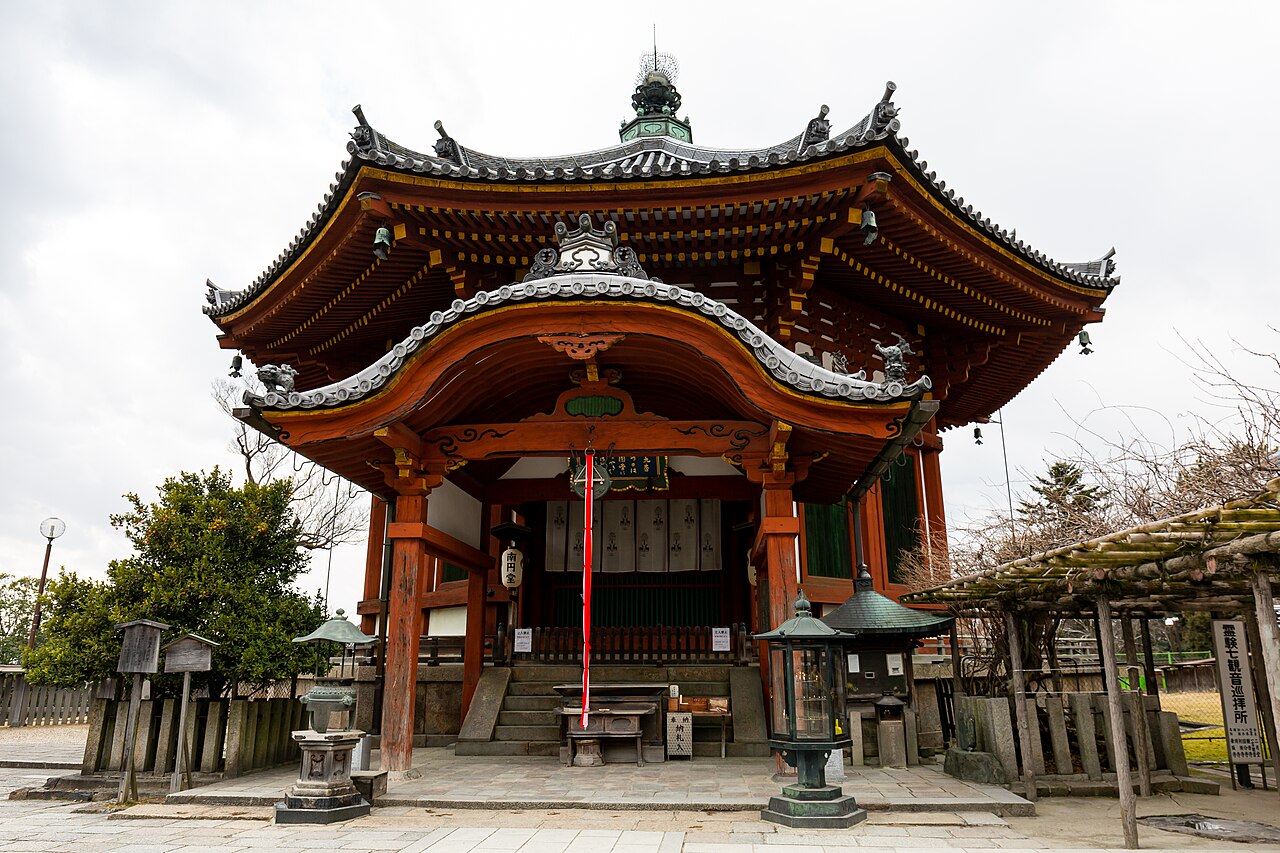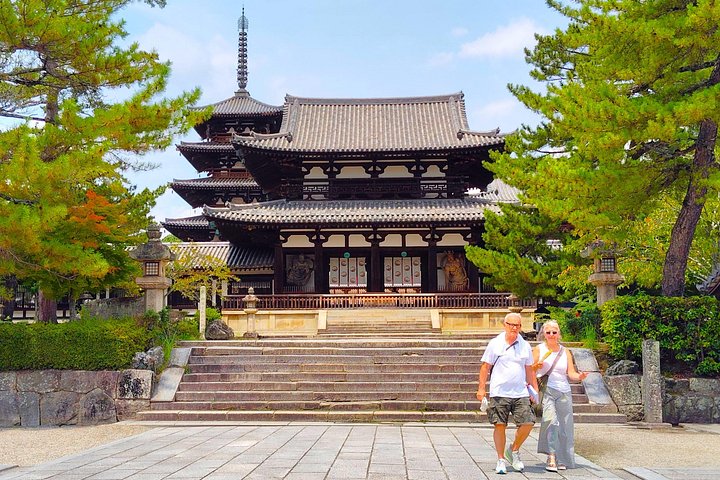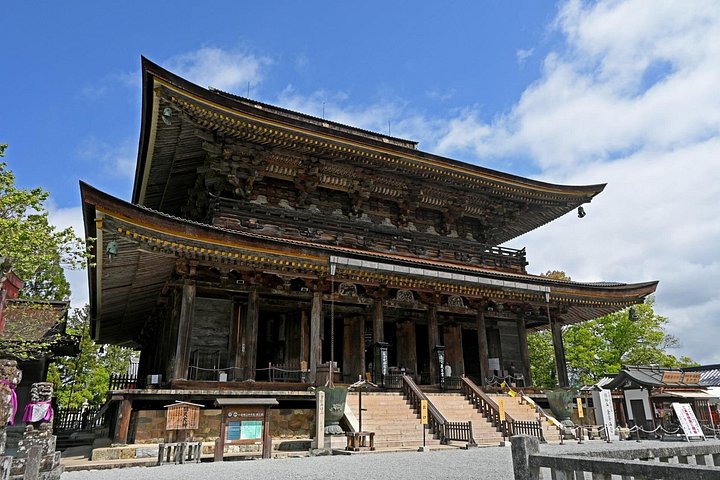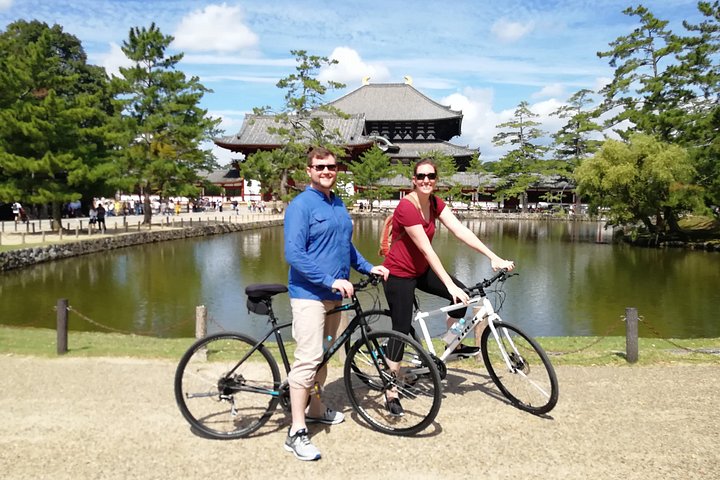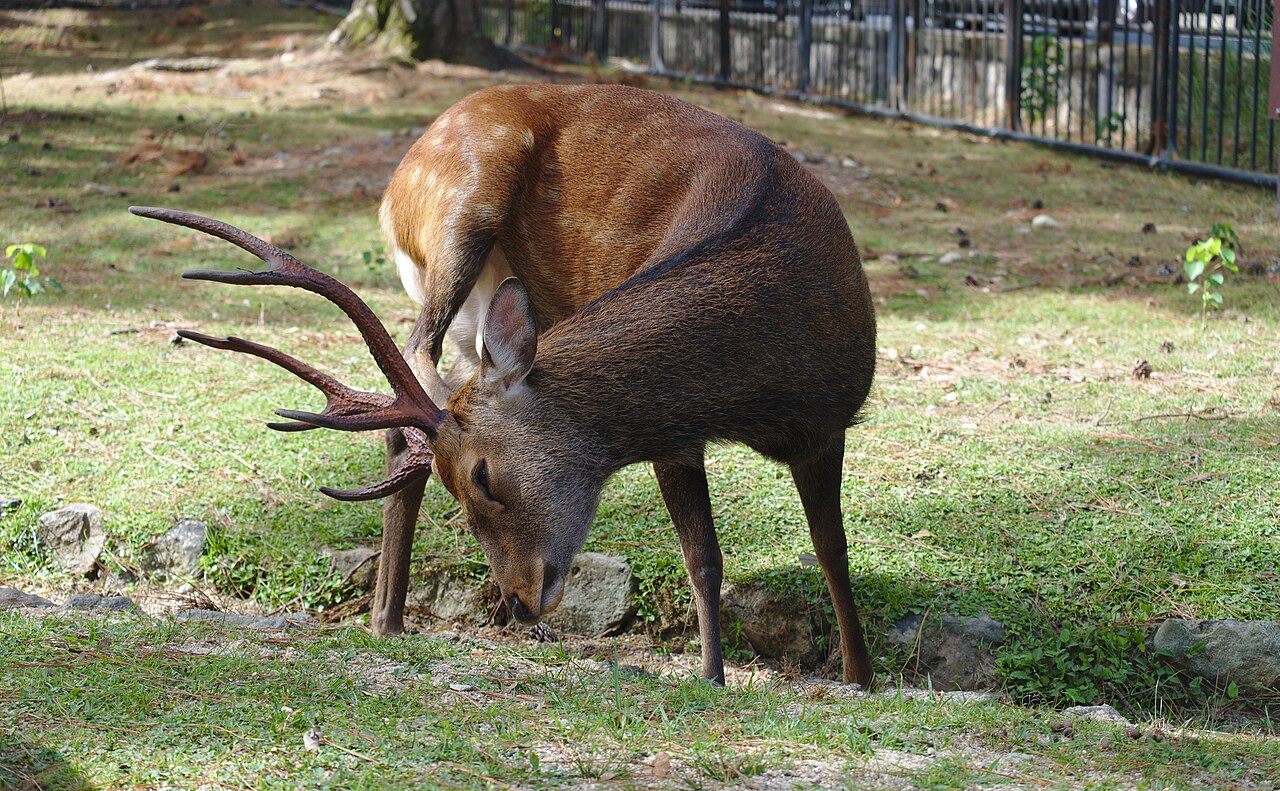
Nara Park is not a park in the ordinary sense. It is the eastern side of Nara city, a sweep of lawns, ponds, stone lanterns and ancient trees that runs from the foot of Mount Wakakusa to the primeval forest on Mount Kasuga, and it is open every day of the year and free to enter. Todai-ji, Kofuku-ji, Kasuga Taisha and the Nara National Museum all stand inside it, so a walk from one to the next doubles as a tour of the city's greatest monuments. The deer are the star. Around 1,300 live in and around the park, and they are protected as a natural monument because of their link to Kasuga Taisha, where they are regarded as sacred messengers of the gods. Visitors can buy special deer crackers from vendors, and a number of animals have learned to bow, politely and with obvious motive, before they are fed. Although they look tame they are wild animals, and the park's own guidance is to treat them with respect: feed them only the crackers sold for the purpose, keep bags and maps out of reach, and never tease them with empty hands.
Where to walk
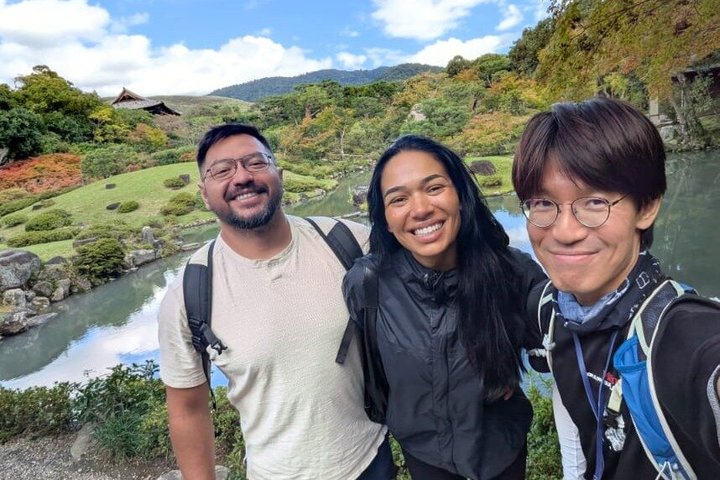
The most popular route links Kintetsu Nara Station, the pond at Sarusawa, the Kofuku-ji precinct, the open lawns of Noborioji and the road to Todai-ji. Quieter alternatives climb through the woods toward Kasuga Taisha along stone-lantern paths, or head up Mount Wakakusa for a view over the whole basin. Ukigumo Garden and Sagi Pond are smaller, calmer corners where the deer are often resting rather than hustling. Early morning is magical, with mist on the lawns and few people, and the park lights up with maple colour in November.
Deer etiquette and safety
Sellers of crackers appear along the main paths and the price is small. Feed the deer one cracker at a time, and when the packet is empty show your open palms so the animals understand there is nothing left. Stags can be more assertive in autumn, which is rutting season, and their antlers are cut in a traditional ceremony to keep everyone safe, so keep your distance from large males and never stand between a mother and her fawn.
There are no rubbish bins in the park, so carry your waste out, and never offer anything except the crackers, since plastic and snacks harm the deer.
Planning the day
You do not need a ticket for the park itself, and many visitors simply roam, but some choose a guided walk to learn the history and the best paths. Plan at least half a day if you want the deer, Todai-ji and one other site, and a full day if you add Kasuga Taisha and the museum. Wear comfortable shoes, bring a light jacket for the mornings and keep your backpack zipped. Families with small children should hold the crackers high and stay with them, since excited deer can nudge or nip.
What to expect
The experience
A free, self-guided stroll through lawns and woods where wild deer roam, with vendors selling deer crackers along the main paths.
Best time
Early morning for mist and quiet, or late afternoon in autumn when the maples glow; avoid the middle of the day at weekends.
How long
Two hours for a short loop, or most of a day if you link the temples and shrines.
Tips
Buy only the crackers made for the deer, feed them one at a time, keep paper and maps out of reach, and carry your rubbish out because there are no bins.
Quick picks
- Best for
- Anyone who wants an easy, free, memorable animal encounter in the middle of a World Heritage city.
- Families
- Fun for children if an adult holds the crackers and keeps them back from large stags, especially in autumn.
- Couples
- A slow walk at sunrise or toward Kasuga Taisha on the lantern-lined paths is quietly romantic.
- Pair with
- Todai-ji, Kofuku-ji, Kasuga Taisha and the Nara National Museum, all inside the park.
- Time needed
- Allow two to four hours depending on how many temples you add.
Good questions
Is Nara Park free to enter?+
Yes, the park is open every day of the year and costs nothing to walk through. Temples and shrines inside it charge their own entry fees.
Where do I buy deer crackers?+
Small stalls along the main paths sell them for a modest price. Buy only these crackers, because other food can make the deer ill.
Are the deer dangerous?+
They are wild animals and usually gentle, but they can nip when excited, and stags can be assertive in autumn. Stay calm, show empty hands when the crackers are gone and do not tease them.
Do the deer really bow?+
Many do, and it is part of the local charm. The bow is a learned habit that usually precedes a cracker.
What is the best time to visit?+
Early morning is calm and beautiful, and November adds autumn colour. Weekday visits are quieter than weekends and holidays.