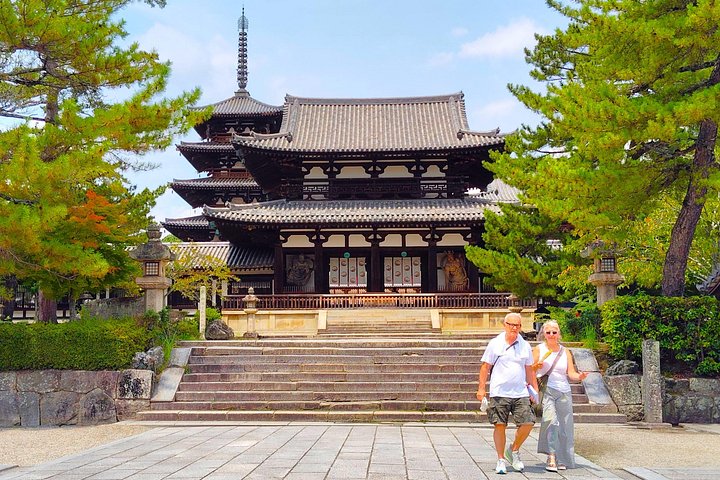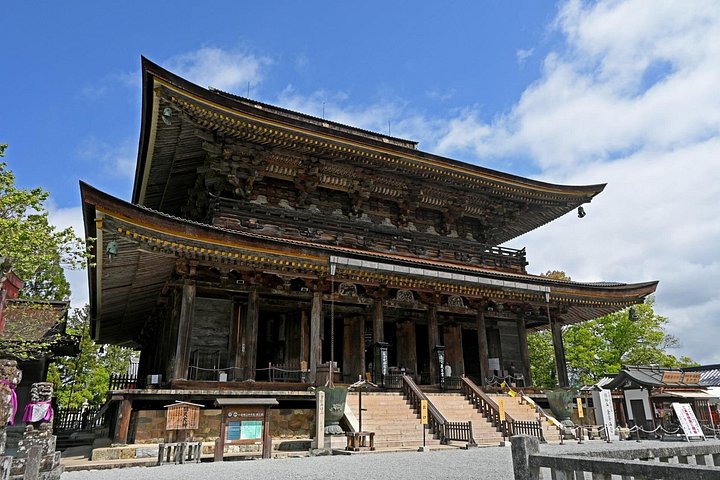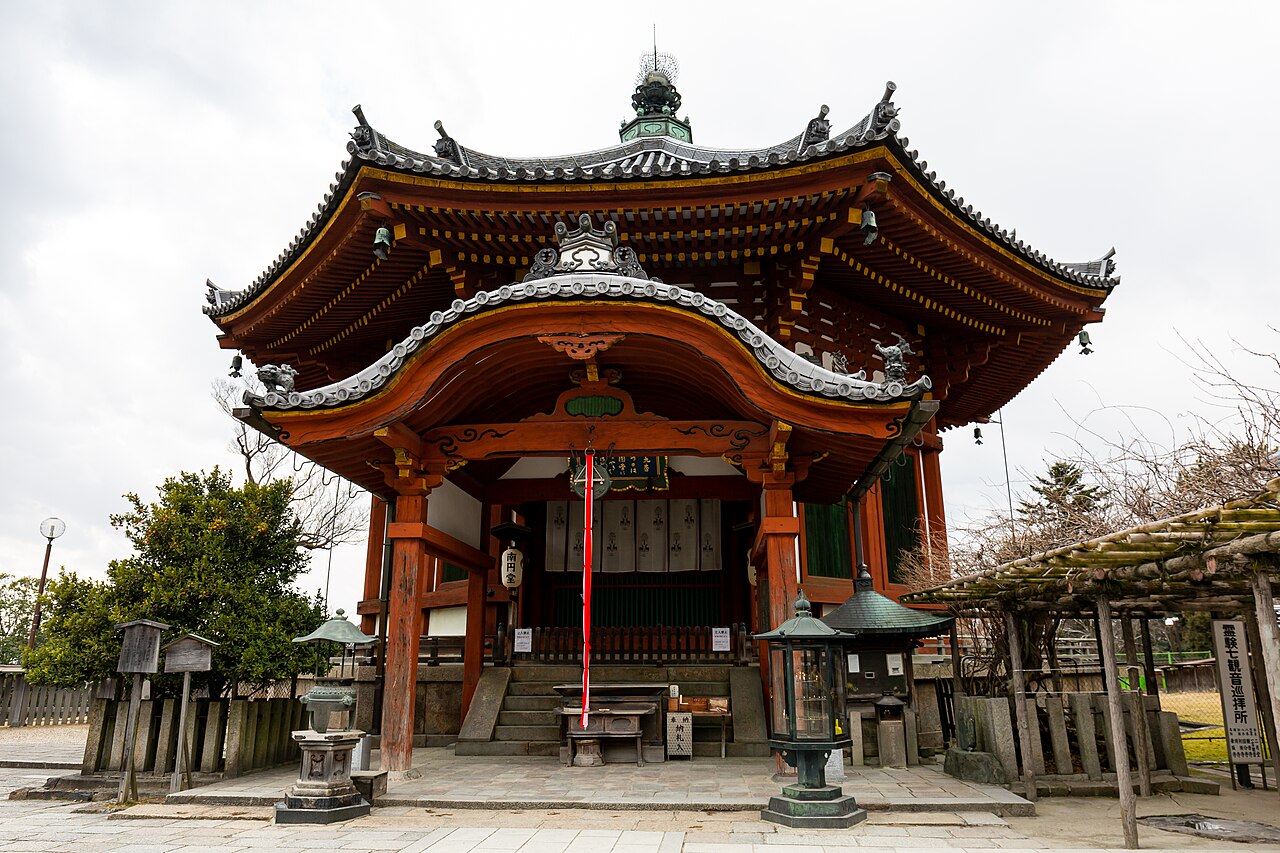
Kofuku-ji was the great family temple of the Fujiwara clan, the most powerful aristocrats of ancient Japan, and for centuries it rivalled the court itself in wealth and influence. It stands just inside Nara Park, only a short walk from Kintetsu Nara Station, which makes it the easiest of the major temples to fit into a first morning. Its precinct holds several famous buildings. The Five-storied Pagoda, a National Treasure of about fifty metres, is the second tallest wooden pagoda in Japan and has burned down five times, with the present structure dating from 1426; it has been through long-running conservation work and may be wrapped or screened, so check before you plan photographs around it. The Eastern Golden Hall, also a National Treasure, was consecrated in 1415 and houses a bronze Yakushi Buddha with attendant bodhisattvas and guardian figures. The Central Golden Hall has been rebuilt in recent years in its original grand style. The temple's greatest treasures, among them the beloved Ashura statue with its youthful, worried face, are displayed in the National Treasure Hall.
What to see and how it is priced: the open precinct, the lawns and the pond area are free to wander, but each of the main halls charges its own admission. The National Treasure Hall, the Eastern Golden Hall and the Central Golden Hall each have a separate fee, and there is a combined ticket that covers all three at a better rate.
The temple accepts cash only, and the halls are open daily from morning until late afternoon, with last admission about fifteen minutes before closing. If you only have time for one paid building, choose the National Treasure Hall for the sculpture, or the Central Golden Hall for its scale and its restored interior.
Why it rewards a slow look
The sculpture in the treasure hall includes wooden and dry-lacquer figures from the eighth century onward, and their expressions are strikingly human. The Ashura, with its slim frame, three faces and six arms, is a favourite with visitors because it feels so modern. The Three-storied Pagoda, a smaller National Treasure, stands quietly at the edge of the precinct and is a good photograph when the main pagoda is under cover.
Kofuku-ji also reflects the history of the shrine and temple split: it was once joined to Kasuga Taisha, and the two were separated in the nineteenth century.
Planning the visit
The temple is about five minutes on foot from Kintetsu Nara Station and a short bus ride from JR Nara Station, so it works as the opening stop of a walk that continues to Nara Park, Todai-ji and Kasuga Taisha. Allow about an hour for the grounds and one hall, ninety minutes if you add the treasure hall.
Because the pagoda is under repair, the pond and the temple's surrounding lawns are the best backdrop for a photograph. The site is mostly flat with some gravel, and wheelchair access is provided with a slope, accessible toilets and a free wheelchair for use inside.
What to expect
The experience
A self-guided walk through a free open precinct with paid entry to three separate buildings: the National Treasure Hall, the Eastern Golden Hall and the Central Golden Hall.
Best time
Mornings, before the tour groups reach Nara Park, or the hour before closing for a quieter treasure hall.
How long
About one hour for the grounds and a hall, ninety minutes with the treasure hall.
Tips
Bring cash because the temple takes no cards, consider the combined ticket, check the pagoda's repair status before planning photos and arrive before the late-afternoon closing.
Quick picks
- Best for
- Sculpture lovers and anyone who wants a major temple that costs little time to reach.
- Families
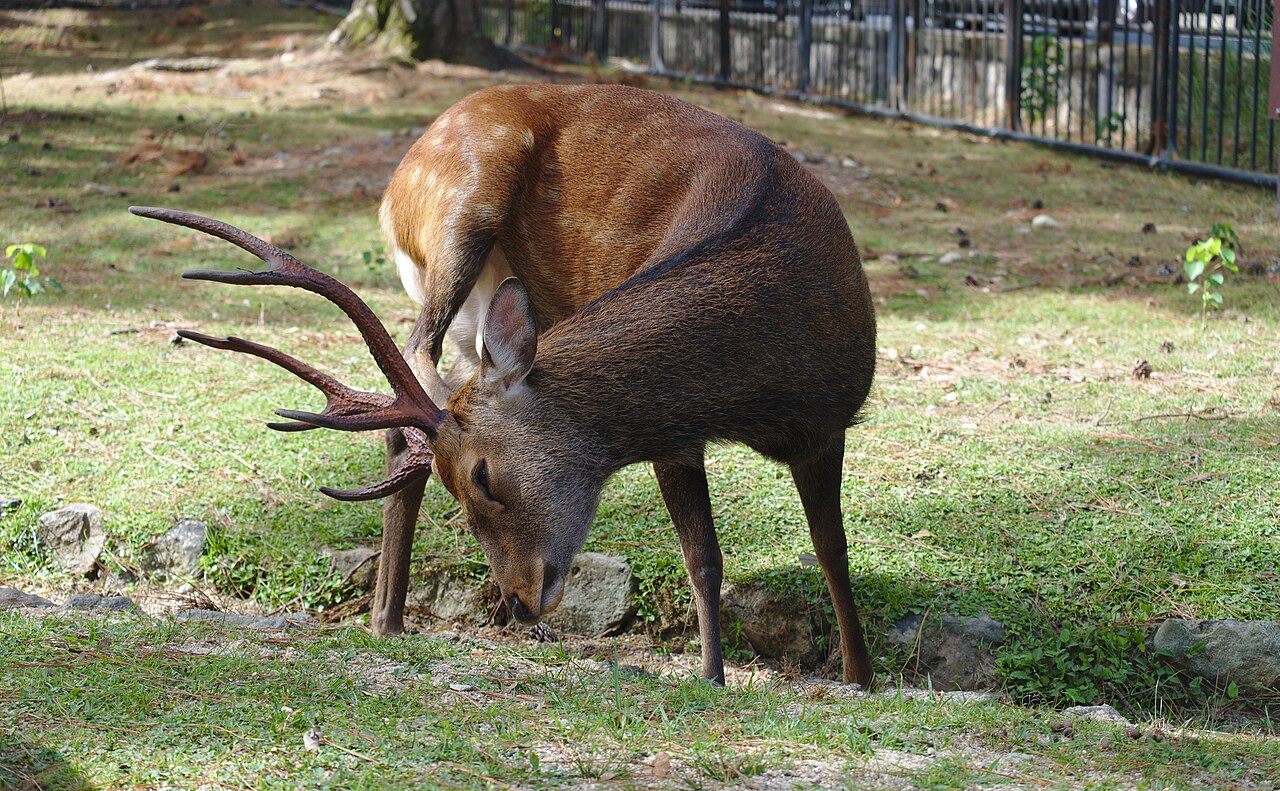
- The open grounds and deer on the lawns are easy with children, while the halls suit older children who can look quietly.
- Couples
- Pleasant in the soft light around the pond in the late afternoon.
- Pair with
- Nara Park, Naramachi and Todai-ji, all within a short walk.
- Time needed
- Allow about ninety minutes including the treasure hall.
Good questions
Is Kofuku-ji free to enter?+
The open precinct is free to walk around, but each of the main halls charges its own fee. A combined ticket for all three is available at a better rate.
Can I see the five-storied pagoda?+
The pagoda has had long-running conservation work, so it may be covered or hard to see when you visit. Check the temple's English pages before you plan around it.
What is the Ashura statue?+
It is a dry-lacquer figure of a guardian with three faces and six arms, kept in the National Treasure Hall. It is one of the most loved sculptures in Japan.
Can I pay by card?+
No, the temple accepts cash only at its ticket counters. Carry enough yen for the combined ticket.
How far is it from Nara Station?+
It is about five minutes on foot from Kintetsu Nara Station. From JR Nara Station, take the city loop bus for a few minutes to the Kencho-mae stop.