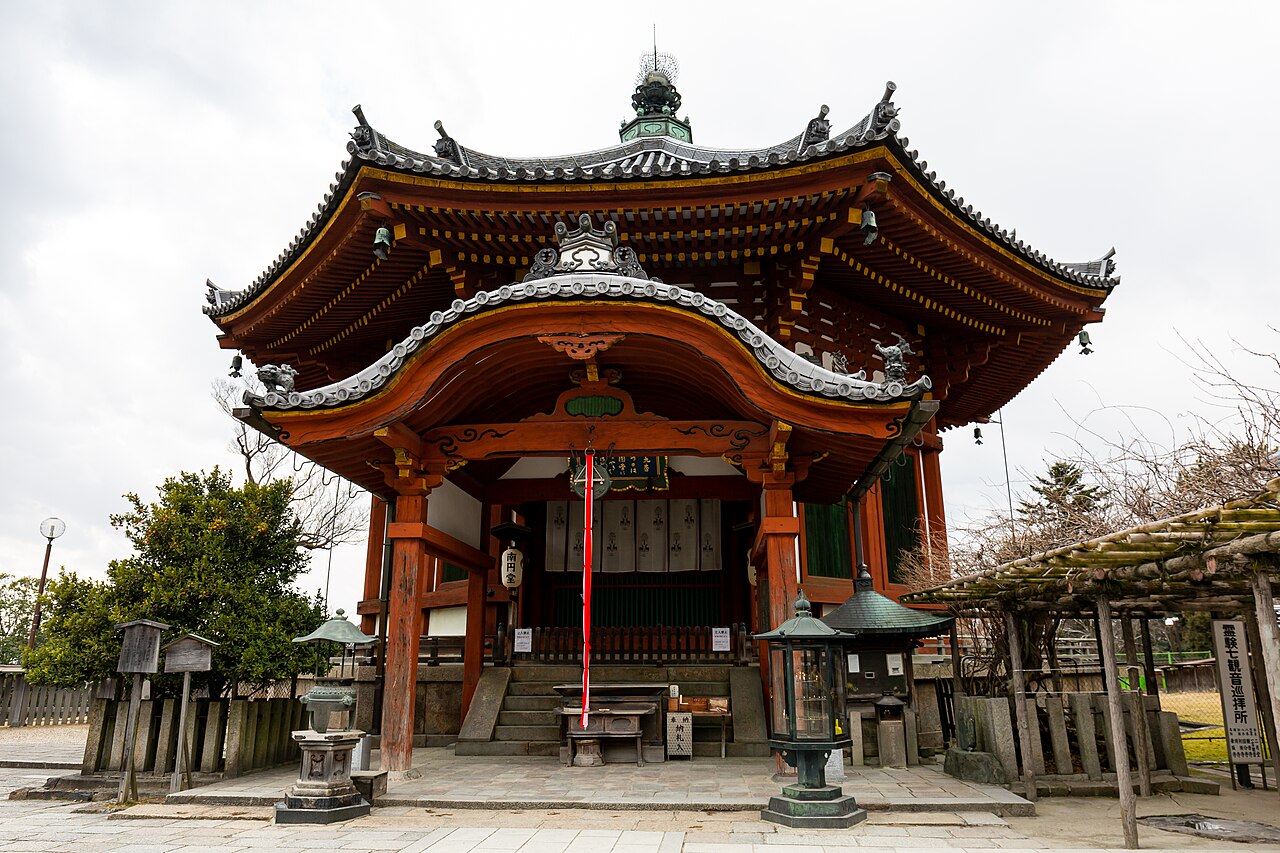
Naramachi was the merchants' quarter of old Nara, and its lanes still have the feel of a working neighbourhood rather than a museum. The old townhouses, called machiya, are narrow at the front and deep behind, with latticed windows, tiled roofs and small inner gardens, and many have been turned into cafes, guesthouses, galleries and shops selling sweets, crafts and sake. A few are open to the public as museums, including a rebuilt lattice house and a roughly century-old townhouse, where you can step inside to see how a merchant family lived, from the shop floor to the box staircase and the tiny courtyard. Little red cloth monkey charms hang from the eaves of many houses as protective talismans, a local custom you will notice quickly. The district also contains temples, among them Gango-ji, one of the oldest in the country, and it sits only a short walk from Sarusawa Pond and Kintetsu Nara Station. Wandering here is free, and it makes a quiet counterpoint to the large monuments of Nara Park.
What to do
Start at Sarusawa Pond, walk south into the lanes and let yourself get a little lost. The museums are small and cheap, and some are free, so drop in at one machiya to see the interior. Look for local specialities such as sweets made from kudzu starch, pickles, calligraphy brushes, ink and small crafts, and for sake shops, since Nara has a long link with sake brewing. Cafes in converted townhouses make a good break, often with a view of a small garden.
If you want a guide
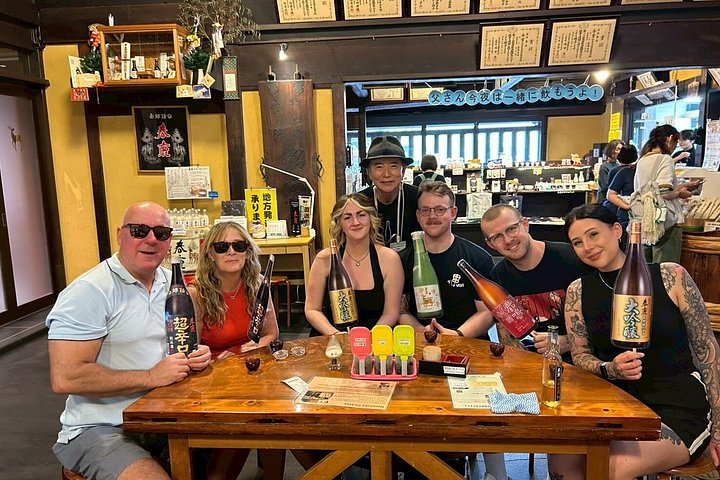
Several small-group walks cover the district, including one that pairs Naramachi with sake tasting at nearby breweries and a shop. Because walking here is free, you do not need a tour, but a guide can unlock the history of a machiya, the meaning of the monkey charms and the lanes you would otherwise skip. Shops and houses often close on one weekday, and some close early, so plan the visit between late morning and mid-afternoon.
Planning the visit
Naramachi sits about five to ten minutes on foot from Kintetsu Nara Station and is served by the city loop buses, so it combines easily with Kofuku-ji and the park. Give it at least two hours, or half a day if you stop at a cafe and a museum.
The lanes are flat and good for walking, though some old houses have steps and narrow entrances. Evening is atmospheric, but many small businesses close by late afternoon, so go earlier if you want to shop. Stay on the public lanes and respect the signs at private homes.
What to expect
The experience
A free, self-guided walk through narrow lanes of wooden townhouses, with small museums, craft shops, cafes and sake shops to stop at.
Best time
Late morning to mid-afternoon, when shops and small museums are open and the light is soft.
How long
Two to three hours, or half a day with a museum and a cafe stop.
Tips
Many small shops close by late afternoon and on one weekday, so go earlier, carry cash and stay on public lanes.
Quick picks
- Best for
- Travellers who want a quieter, human-scale contrast to the big temples.
- Families
- Easy walking and the red monkey charms are fun to spot, but narrow lanes and small shops are best with older children.
- Couples
- A relaxed afternoon of cafes, craft shops and old houses.
- Pair with
- Kofuku-ji, Sarusawa Pond and a sake tasting.
- Time needed
- Allow two to three hours.
Good questions
Is Naramachi free to visit?+
Yes, the lanes are public and free to walk. Some small museums and houses charge a low entry fee, and a few are free.
What are the red monkey charms?+
They are small red cloth talismans, called migawari-zaru, hung from the eaves of houses as protection against bad luck. You will see them across the district.
How far is it from Nara Station?+
It is about five to ten minutes on foot from Kintetsu Nara Station, and the city loop buses also run there. From JR Nara Station, allow about a fifteen-minute walk.
When are shops open?+
Most open in late morning and close in the late afternoon, with many closed on one weekday. Check before you go if you have your heart set on one shop.
Is there a guided option?+
Yes, several small-group walks pair Naramachi with tea, sake or local food. It is easy to explore without a guide if you prefer.