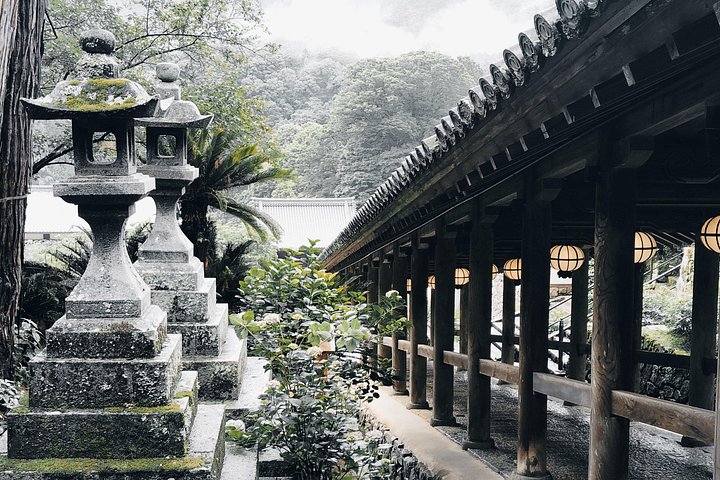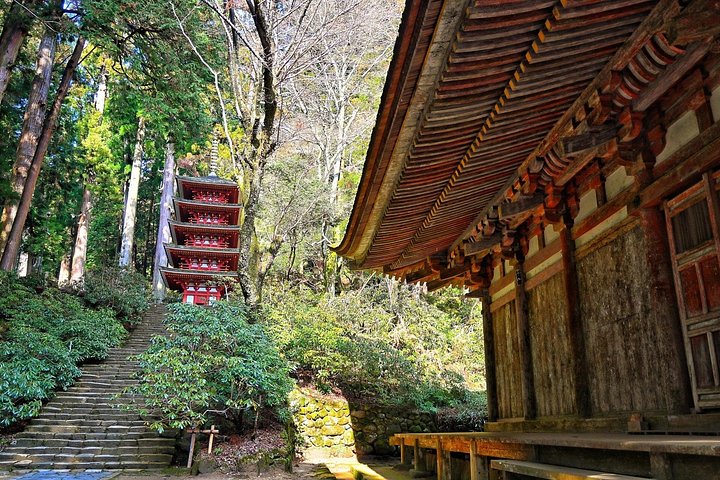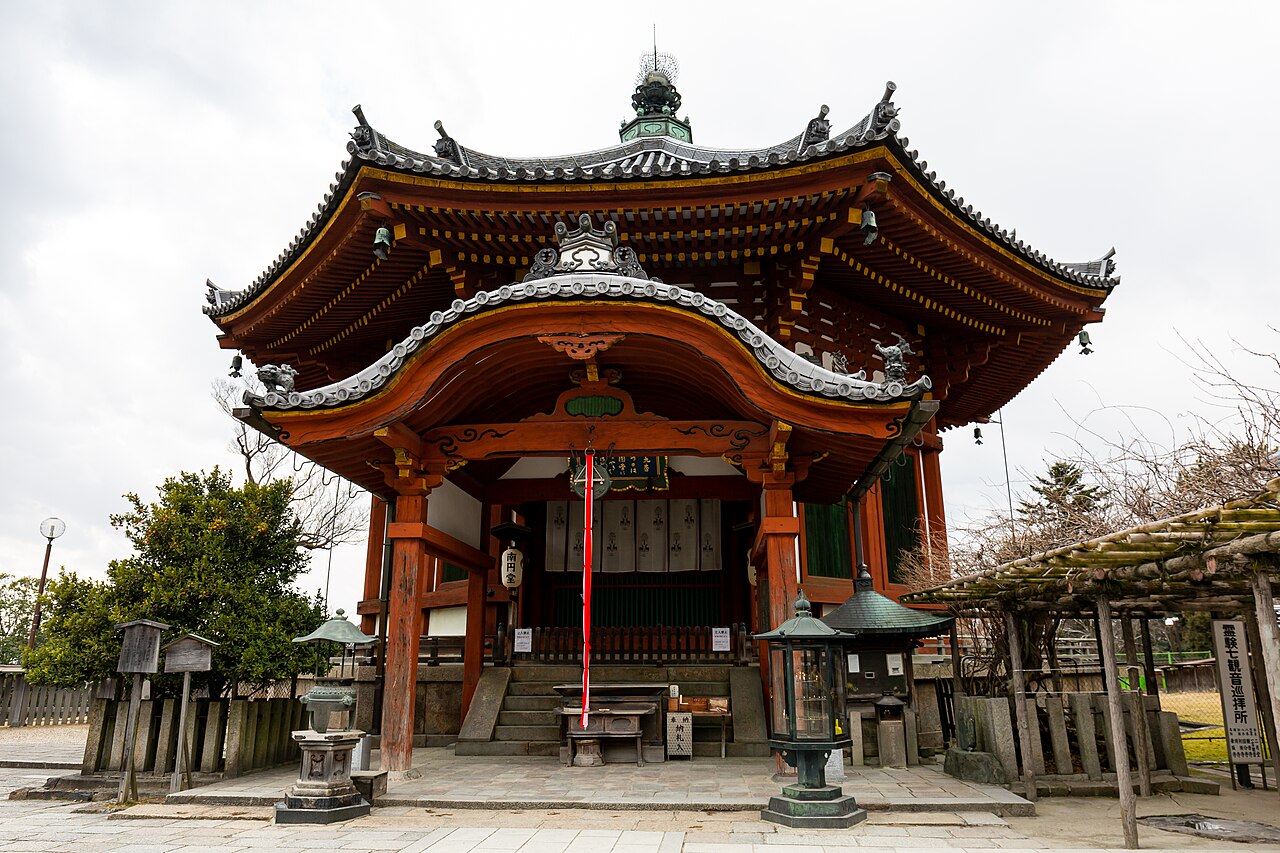
Tanzan Shrine stands on a forested hillside in Sakurai, south of Nara city, and it is one of the region's most photogenic and least crowded sacred places. It honours Fujiwara no Kamatari, the statesman who helped found the powerful Fujiwara family and whose descendants shaped the Nara and Heian courts. Its most striking feature is a thirteen-storey wooden pagoda that rises among the trees, a rare form that combines Buddhist and Shinto traditions from the period when the two faiths were closely intertwined. The pagoda is vermilion and slender, and in autumn the maples around it turn red and gold, making it a favourite subject for photographers. Paths wind between smaller halls, stone lanterns and mossy steps, and the whole site has a calm, secluded feel.
What makes it special
The pagoda is the headline, but the setting is just as important. The shrine climbs a slope and the approach is a quiet walk through cedar and maple, with steps, lanterns and shaded corners. A guide can explain the history of the Fujiwara, the layering of Shinto and Buddhist elements and the meaning of the buildings, which are easy to miss without context. Because the shrine is off the main tourist routes, it can feel peaceful even in busy seasons.
When to go
Autumn is the highlight, with red maples around the tower, but spring brings fresh green and soft light, and winter has a stillness of its own. Early in the day is best for quiet and for photographs. Weather can change quickly on the hillside, so bring a light layer and check conditions before you travel.
Planning the visit
The shrine is in the Sakurai area, reached from Nara by train and a local bus or taxi, which makes a guided option convenient if you do not want to work out connections. It combines well with Hase-dera and other sights in the area, and a half day is usually enough. Wear sturdy shoes because there are steps and slopes, and bring cash for small entry fees. Use Get tickets to see the guided tour and its meeting arrangements.
What to expect
The experience
A guided visit to a hillside shrine and its thirteen-storey pagoda, with background on the Fujiwara family and the mix of Shinto and Buddhist traditions.
Best time
Autumn for the maples, early morning for quiet and soft light on the pagoda.
How long
A half day including travel from Nara.
Tips
Wear sturdy shoes for steps and slopes, bring a light layer, carry small cash for entry and check the transport arrangements in advance.
Quick picks
- Best for
- Photographers and history lovers who want a quiet, distinctive site beyond the main Nara circuit.
- Families
- Suitable for children who can manage steps and a gentle uphill walk, though the guided talk suits older ones.
- Couples
- A peaceful, scenic outing, especially when the maples are in colour.
- Pair with
- Hase-dera, Muro-ji and the Asuka area for a full day in the south-east of Nara.
- Time needed
- Allow half a day including transport.
Good questions
What is special about the pagoda?+
Tanzan Shrine's tower has thirteen storeys, which is unusual among Japanese pagodas, and it reflects the blend of Buddhist and Shinto practice that was common in earlier centuries.
Who is the shrine dedicated to?+
It honours Fujiwara no Kamatari, founder of the Fujiwara family, which dominated Japanese politics for centuries.
When are the autumn colours at their best?+
Colour usually peaks in the second half of autumn, but timing varies by year and elevation, so check local reports before you go.
How do I get there from Nara?+
The shrine is in the Sakurai area and needs a train plus a bus or taxi, which is why a guided option can be convenient. Check connections in advance.
Is it crowded?+
It is much quieter than Nara Park, although autumn weekends can bring photographers and visitors. Go early for the calmest experience.