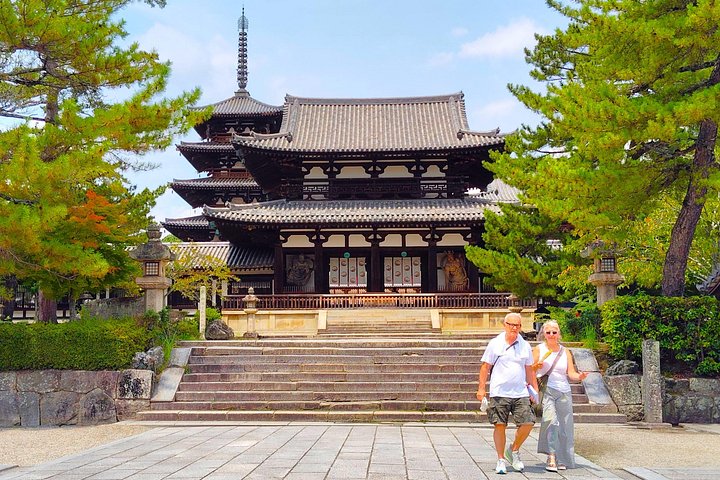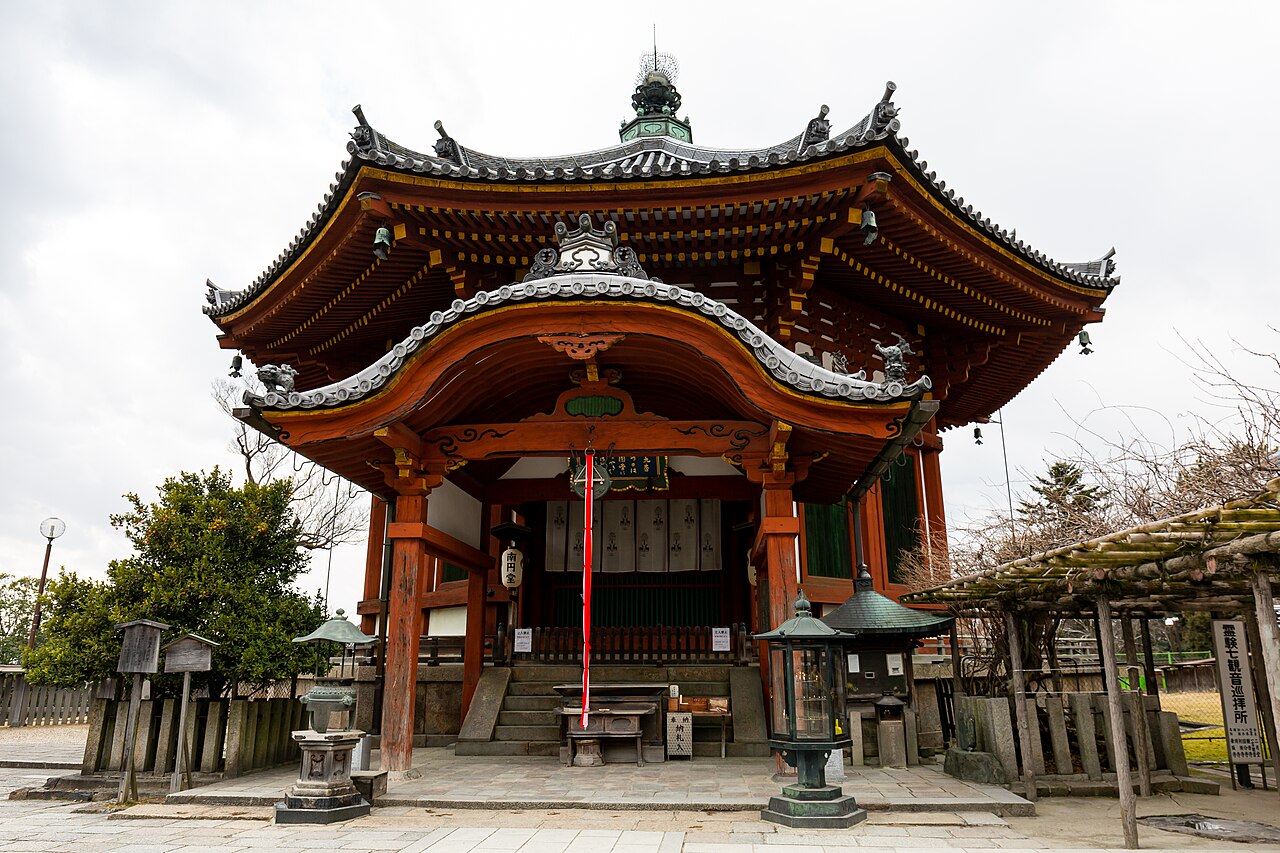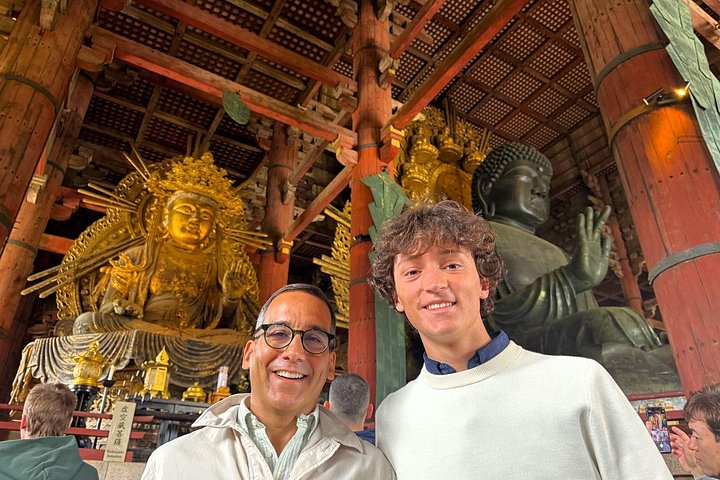
Hase-dera is a hillside temple in the town of Sakurai, south-east of Nara city, and it is one of the great pilgrimage temples of western Japan. It was founded in the seventh century and has been rebuilt after fires many times, most recently in the Edo period, and it climbs up its slope in a series of halls linked by a long covered stairway of nearly four hundred steps lined with lanterns. The stairway is a famous sight in its own right, and in spring it is framed by peonies, in early summer by hydrangeas and in autumn by red and gold maples. At the top stands the main hall, whose wide wooden veranda juts out over the valley in the same way as the more famous Kiyomizu temple in Kyoto, and gives a sweeping view over the roofs of the temple and the wooded hills beyond. Inside, the hall holds a very tall gilded wooden statue of the eleven-faced Kannon, the bodhisattva of compassion, which rises to about ten metres and is among the largest wooden statues of its kind in Japan. Visitors are allowed to walk close to the statue's feet, which gives a rare chance to touch the ground it stands on and sense the full height of the figure.
What to see
Begin at the main gate and climb the covered stairway at an easy pace, stopping at the subsidiary halls and the small cemeteries along the way. The upper area includes the main hall, the veranda and several side halls and viewing points. The gardens change dramatically with the seasons, so check the flower calendar if you care about a particular bloom, and remember that peak times for peonies and maples bring crowds.
The statue inside the main hall can be viewed only during the temple's opening hours and by paying a modest entry fee, and photographs inside are not allowed.
How the guided option works
The booking link on this page is for a guided visit built around the temple and its giant Kannon. It suits visitors who want the pilgrimage history and the legends of the statue explained, and who would like help with the trains and the walk from the station, which can be confusing for first-time visitors. Check what is included, whether temple entry is paid separately, the meeting point and how long the tour lasts before you book.
Planning the visit
Hase-dera lies about twenty minutes' walk from Hasedera Station on the Kintetsu Osaka Line, through a small old town with traditional shops selling rice cakes and herbal sweets. From Nara, the trip involves a change of trains, so allow about an hour each way. Wear comfortable shoes for the stairs, bring cash for the entry fee and expect to spend about ninety minutes inside the temple. It combines well with Muro-ji, which lies a little further east, though most visitors treat each as a separate half day.
The temple closes in the late afternoon, so start by mid-morning. If you are visiting in a flower season, arrive early, because the best photographs of the stairway are taken before the tour groups arrive. Pay attention to the small side halls as you climb, since many contain interesting statues and lanterns, and allow time to sit on the veranda and simply enjoy the view across the valley.
What to expect
The experience
A climb up a covered stairway to a hillside temple with a large wooden Kannon statue and a veranda overlooking the valley, on your own or with a guide.
Best time
Spring for the peonies, early summer for hydrangeas and autumn for the maples; weekdays are quieter in every season.
How long
About ninety minutes at the temple, plus travel from Nara of around an hour each way.
Tips
Wear comfortable shoes for the stairs, carry cash for the entry fee, check train changes in advance and start by mid-morning.
Quick picks
- Best for
- Visitors who want a scenic, atmospheric temple away from the main crowds.
- Families
- Older children enjoy the climb and the statue, but the stairs are a lot for very young ones.
- Couples
- The veranda view and the flower-lined stairs make it a lovely, quiet outing.
- Pair with
- Muro-ji, or a slow lunch in the old town below the temple.
- Time needed
- Allow half a day including travel.
Good questions
How do I get to Hase-dera from Nara?+
Take a train to the Kintetsu Osaka Line and travel to Hasedera Station, which usually involves a change. The temple is a walk of about twenty minutes from the station.
When is the best season?+
Spring for peonies, early summer for hydrangeas and autumn for maple colour all work well. Weekdays are quieter.
Are there many steps?+
Yes, the covered stairway has almost four hundred steps in several flights, with rest points along the way.
Can I take photographs of the statue?+
Photography inside the main hall is not allowed, but the veranda and the gardens are fine for pictures.
Is a guide needed?+
No, but a guide helps with the pilgrimage history and the journey from the station.