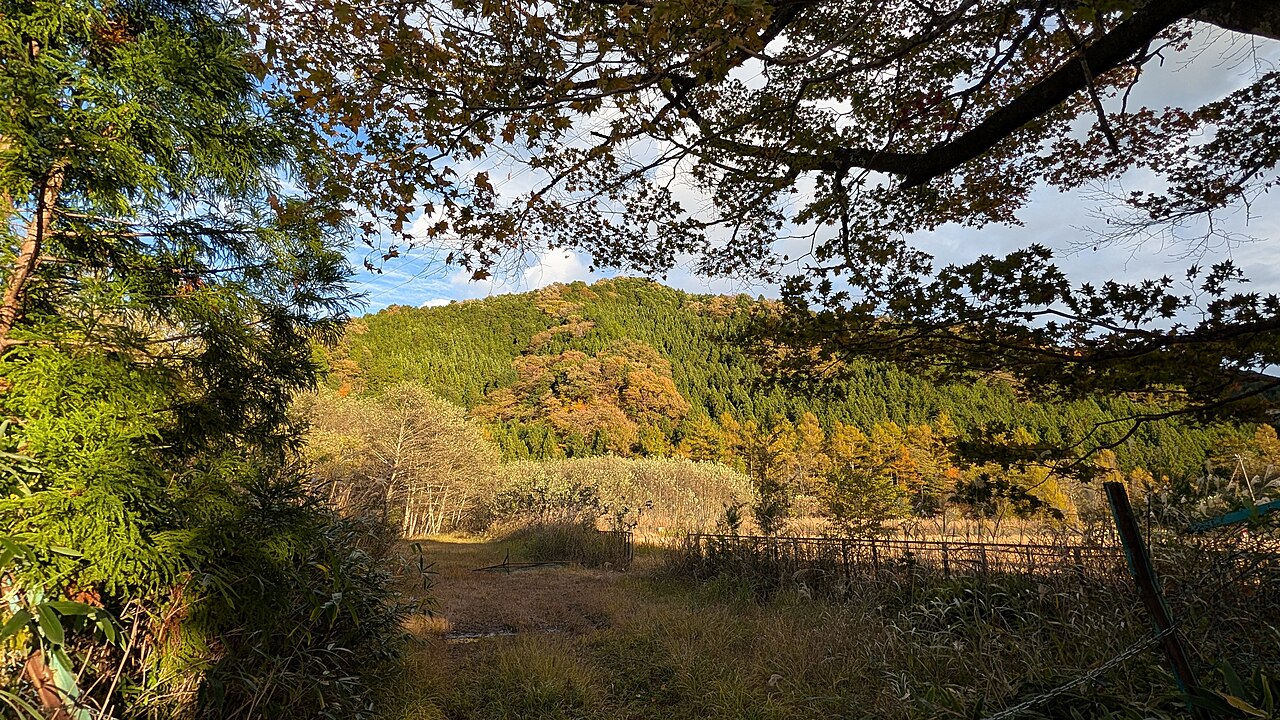
Okunikko, the deep Nikko, is the high-country end of the national park, and Senjogahara is its centrepiece: a flat marshland plateau of roughly 400 hectares at about 1,400 metres above sea level, ringed by volcanic peaks and registered as a Ramsar wetland. A gentle nature trail crosses the marsh and takes about two hours, suitable for beginners, past larches, birch and open grass. In summer the plateau is carpeted with cottonsedge and meadowsweet, and in autumn the trees and grasses turn red and gold, but that colour usually fades by late October. By November the plateau is typically brown, cold and quiet, and snow may affect access, so the walk is best as a clear-weather stroll with sturdy, warm clothing. A popular route runs from Yudaki Falls across the marsh, and Ryuzu Falls and the hot-spring village of Yumoto Onsen lie further up the valley. Buses from both Nikko stations take roughly an hour or more to reach the Sanbonmatsu stop.
The setting is the lesson. Senjogahara is an old lakebed formed when lava from the Mount Nantai region dammed the Daiya River, and the open marsh now sits beneath Mount Nantai and Mount Taro. The sky feels large, the wind carries, and the temperature is noticeably colder than at Lake Chuzenji, let alone in Nikko town. Boardwalks and dirt trails cross the marsh, and frost or dew can make them slippery early in the day, so closed shoes with grip are essential.
Planning the day
Okunikko is far enough away that you should treat it as a half-day or full-day trip by itself. Buses climb the Irohazaka roads and run a reduced schedule in winter, so look at the return times before setting off and give yourself margin for the early sunset.
Be aware that conditions on the plateau can change quickly; ice and snow can make the trail unsafe, and you should skip it if the forecast is poor. Bears are present in the Nikko mountains, so bring a bell or make noise, and follow local advice.
If you do come, a sensible route links Yudaki Falls, the marsh trail and a stop at a hot-spring bath in Yumoto Onsen. Skiing and snowshoe tours begin in the deep winter months, and the marshland looks quite different under snow. In November, though, the main rewards are solitude and big landscapes rather than colour. For autumn foliage in November, the lower slopes near Nikko town and Kanmangafuchi Abyss are a much better bet.
What to expect
The experience
A self-guided walk on a flat marsh trail across a high plateau, with falls and hot springs nearby.
Best time
Mid-June to early August for flowers and late September to mid-October for colour; in November go only on clear days.
How long
About two hours on the nature trail, plus an hour or more of travel each way.
Tips
Wear warm layers and grippy shoes, check bus return times, and skip the trail if snow or ice is forecast.
Quick picks
- Best for
- Hikers and landscape lovers with a free half day and good weather.
- Families
- Suits older children who like walking, but the cold, distance and slippery sections are hard on toddlers.
- Couples
- Big open skies and silence, best on a clear, still day.
- Pair with
- Lake Chuzenji and Kegon Falls on the way up, and a hot-spring bath at Yumoto Onsen.
- Time needed
- Half a day or more including the bus.
Good questions
Is Senjogahara worth visiting in November?+
The autumn colour is usually over by late October, so the draw is quiet and open scenery. Go only on a clear day, and consider Nikko town instead if foliage is your goal.
How long is the walk?+
The standard nature trail takes about two hours and is suitable for beginners. The distance depends on which route and start point you pick.
How do I get there?+
Take a bus toward Yumoto Onsen from either Nikko station to the Sanbonmatsu stop, which takes about an hour or a little more. Winter timetables are reduced.
Is it open in snow?+
Snow can affect access to the route, and the trail may be unsafe in ice. Check conditions locally before you go.
Are there bears?+
Bears live in the Nikko mountains. Carry a bell, make noise, avoid dawn and dusk walks alone and follow local advice.