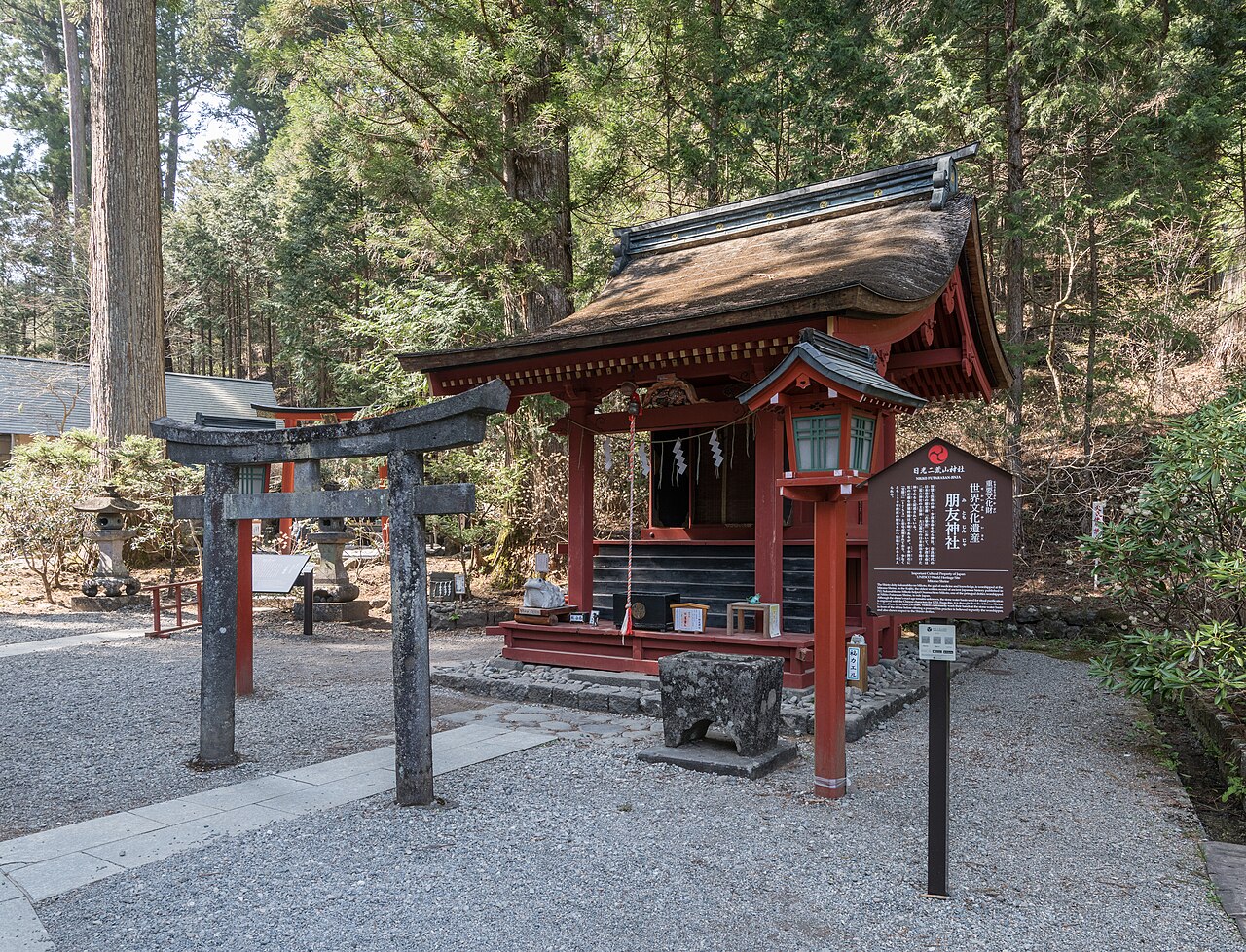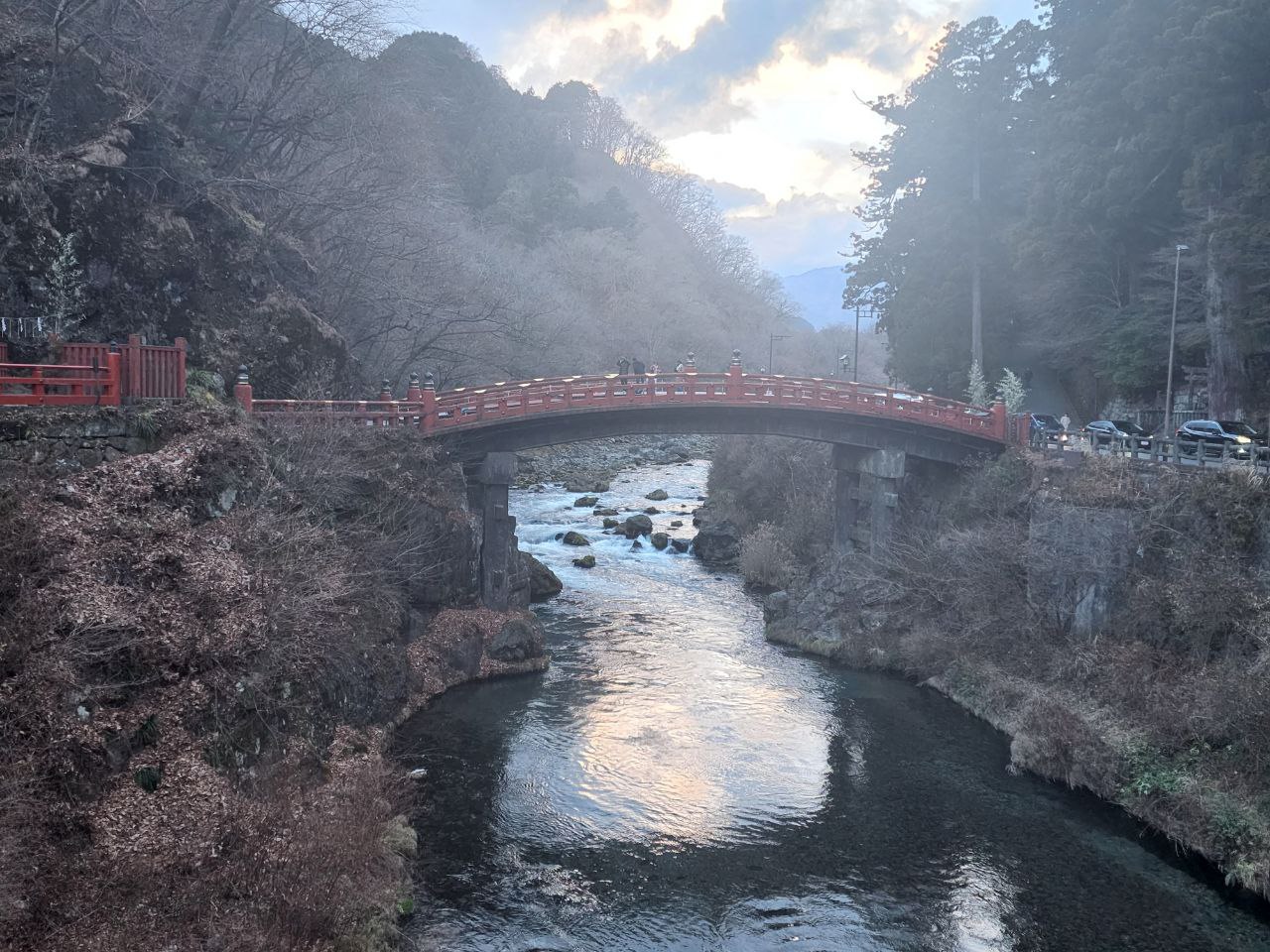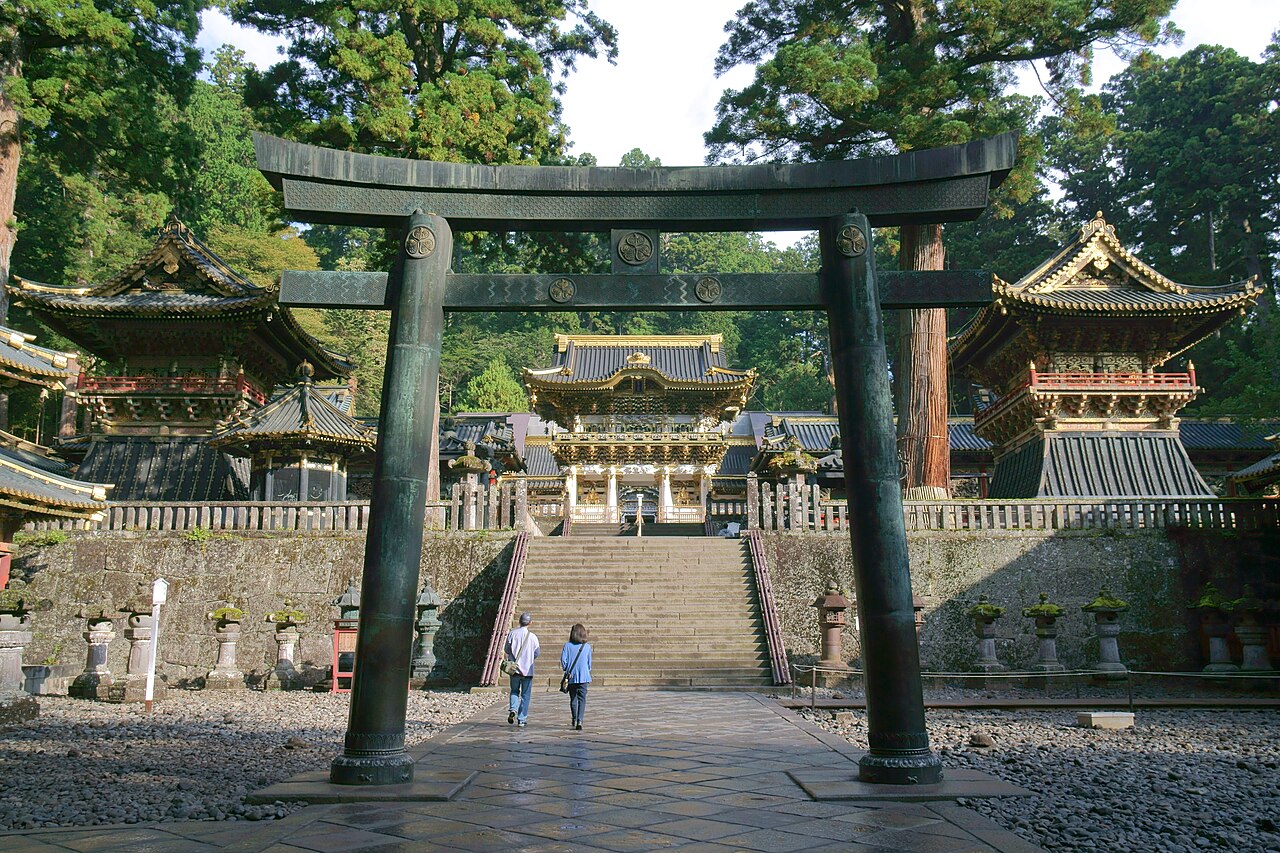
Taiyuin is the mausoleum of Tokugawa Iemitsu, the third Tokugawa shogun, and it sits in the temple precinct of Rinnoji just up the slope from Futarasan Shrine. Iemitsu is the man who rebuilt Toshogu on its present lavish scale, yet when it came to his own tomb he chose restraint. The complex was built to face his grandfather's shrine, a gesture of respect, and it was kept slightly smaller and less glittering than Toshogu so that nobody could say the grandson had tried to outshine the founder. Restraint in Nikko is a relative idea. Taiyuin still has black lacquer and gold leaf, carved dragons and lions under every eave, and a series of gates that raise the drama step by step as you climb. The prayer hall, the highlight of the site, is richly painted inside, and a number of the buildings are designated National Treasures. For many visitors this is the most rewarding part of the whole World Heritage area, because the mood is intimate where Toshogu is overwhelming.
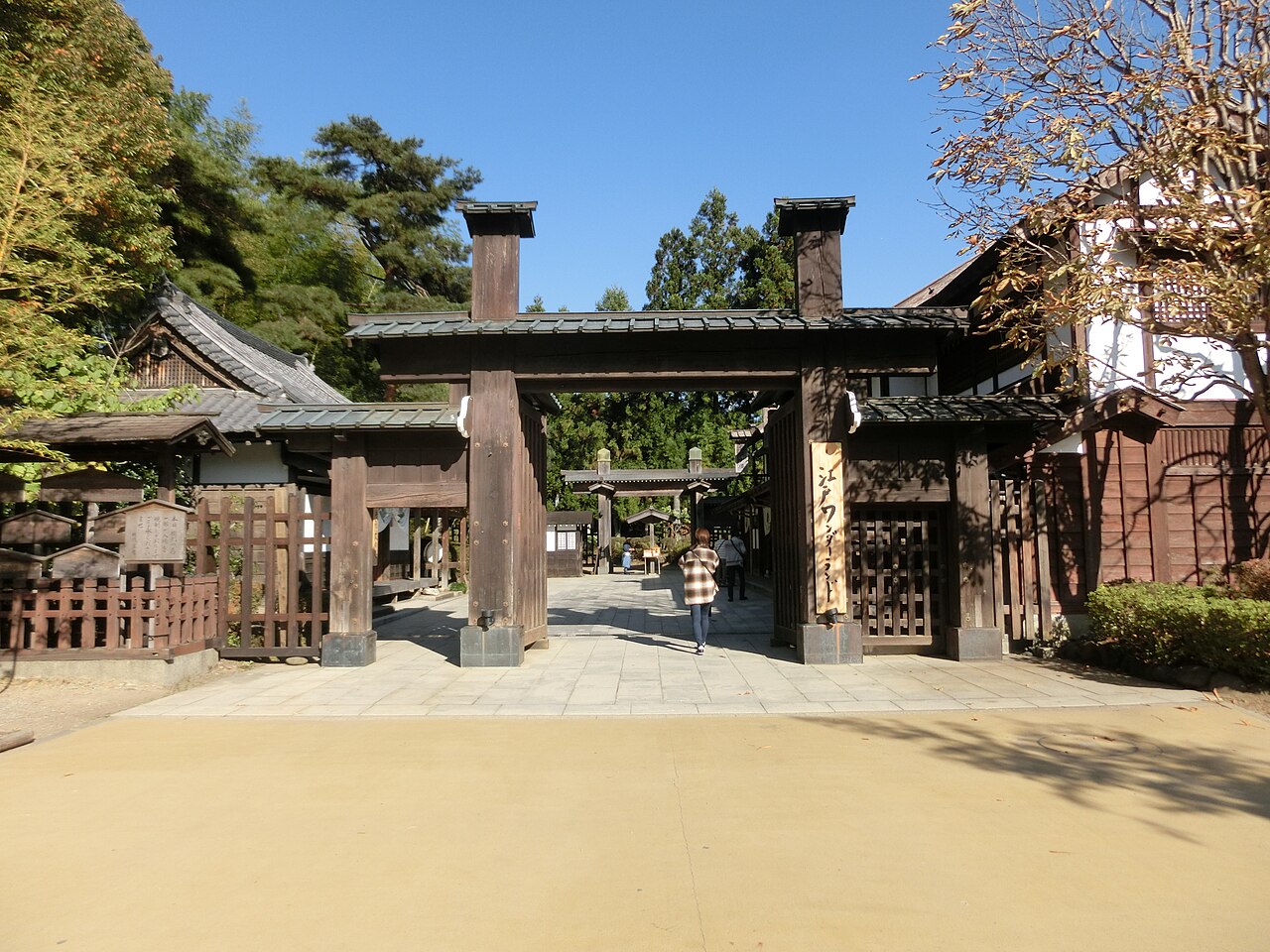
The approach is part of the experience. You pass first through Nitenmon, a gate guarded by fierce painted deities, then climb a flight of stone steps past lanterns and the huge bell and drum towers before reaching the next gate, Yashamon, where four colourful guardian figures keep watch. Beyond it stands Kokamon, a white and gold gate in the Chinese style that many people rate as the most beautiful thing at Taiyuin.
Every gate is more elaborate than the last, which is a deliberate piece of stagecraft: the precinct is designed so that you feel yourself moving closer to something sacred.
Inside the main courtyard the prayer hall and its connecting buildings are covered in painted patterns, coffered ceilings and carvings. The colours are strong, deep reds and blues and greens with gold picking out the details, and the interiors repay a slow look. Beyond the hall, a path leads further up to the inner shrine where Iemitsu is entombed, a small, quiet, dark-doored structure that feels very different from the colourful buildings below it. The contrast is the point. Public splendour sits in the courtyard, and private rest is up the hill under the cedars.
Practicalities are simple. Taiyuin is reached by its own entrance ticket, sold at the gate, and it is a few minutes' walk from Futarasan Shrine and Rinnoji's Sanbutsudo hall, so it fits naturally into a day that also includes Toshogu. Buses from both Nikko stations take roughly a quarter of an hour to the stop near the entrance.
Shoes may need to come off in the hall, so wear socks. In winter, the precinct generally follows the shorter closing time of the neighbouring temples, so check the hours before you go and do not leave it for the end of the day. Stone steps and gravel make it harder for wheelchairs and strollers than the main Toshogu circuit.
If you have time for only one mausoleum, most first-time visitors choose Toshogu, and that is reasonable. If you have time for both, do Toshogu first for the spectacle and Taiyuin afterward for the calm. Many people who do this find they remember Taiyuin more fondly, because the crowds thin out and the gates, one after another, reward looking up.
What to expect
The experience
A stepped climb through a sequence of gates to a painted prayer hall and, further up, the inner tomb, all on its own entrance ticket.
Best time
Early afternoon on a weekday, after Toshogu has done its work on the crowds; mornings in the first half of November for the maple colour.
How long
About an hour, a little more if you climb to the inner tomb and stop at every gate.
Tips
Wear socks, take your time at Kokamon, and watch the winter closing time, which is earlier than in summer.
Quick picks
- Best for
- Anyone who wants the Nikko shrine experience without the biggest crowds.
- Families
- Older children enjoy the guardian statues and the dragons; the steps are tiring for small ones.
- Couples
- A calm, atmospheric pairing after the bustle of Toshogu, especially in soft afternoon light.
- Pair with
- Rinnoji's Sanbutsudo hall, Futarasan Shrine and Toshogu in the same day.
- Time needed
- One hour.
Good questions
Why is Taiyuin less grand than Toshogu?+
Iemitsu had it built to face his grandfather Ieyasu's shrine and kept it more modest out of respect. It is still richly decorated, just on a smaller scale.
Is Taiyuin worth visiting if I have seen Toshogu?+
Yes. The mood is quieter, the gates are beautiful and the crowds are thinner. Many visitors say they enjoyed it more than expected.
Do I need a separate ticket?+
Yes, Taiyuin has its own entrance ticket, sold at the gate. It is separate from the Toshogu and Futarasan tickets.
How do I get there from the stations?+
A World Heritage area bus from either Nikko station takes roughly a quarter of an hour to the stop near the entrance. Walking from Toshogu takes about ten minutes.
Can I take photographs?+
Outdoors, yes. Rules for the interiors vary and signs at the entrance say what is allowed, so check them before you raise the camera.