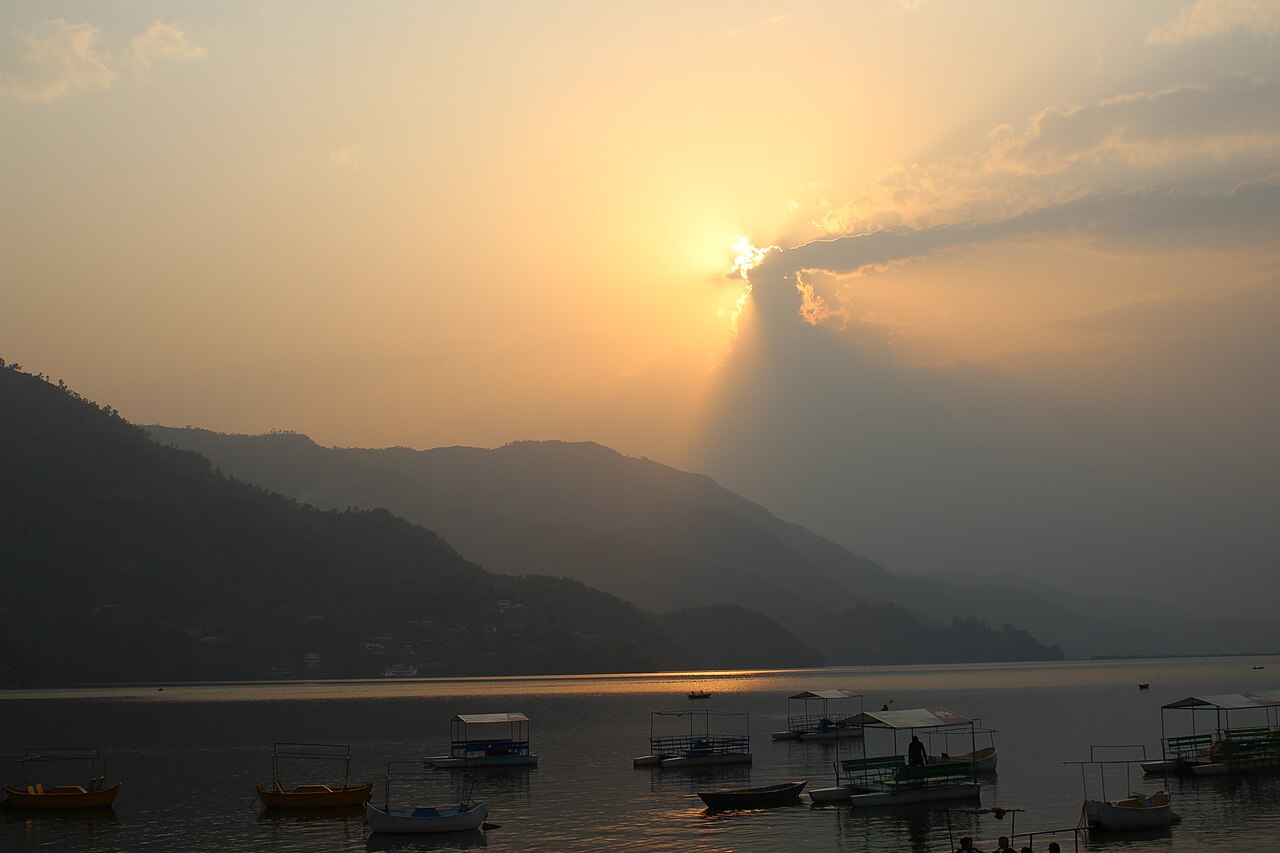
Most visitors see Pokhara through its lake and its views, but the valley and the hills around it hold a second layer of culture, ritual and village life. This guide pulls together the places that reward a slower pace, from an evening ritual on the lakeshore to a night in a Gurung village, and shows how to combine them with the better-known sights.
Start at the water
Barahi Ghat, the jetty at Lakeside where boats leave for Tal Barahi Temple, is also a place of evening ritual. A short aarati at dusk, with lamps, chanting and bells, is one of the most atmospheric cultural moments in the city and costs little time. Go with a guide if you want the meaning explained, dress modestly and keep photography discreet.
Old Pokhara
Away from Lakeside, Old Bazaar and Bindhyabasini Temple show the older, working town, with Newari-style lanes, shops selling brass, spices and textiles and a white-domed temple that is busy with worshippers. Visit in the morning, when the light is soft and the shops are opening. The Tibetan settlements add another layer, with monasteries, prayer wheels and carpet workshops that tell the story of the refugee communities who settled here.
Sacred places in the hills
The World Peace Pagoda is the best known, reached by a forest walk or a short drive, and it gives a view back across the lake. Farther afield, Manakamana Temple is a pilgrimage hilltop reached by cable car, where devotees come to make wishes to the goddess Bhagwati. It is a full day trip, with long drives and lively crowds, and it suits travelers who are curious about living Hindu traditions.
Villages and ridges
For a taste of rural life, an overnight at Ghandruk, a Gurung hill village of slate roofs and stone steps, is hard to beat. Panchase Hill offers a quieter forest ridge and a sunrise view, and Australian Camp and Dhampus make easy day hikes. In each case, a night or a meal in a village does more for local families than a hurried stop, so choose homestays and family-run lodges where you can.
Above it all
If you prefer to see the valley from the air, a hot air balloon flight at dawn is the gentlest option. It is quieter than a paraglide, it needs no experience and it frames the lakes, terraces and the Annapurna range in one sweep. Weather decides, so book early in your stay and keep a spare morning. For a free alternative, the Sarangkot sunrise gives a similar panorama from solid ground.
Wheels and water
A guided mountain bike day connects villages and lakeshore trails at your own pace, and canyoning or multi-day rafting brings adrenaline into the mix. These are best kept for days when you are fresh, and each needs a reputable operator, so ask about safety, equipment and cancellation terms.
Etiquette in sacred places
Remove shoes where signs or other visitors show you should, wear clothes that cover shoulders and knees, walk clockwise around stupas and prayer wheels, and keep voices low. Ask before photographing people, especially at ceremonies, and avoid pointing your feet at statues or shrines. Leather items are sometimes restricted inside temples, so check at the entrance.
Sample plans
For a culture-first day, begin with Old Bazaar and Bindhyabasini Temple in the morning, visit the Tibetan settlements after lunch and finish with the evening aarati at Barahi Ghat. For a village weekend, take an overnight at Ghandruk or Panchase, return to Pokhara on day two for a lake boat and a spa afternoon, and add a dawn balloon flight on day three if the weather is clear. For a pilgrimage day, leave early for Manakamana, return by late afternoon and spend the evening quietly at your hotel.
Where to base yourself
Lakeside hotels put you near the jetties and the evening ritual, while quieter hillside lodges are better for sunrise walks and village trips. Hotel Middle Path and Spa and Hotel Delight Inn are close to the water, and Tiger Mountain Pokhara Lodge offers a hillside retreat with a pool and spa.
Seasons
October and November bring the clearest skies and festivals, spring is warm and green, winter is cool and clear in the mornings and the monsoon brings cloud, rain and leeches on the trails. Check the festival calendar, because major Hindu and Buddhist festivals bring processions and crowds, and plan transport and accommodation ahead if you want to witness them.