Pokhara is the gateway to the Annapurna region, and almost every route into the mountains begins with a taxi, a jeep or a short bus ride from the lakeside strip. The choice is wide: you can be on a ridge watching sunrise after one night, or crossing a 5,400 meter pass after nine. This guide compares the main options so you can match the trek to your time, fitness and appetite for altitude.
Start with the question of time
With two to three days you can do the short Poon Hill trek or an overnight at Ghandruk or Panchase. With four to five days the choices widen to a longer Poon Hill loop or Mardi Himal. A week opens the door to Annapurna Base Camp or the Khopra Danda ridge, and nine days or more puts the Annapurna Circuit within reach. If you have less than two days, a day hike to Australian Camp and Dhampus is the best taste of the foothills.
Poon Hill
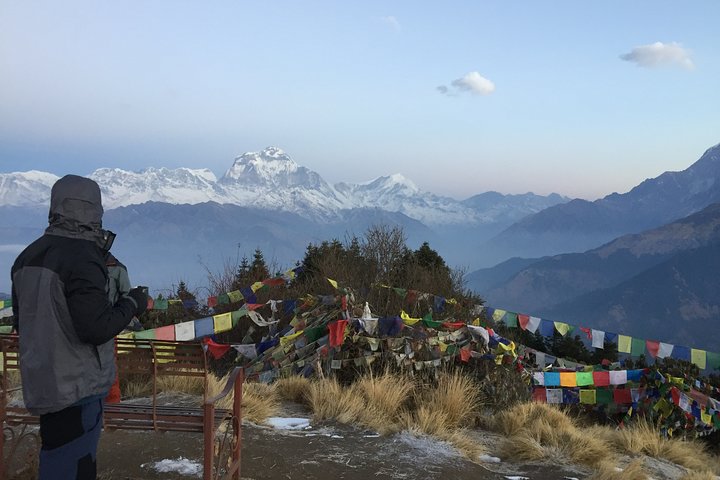
At around 3,200 meters, Poon Hill is the classic first Himalayan trek. The route climbs stone staircases through rhododendron forest to Ghorepani, then goes up in the dark for a sunrise over Dhaulagiri and the Annapurna range. A short two day version moves quickly with transport, while four or five days adds Ghandruk and a more relaxed pace. It is the best choice for first-time trekkers and for families with older children.
Mardi Himal
This ridge trek climbs through forest to high camp and the Mardi Himal viewpoint, with Machhapuchhre almost close enough to touch. It takes four to five days, reaches roughly 3,700 meters at the high camp and feels wilder and quieter than Poon Hill. It suits walkers who want a real ridge walk and are comfortable with simple lodges and cold nights.
Annapurna Base Camp
The big one for many visitors, ABC takes about a week to reach roughly 4,130 meters inside the Annapurna Sanctuary. Days are longer, the altitude is serious and the reward is a glacial amphitheater at dawn. Choose it if you are fit, have a week and are happy to follow an acclimatization plan. If you prefer to skip the walk, a helicopter landing gives the view in a morning, though not the experience of earning it.
Khopra Danda and Kapuche
For quieter alternatives, Khopra Danda is a community-run ridge at about 3,660 meters with huge views of Dhaulagiri and Annapurna South, and Kapuche Glacier Lake is a low glacial lake reached through the Gurung village of Sikles. Both see far fewer trekkers than the main trails and suit people who value solitude over fame.
The Annapurna Circuit
The great long-distance trek crosses Thorong La at 5,416 meters and descends to Muktinath. Road building has shortened parts of it, and many itineraries use vehicles on lower sections, but it remains a serious high-altitude journey. If you want the dry-side scenery without the pass, a Lower Mustang jeep tour covers the Kali Gandaki valley by road.
Fitness and altitude
Train with hills and stairs for several weeks before you arrive, and break in your boots. Altitude sickness can affect anyone above about 3,000 meters, so ascend slowly, drink water, avoid alcohol, and tell your guide at the first persistent headache or nausea. Descent is the cure, and a good operator will not argue.
Permits and guides
Treks in the Annapurna Conservation Area require permits, and operators normally arrange them. Independent trekking is possible on some routes, but a licensed guide adds safety, local knowledge and support for the local economy, and some areas require one. Confirm what is included in your booking, including permits, transport, lodging, meals and a porter if you are not carrying your own pack.
Season
October and November bring the clearest skies and the busiest trails, March to May is warm with rhododendron in bloom, winter is cold at altitude and the monsoon is wet, leech-prone and cloudy. Book teahouse trips early in autumn.
Before and after
Arrive a day early to collect permits and pack, leave spare luggage at your hotel and plan a comfortable night when you return. A massage, a lake boat and a good meal in Lakeside are the best reward for sore legs, and a Sarangkot sunrise before you leave gives a preview of the mountains you are about to enter.
Insurance
Make sure your policy covers trekking at the altitude you plan to reach and emergency evacuation. Many standard policies exclude altitudes above 3,000 or 4,000 meters, and helicopter rescue is expensive. Carry copies of your policy and emergency contacts, and tell your hotel your route and expected return date.