Avignon is one of the best bases in France for day trips, with a rail station, a river and a ring road that put an astonishing range of sights within an hour. This guide sorts the options by theme, gives rough travel times and suggests sensible pairings, so that you spend your time looking rather than driving. All times are approximate and depend on traffic and season.
By train, without a car
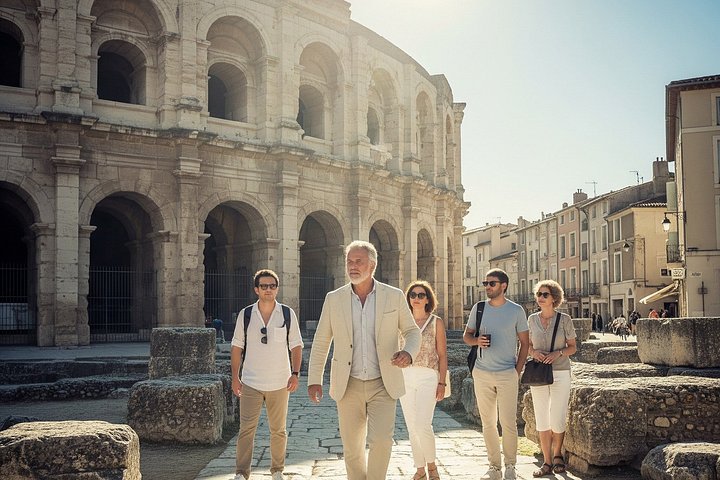
Arles is the easiest rail trip, about twenty minutes from Avignon, and it gives you the Roman amphitheatre and theatre, the Van Gogh trail and a good lunch in one day. Orange is also reachable by train in a short ride, and its Roman theatre and triumphal arch are within walking distance of the centre. Aix-en-Provence takes more effort by rail but is a good city day, with the Cours Mirabeau, fountains and cafes. Villeneuve-lès-Avignon is just across the river and can be reached on foot or by a short bus ride. If you do not want to drive, these four are the best choices.
By car or small-group tour, the villages
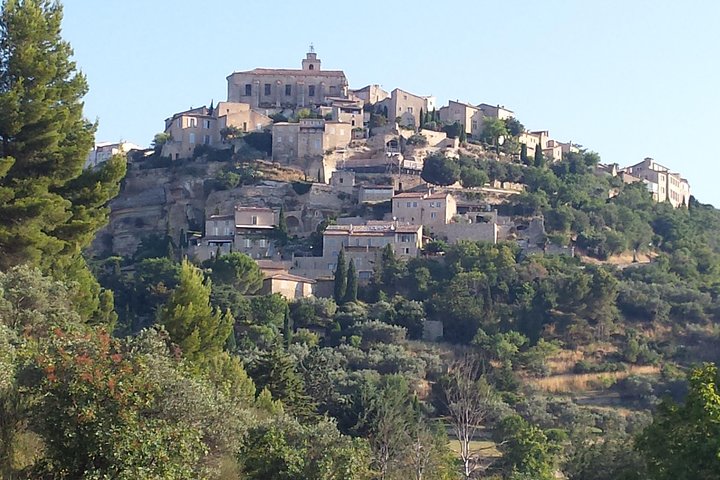
The Luberon hill villages are best seen with a car or a tour, as public transport is limited. Gordes is perched on a hillside and looks spectacular from the road, Roussillon is built on ochre cliffs with a trail through the old quarries, and the Abbaye de Sénanque sits in a quiet valley below Gordes. Allow a half to a full day and about an hour each way from Avignon. On the way back, stop at Fontaine-de-Vaucluse for the spring and at L'Isle-sur-la-Sorgue for its water wheels and antiques shops, which are open most days and especially busy on Sundays.
Roman Provence
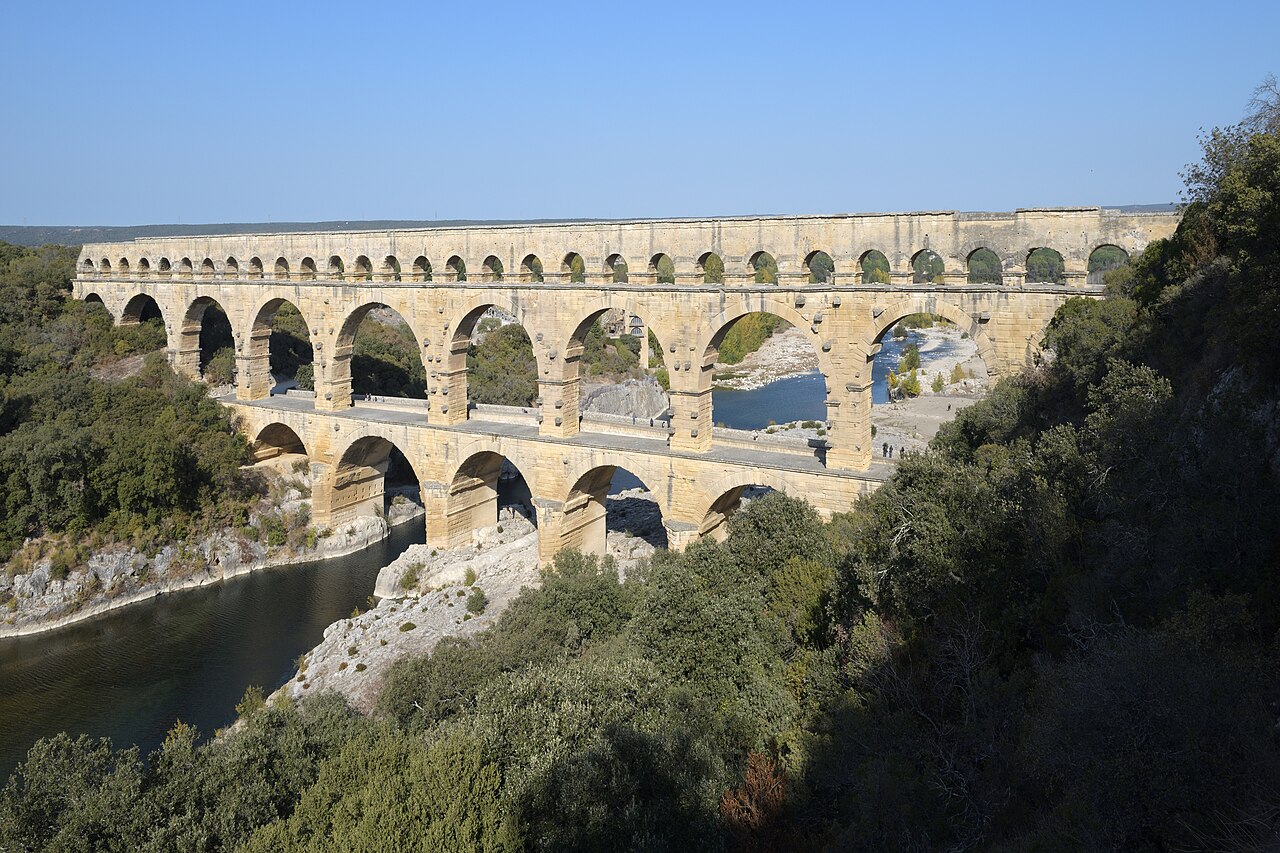
The Pont du Gard is about half an hour from Avignon, a huge Roman aqueduct bridge over the Gardon river that can be walked around at no cost, with paid parking. It pairs well with Nîmes or with Uzès. Orange, thirty minutes north, has the Roman theatre with its famous stage wall. Saint-Rémy-de-Provence has the Roman site of Glanum with its arch and mausoleum. Arles has the amphitheatre. A day built around the Pont du Gard and Orange, with lunch in between, is a satisfying Roman route.
Wine and food
Châteauneuf-du-Pape is about twenty minutes by car, and a half-day wine tour from Avignon is the easiest way to taste several cellars without worrying about driving. Combine it with Orange for a full day. The Luberon and the Ventoux wine roads are quieter alternatives. Many cellars close at lunchtime and on some days, so book tastings ahead.
The Alpilles and Les Baux
The hills south of Avignon hold Saint-Rémy, Les Baux and the Carrières des Lumières. Les Baux is a ruined castle town on a rock spur with sweeping views, and the Carrières des Lumières, in nearby old quarries, projects art onto the walls and floor of the caves. Saint-Rémy is a pleasant market town, and Glanum and the Van Gogh asylum are on its edge. Allow a full day, and start early to be at Les Baux before the tour groups.
A note on timing
Trips are most comfortable when you cap the day at two main stops and one long lunch. Rushing four villages in a day leaves little memory of any of them, while two stops with time to walk and sit give a much better impression of the region. Leave buffer time for parking and for the small roads, which are slower than they look.
Choosing and combining
For a first trip with two or three day trips, the best set is the Luberon villages, Arles and one of the Roman sites. For a wine lover, add Châteauneuf-du-Pape. If the weather is wet, favour the indoor options, such as the Carrières des Lumières, a wine tasting or the museums of Arles, and keep the villages and viewpoints for a clear day. In winter, days are short and the sun sets early, so start by nine and plan your last stop for the afternoon.
Getting around
A rental car offers the most freedom, and the roads are generally easy outside the busiest summer weekends, though village parking can be tight and some old centres are restricted. Small-group tours cover the Luberon, the Alpilles and the vineyards with a driver and a guide and are worth booking a few days ahead. Trains and local buses serve the larger towns. Whichever you choose, check opening days before you go, because many sights close one day a week and some villages shut for part of the winter.