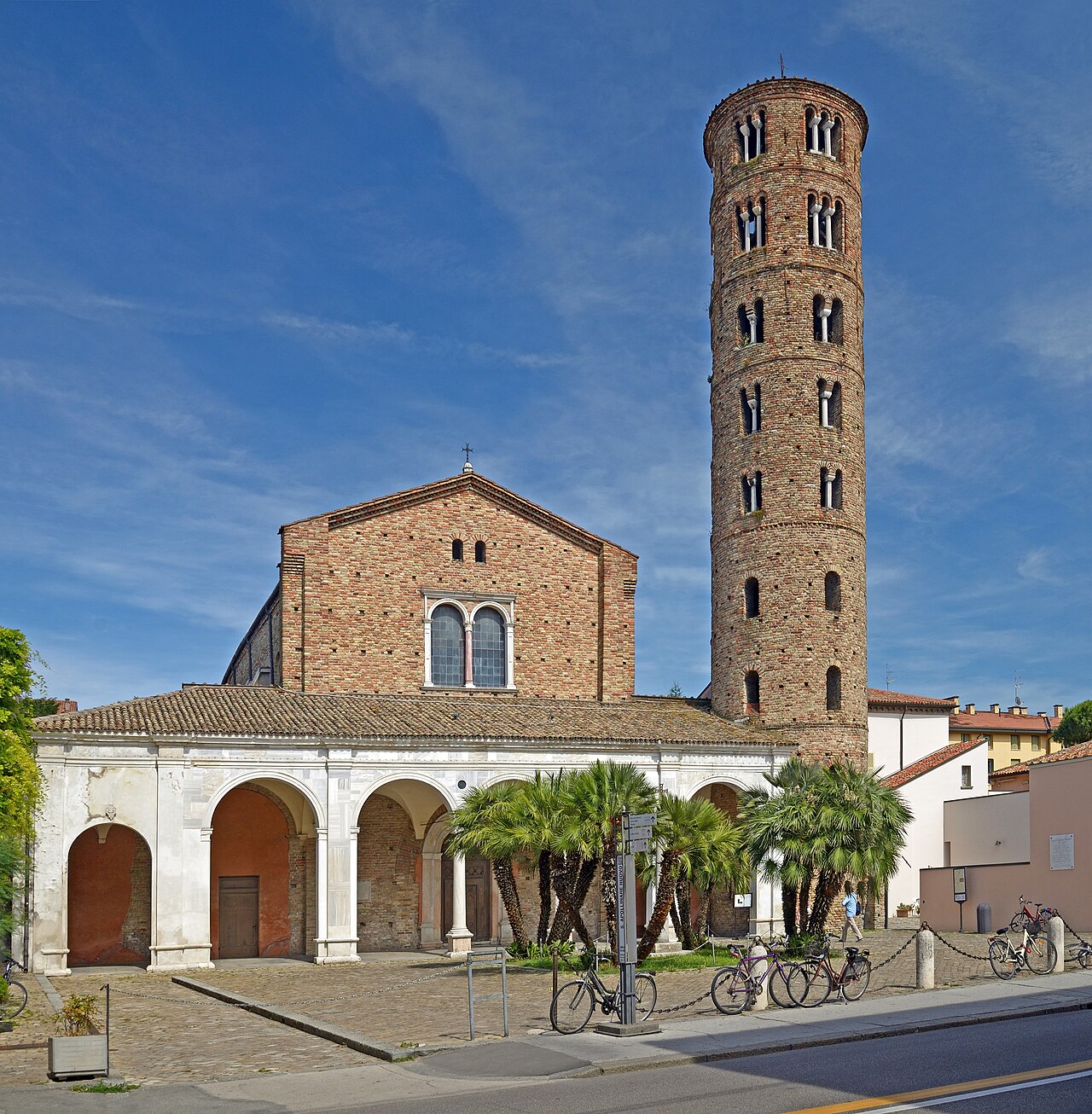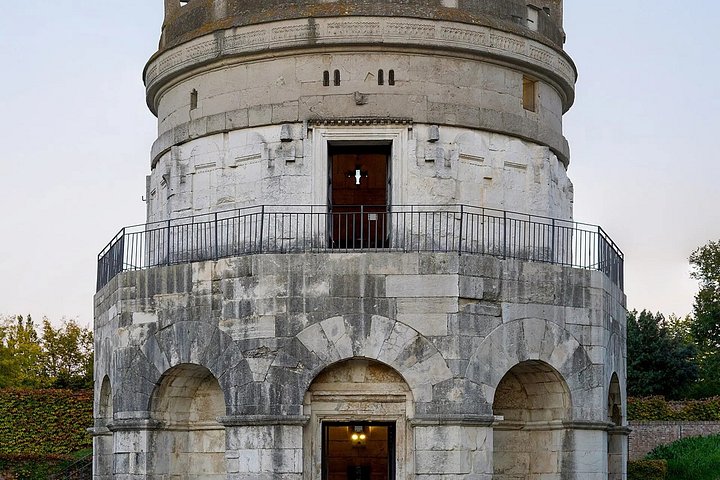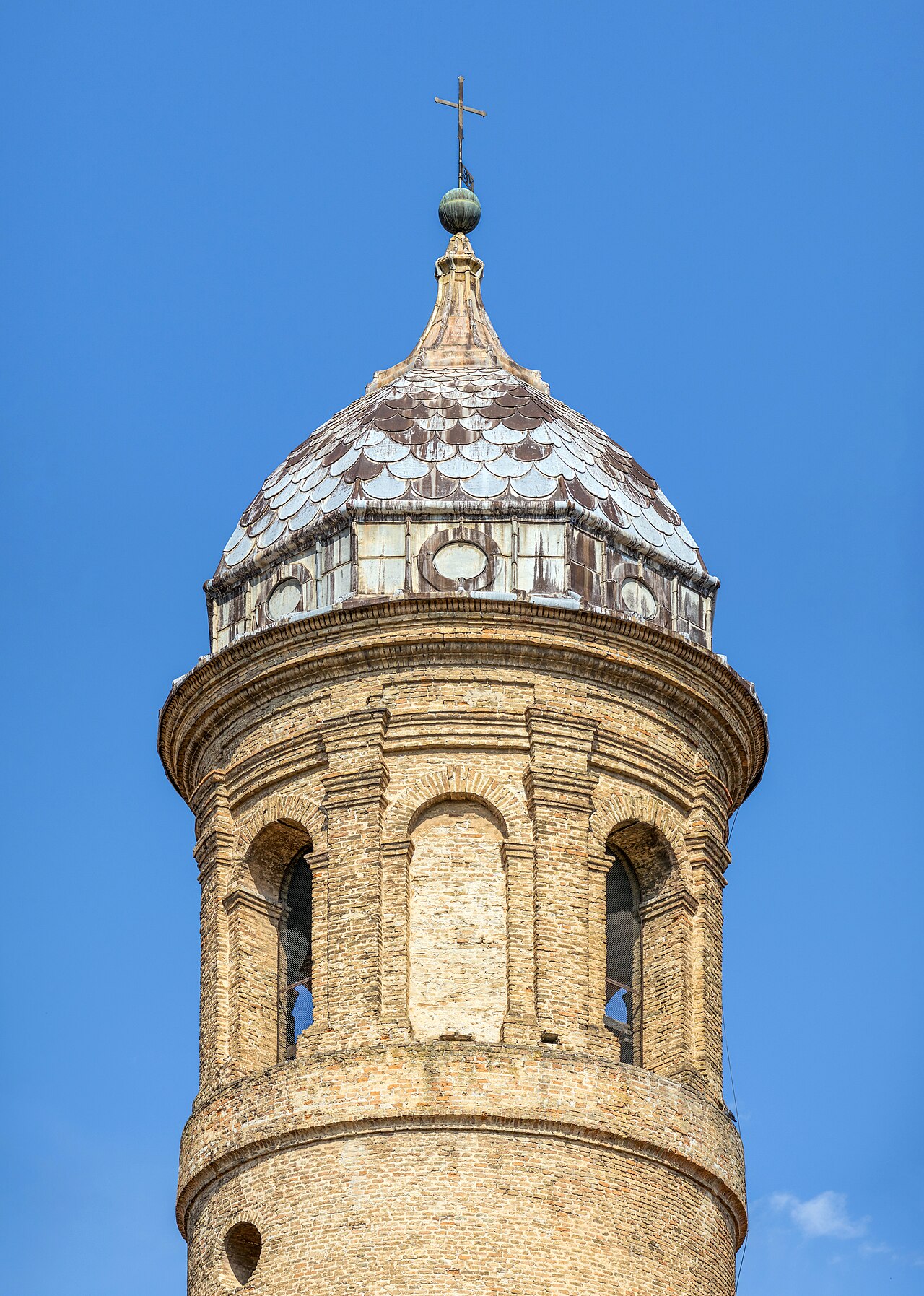
A short ride south of the centre, in the flat farmland that was once a busy Roman harbour, stand two sights that complete the picture of Ravenna. Classe was the port of the Roman fleet, founded by Augustus, and for centuries it was the reason the city mattered. Today the harbour has silted up and the sea is miles away, but the Classis Ravenna museum, housed in a converted sugar refinery, tells the story of the port and the city with finds, maps, reconstructions and multimedia displays. Across the road stands the basilica of Sant'Apollinare in Classe, consecrated in 549, a tall brick church with a round bell tower that looks across fields toward the pine forest. Together they form the eighth and final UNESCO monument in the group and a satisfying counterpart to the dense old town.
The basilica interior is a vast, plain nave lined with Greek marble columns and a wooden roof, and every eye goes straight to the apse. The mosaic here is a landscape rather than a ceremony. Saint Apollinaris, the first bishop of Ravenna, stands with his arms raised in prayer in a lush green meadow dotted with flowers, rocks and trees, while twelve white sheep, representing the apostles, walk toward him from either side.
Above, a jewelled cross floats in a starry blue disc, with the hand of God emerging from the clouds. It is a vision of paradise on earth, with a calm, open spirit unlike the courtly splendour of San Vitale, and the green is a colour not seen elsewhere in the city's mosaics.
The museum makes sense of what you see. Its galleries trace the layers of Roman and Byzantine Ravenna from the first harbour to the arrival of the Exarchate, with mosaics, marble inscriptions, coins and ship timbers, and it uses large screens to recreate the lost port. Descriptions are in Italian and English. Allow an hour for the museum and forty minutes for the basilica.
Getting there is simple
A local bus runs from the station area to Classe in a short time, and cyclists can follow a flat path through the fields. A single combined ticket covers the museum and basilica, which is the practical way to visit, and a guided option is available if you prefer context on the harbour. Many visitors pair this stop with a walk in the Pineta di Classe, the historic pine forest that lies a short distance away, making a relaxed half-day away from the old town.
What to expect
The experience
A museum visit followed by a basilica visit, on the edge of town in the former port area.
Best time
Morning, then lunch in town. The apse is best seen with good light.
How long
1.5 to 2 hours for both, plus travel.
Tips
Use the local bus or bike. Buy the combined ticket and sit in the nave for a minute to take in the apse.
Quick picks
- Best for
- Travellers who want the full story of Ravenna, not only the mosaics.
- Families
- The museum screens and open grounds are good for children.
- Couples
- A relaxed half-day with a peaceful countryside feel.
- Pair with
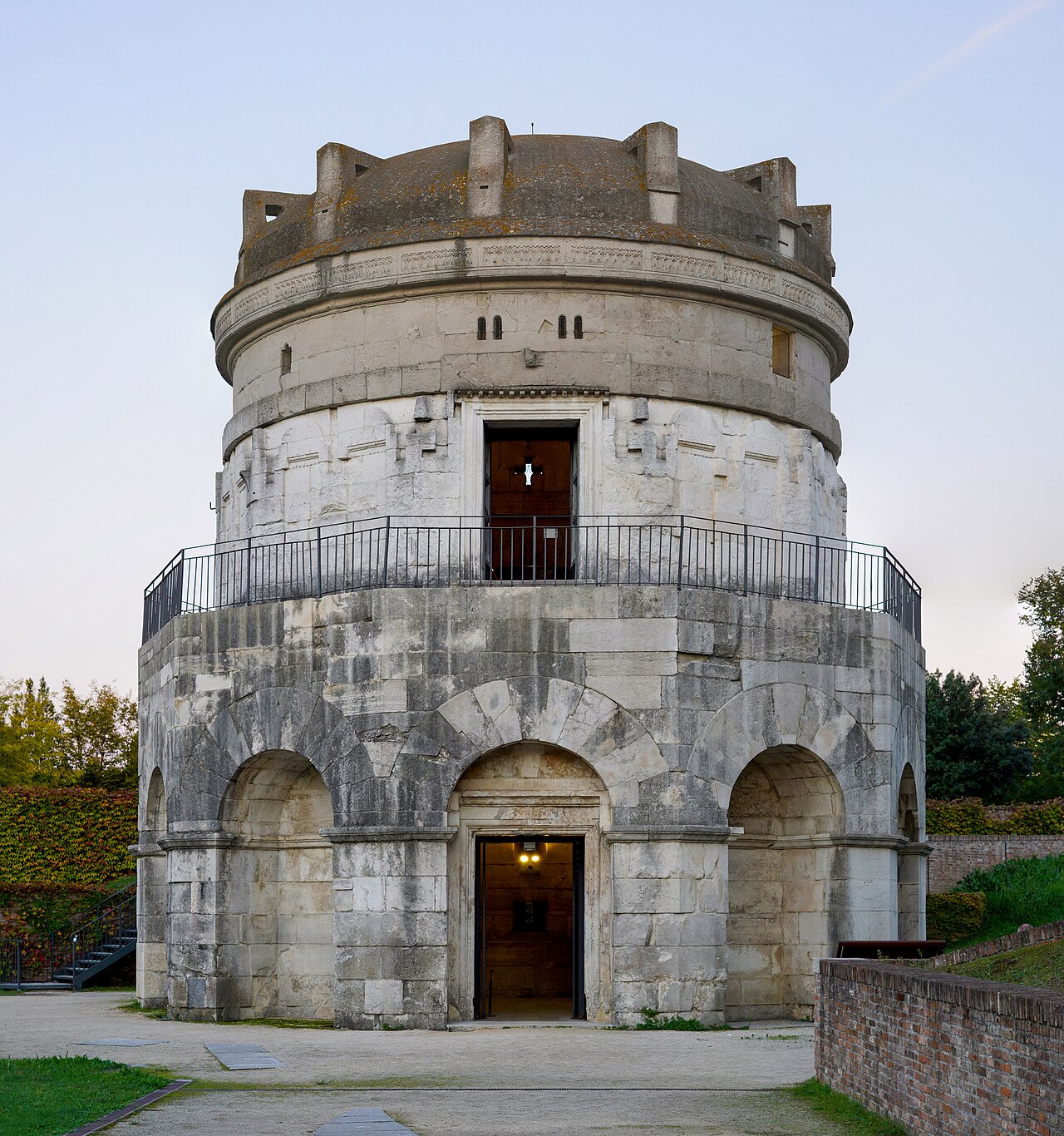
- Pineta di Classe and the Mausoleum of Theodoric.
- Time needed
- Two hours with travel.
Good questions
Why was Classe important?+
It was the port of Ravenna and the base of a Roman fleet, founded under Augustus. The harbour later silted up and the coast moved away.
What is special about the apse mosaic?+
It shows Saint Apollinaris in a green meadow with twelve sheep, under a jewelled cross, a rare landscape design among Ravenna's mosaics.
How do I get there from the centre?+
By local bus from the station area, by bike on a flat route, or by taxi. Check current timetables locally.
Do I need two tickets?+
A combined ticket for the museum and the basilica is the usual option, which keeps the visit simple.
Is it worth the trip?+
Yes, if you have the time. The basilica mosaic and the museum add depth and a break from the busy town centre.