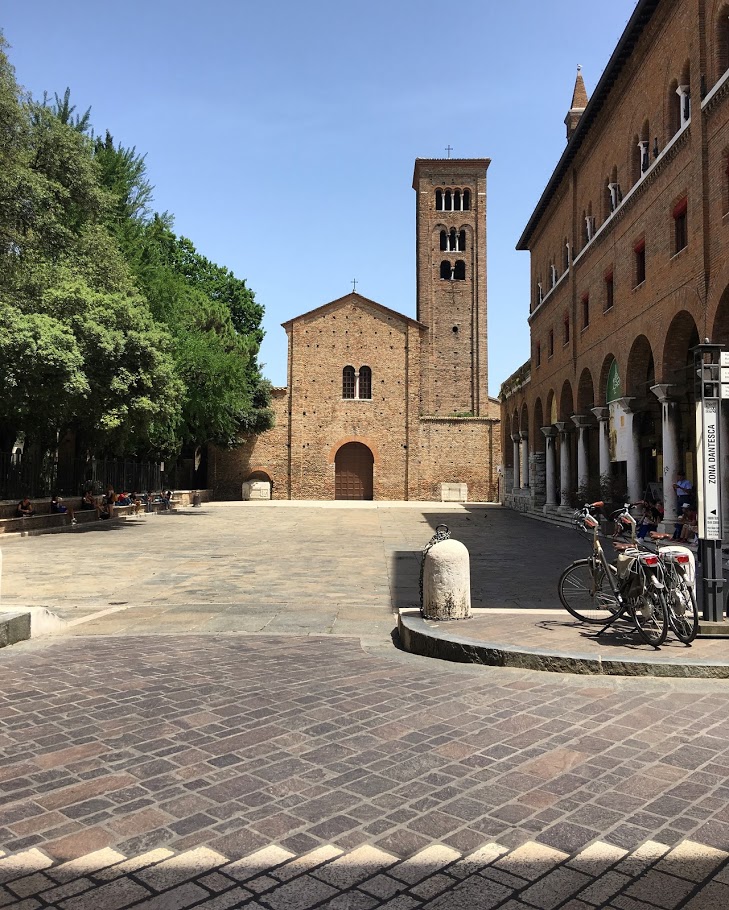
Dante Alighieri, the author of the Divine Comedy, died in Ravenna in 1321 after years of exile from Florence, and the city still guards his memory with quiet pride. His tomb stands in a small, serene precinct a few steps from the Basilica of San Francesco, in an area known as the Zona del Silenzio, the Quiet Zone. The building you see today is a neoclassical shrine from 1780, a small domed temple of pale stone with a bas-relief of the poet in profile. Inside is a plain stone sarcophagus under a lamp, the inscription naming him in Latin as the poet of the three kingdoms. Florence, which once condemned him, has asked repeatedly for his bones, and Ravenna has always refused. During the Second World War the bones were hidden in a mound of earth for safety, and they were returned to the tomb afterward.
There is no ticket for the tomb itself, and it is open for free viewing at set hours, which suits a short visit between other stops. The atmosphere is what matters here. The precinct is quiet and shaded, and the walls and garden make a small refuge in the centre of the old town.
Every September, around the anniversary of his death, the city holds a ceremony in which Florence supplies oil for the lamp that burns above the tomb, a gesture of reconciliation that has become a tradition. The sarcophagus is flanked by a laurel wreath and ribbon in the Italian colours, and inscriptions on the nearby walls quote lines from the poem.
For readers of Dante, this is a place of pilgrimage. For others, it is a fine example of how a city turns a literary figure into a living civic symbol. Beside the tomb, the Dante Museum, a small museum in a former convent, tells the story of his life, exile and works with models, manuscripts and illustrations. It has a separate ticket and a short visit of about forty minutes. A walk through the lanes nearby, including the churches and cloisters, brings the medieval town to life.
The tomb is a short stroll from Piazza del Popolo and lies within easy walking distance of most hotels. A visit takes ten to twenty minutes and pairs naturally with the Basilica of San Francesco beside it. If you want more depth, a self-guided audio tour of Dante's Ravenna ties the places together with a story. Respectful dress and quiet voices are appreciated in the precinct, and early morning is the most peaceful time.
What to expect
The experience
A free visit to a small tomb and a quiet courtyard beside the Basilica of San Francesco.
Best time
Early morning, when the Quiet Zone is peaceful.
How long
15 to 20 minutes.
Tips
Check opening hours, which can vary. Pair with the museum next door if you want more context.
Quick picks
- Best for
- Readers, pilgrims and anyone who wants a calm moment in town.
- Families
- Short and free, though children may want a story first.
- Couples
- A reflective stop and a lovely area to wander.
- Pair with
- Basilica of San Francesco and Piazza del Popolo.
- Time needed
- Twenty minutes.
Good questions
Why is Dante buried in Ravenna?+
He was exiled from Florence and spent his last years in Ravenna, where he died in 1321. The city has kept his remains ever since.
Is entry free?+
The tomb is generally free to view at set hours. The nearby Dante Museum charges its own entry.
What is the Quiet Zone?+
A calm area around the tomb and San Francesco, where visitors are asked to keep voices low.
What is the oil ceremony?+
Each year Florence provides oil for the lamp over the tomb in a ceremony of reconciliation around the anniversary of Dante's death.
Can I visit with children?+
Yes. It is short, and a quick story about the poet helps.