Ravenna's mosaics are the main reason people come, and they reward understanding. A little background turns a pretty room into a story. This guide explains how the mosaics were made, how the styles change across the centuries and what to look for at each monument.
What a mosaic is
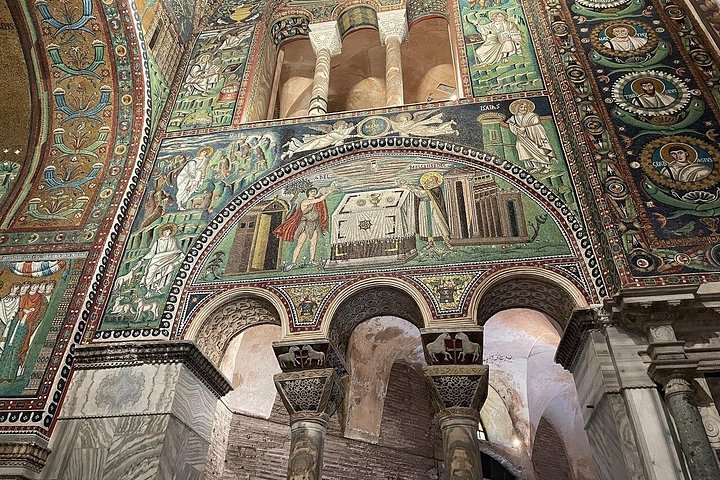
A mosaic is a picture made of small cubes called tesserae. In Ravenna, the cubes are of stone, coloured glass and glass backed with gold leaf. They are set into wet plaster on walls and vaults, often at slightly different angles so that light catches them in different ways. This is why the gold seems to shimmer as you move. Look closely and you will see the tiny gaps and the changes of direction that give the surfaces life.
Why Ravenna
In 402 the Western Roman emperor moved his court here for safety. After the empire fell, the Ostrogoth king Theodoric ruled Italy from Ravenna from 493 to 526. Then in 540 the Byzantine army of Justinian took the city, and it became the western seat of the empire in Italy. Each period left its own monuments, and that is why the city holds a rare sequence of styles in one small place.
The Roman phase
The Mausoleum of Galla Placidia and the Neonian Baptistery show an early style, still close to classical Rome. Figures are naturalistic, with soft shading, and the settings are landscapes and gardens. The Good Shepherd in Galla Placidia is a young, relaxed figure among sheep, not a stern king. The deep blue vault with its gold stars is among the most beautiful ceilings in Italy.
The Gothic phase
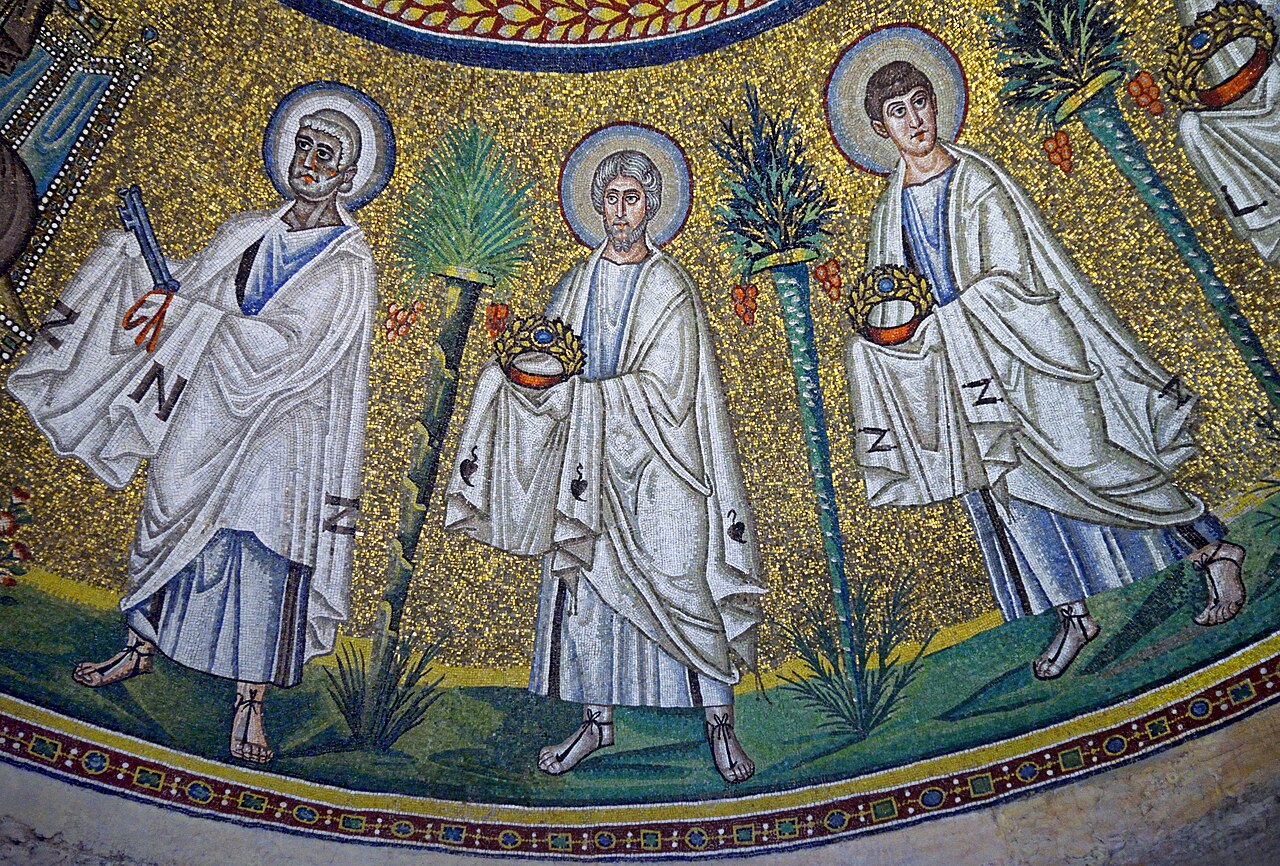
Under Theodoric, the Arian Baptistery and Sant'Apollinare Nuovo show a clear narrative style. In the long nave, processions of saints walk in rhythm toward Christ. Look for the palace of Theodoric and the harbour of Classe. Look also for the columns where figures have been removed. The mosaics were altered when the political order changed, a reminder that art here was always tied to power.
The Byzantine phase
San Vitale and Sant'Apollinare in Classe show the mature Byzantine manner. Figures are frontal and elongated, with large dark eyes and no real shadow. Gold backgrounds suggest a heavenly space. The panels of Justinian and Theodora are formal, with each person placed carefully in a row. In Classe, the apse is a green meadow with sheep, a more symbolic and spiritual image.
What to notice
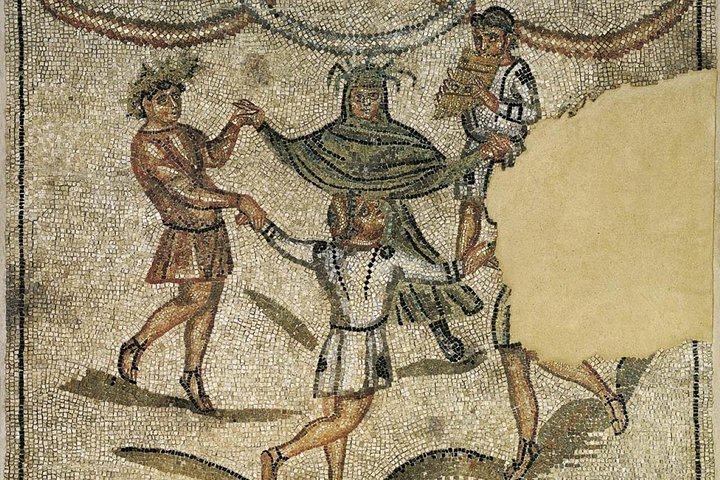
Start with the faces and hands. Then look at the borders, which often contain small birds, flowers and geometric patterns. Notice the colour: purple, which was the imperial colour, appears at San Vitale in the robes. Compare the baptisteries: both have the baptism of Christ in the dome, but the Arian one is brighter and more open. Compare floors and walls: the Domus of Stone Mosaics shows what mosaic looked like at home.
How to see them well
Go early, bring binoculars if you have them and use your phone zoom for details. Take your time, because the first impression is only a part of the effect. A guide or audio tour adds context, but you can also read a short summary before your visit. Rules on photography vary.
Common questions
Are the mosaics original? Most are, although some areas have been restored over the centuries, and restorers work with traditional materials. Why are the faces so solemn? Byzantine art aimed to show a spiritual, timeless reality, not a snapshot. Why so much gold? Gold stood for divine light and imperial status, and it also reflects candlelight beautifully.
A suggested order
To feel the change of styles, visit Galla Placidia first, then the Neonian Baptistery, then Sant'Apollinare Nuovo, and finish with San Vitale and Classe. In that order you walk through a century of change, from classical grace to Byzantine majesty.
Reading the symbols
Look for the lamb, which stands for Christ, the peacock, a sign of eternal life, and the vine, a symbol of the Church. Deer drinking from water refer to the soul seeking baptism. Knowing a few of these symbols turns a decorative scheme into a message.
Seeing the craft today
Ravenna still has working mosaic studios and a mosaic school. Several offer short workshops where you can try setting tesserae. It is a good way to understand the effort behind the old masterpieces.