Ravenna is a small city with an outsized reputation. Eight early Christian monuments share a single UNESCO inscription, and the best of them hold some of the finest mosaics in the world. Two days is the ideal length of stay: enough to see the highlights without rushing, and enough to enjoy the evenings in the old town when the day trippers have gone. This plan groups the sights geographically so you spend your time looking, not travelling.
Before you go
Buy a combined ticket for the main mosaic monuments, which covers San Vitale, the Mausoleum of Galla Placidia, Sant'Apollinare Nuovo and the Neonian Baptistery, among others. It saves money and queues. Check opening hours locally, since some sites close for a midday break and hours change by season. Wear comfortable shoes, since the centre is entirely walkable, and carry a light layer for the cool interiors.
Day one morning: the San Vitale quarter
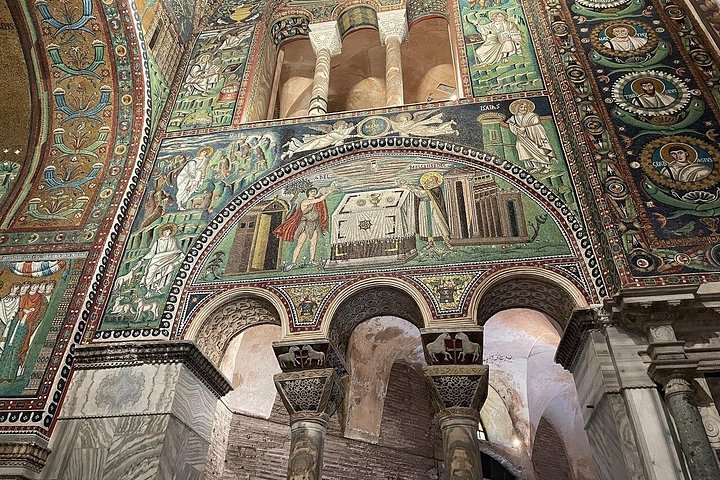
Start early at the Basilica di San Vitale, before the tour groups arrive. Spend a full hour inside, letting your eyes adjust to the gold, and study the Justinian and Theodora panels from several angles. Step next door to the Mausoleum of Galla Placidia and its starry blue vault. The visit is short but unforgettable. If you have energy, add the Archiepiscopal Museum for the ivory throne and the chapel.
Day one afternoon: baptisteries and Dante
Break for a long lunch, perhaps piadina or a plate of fresh pasta. In the afternoon, visit the Neonian Baptistery and the Arian Baptistery to compare the two dome mosaics. Then walk to the Dante quarter. His tomb is free, the Basilica of San Francesco has the flooded crypt with goldfish, and the quiet streets around them are pleasant to wander. If you like stories, download the Dante audio walk before you set out.
Day one evening
Walk to Piazza del Popolo for aperitivo. The square fills with locals, bicycles lean on every wall, and the arcades glow. Dinner in the old town can be as simple as cappelletti in broth or tagliatelle with ragu, with a glass of Sangiovese. Ravenna goes to bed early, so book ahead for popular restaurants.
Day two morning: Sant'Apollinare Nuovo and the Domus
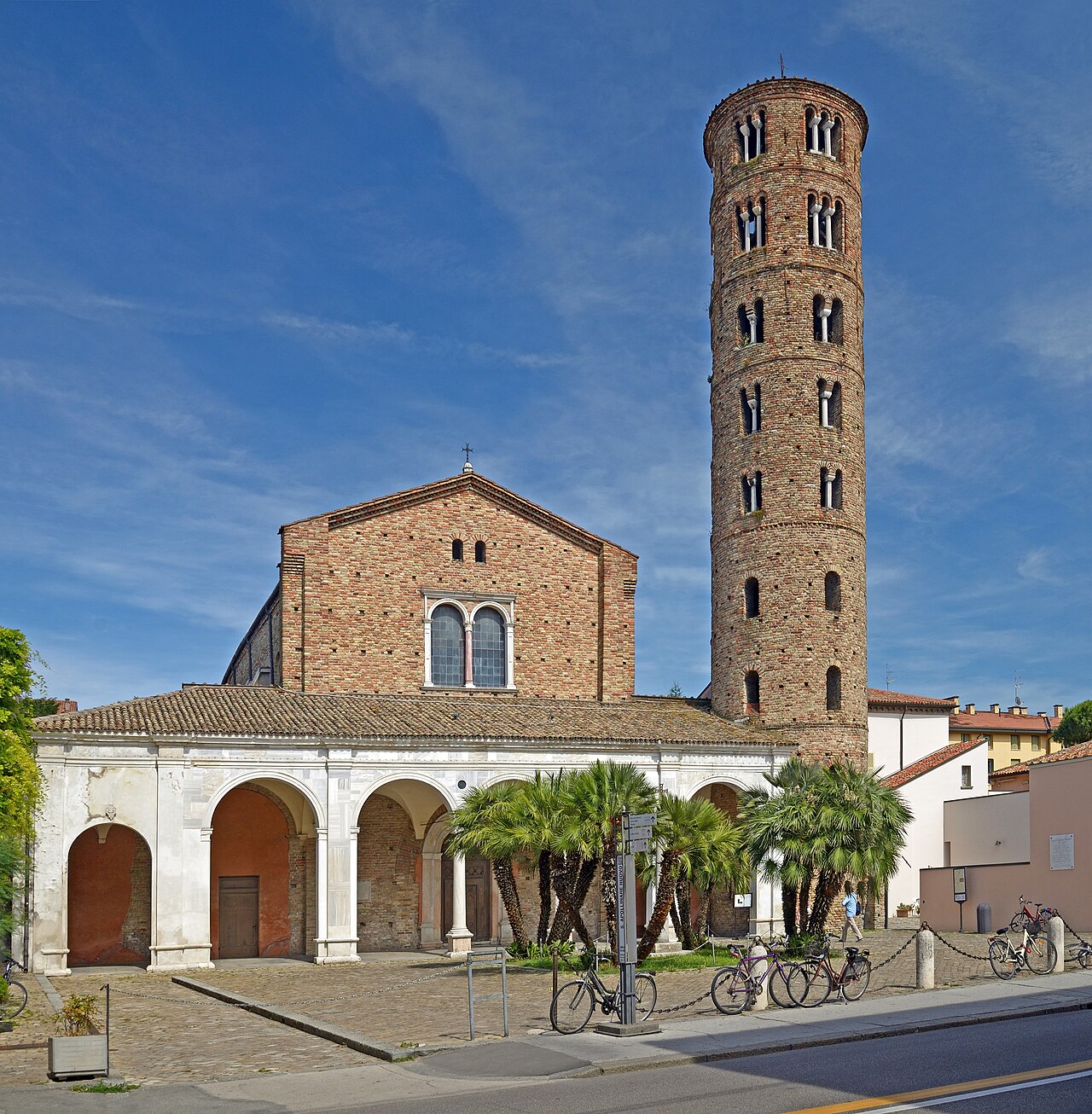
Begin at Sant'Apollinare Nuovo, where the long mosaic processions of saints and the harbour of Classe unfold along the nave. Then descend into the Domus of Stone Mosaics for a look at sixth-century floors from a Byzantine house. The contrast between gold walls and everyday floors is the best lesson in the city's history.
Day two afternoon: Classe or the sea
After lunch, head south to Classe by bus or bike. The Classis Ravenna museum tells the story of the ancient port, and the basilica of Sant'Apollinare in Classe has a green apse mosaic unlike anything in the centre. On the way back, stop at the Mausoleum of Theodoric, a ten-sided tomb with a dome cut from a single stone. In summer, replace this with an afternoon on the beaches of Marina di Ravenna.
Day two evening
Choose a longer meal. Seafood from the Adriatic, a local Albana, and a stroll along the canal at the Darsena make a pleasant ending. If you have a late train, leave your bags at the hotel.
Variations
With children, add the gelato class or the wildlife park and shorten the churches. With an extra day, take a trip to Bologna, Ferrara or Venice. With less time, a single day can cover San Vitale, Galla Placidia, Sant'Apollinare Nuovo and the Neonian Baptistery, but you will have to keep moving.
Money savers
Use the combined ticket, eat the main meal at lunch when menus are cheaper, and walk everywhere. Most of the old town is free to wander, and Dante's tomb, the Arian Baptistery and the San Francesco crypt cost nothing or very little.
If it rains
Ravenna works well in wet weather because the key sights are indoors. Swap the outdoor stops for the Archiepiscopal Museum, the Dante museum and a cooking or gelato class, and save the pine forest for another day.
Practical notes
Ravenna is flat and compact. Bicycles are the local way to get around and are easy to hire. Many monuments request quiet and modest dress. Photography rules vary, so follow the signs. Prices and hours change, so confirm details close to your date. Above all, build in time to sit in front of the mosaics. They reward patience.