Siena sits in the middle of some of the best day-trip country in Italy. Hill towns, castles and vineyards lie within an hour, and the city is a calm place to return to in the evening. This guide covers the most rewarding trips, how to reach them and how to combine them into days that make sense.
San Gimignano
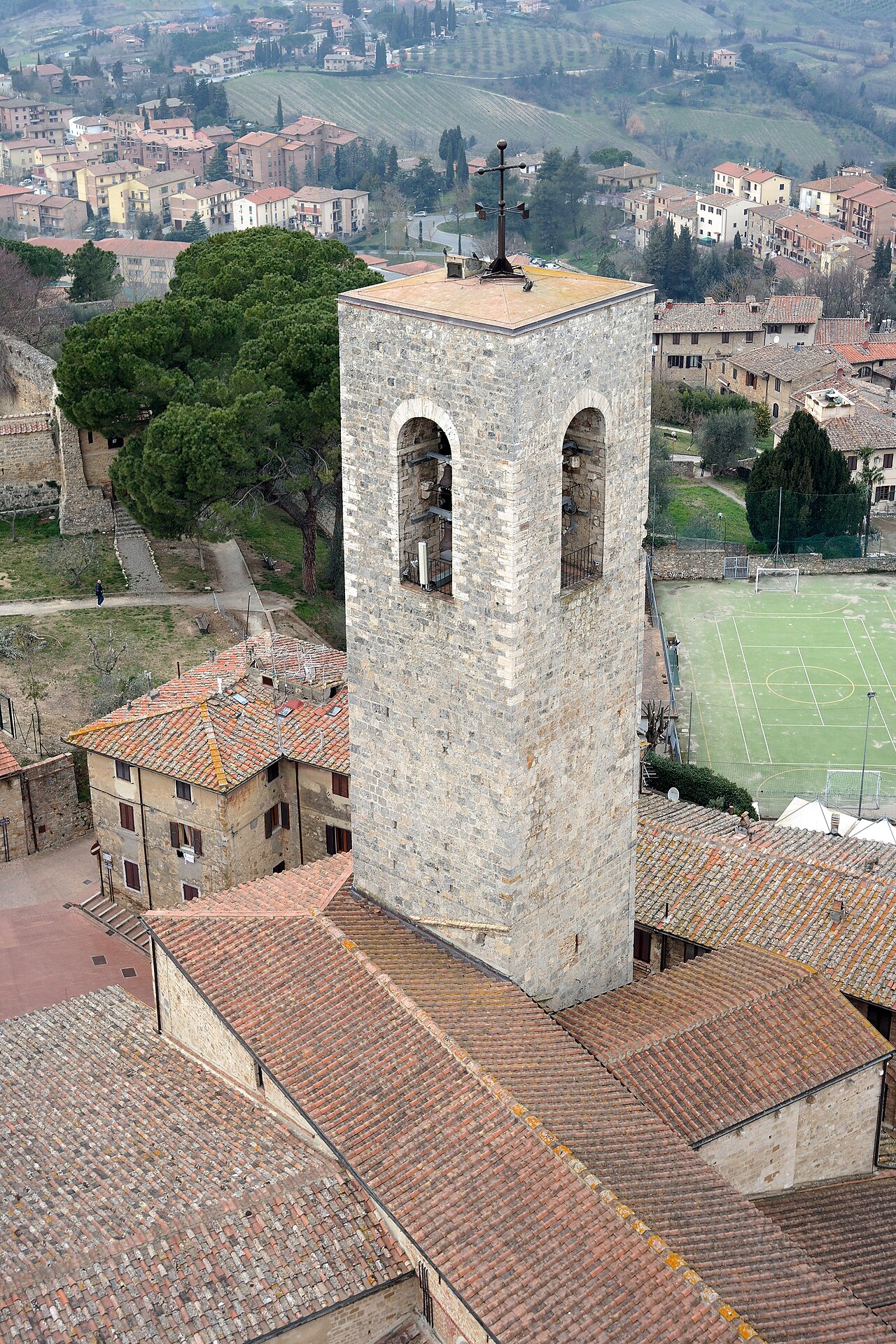
The town of towers lies about an hour from Siena by road and is the most famous skyline in the region. The Collegiata church is covered in fourteenth-century frescoes, the Torre Grossa gives views over the roofs, and the lanes between the two main squares are lined with food shops and wine bars. It is a day trip by car or bus, and the old town is closed to most traffic, so park outside the walls and walk up through the gates. The town fills with day-trippers between late morning and mid-afternoon in season, so go early or stay late. Winter hours are shorter, so check before you travel. Allow at least half a day, or stay overnight to see the town when the crowds have left.
Monteriggioni
About fifteen minutes from Siena, this tiny village is surrounded by an almost perfect ring of walls and fourteen towers. Dante compared its towers to giants, and the village is small enough to see in an hour. It is the best quick stop on the way to San Gimignano or Chianti, and the walls can be walked in places for views over the olive groves. A guided day trip that links Siena, Monteriggioni and San Gimignano with a lunch and a wine tasting is a good option if you prefer not to drive.
Chianti
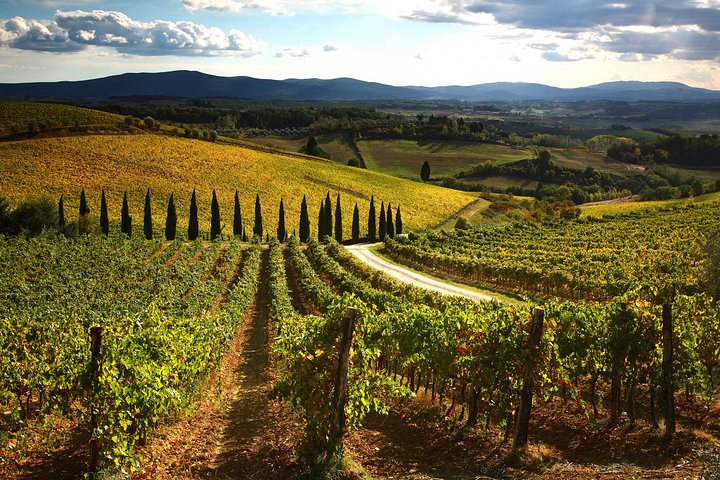
The rolling wine country between Siena and Florence is the simplest wine day to organise. A small-group trip from Siena with castle stops, a Tuscan lunch and a tasting removes the problem of driving after wine, and a guide explains the Chianti Classico appellation and its black rooster emblem. If you prefer your own pace, hire a driver or drive the winding Chianti road with one booked tasting. Roads are narrow, and distances are longer than they look, so keep the plan modest. Spring and autumn offer the best colours.
The Val d'Orcia
South of Siena lies the landscape most people picture as Tuscany: rolling hills, cypress-lined roads and hilltop villages, recognised by UNESCO. Pienza, about fifty kilometres from Siena, was rebuilt in the fifteenth century as an ideal Renaissance town and is the place to buy pecorino cheese. Montalcino, about twenty kilometres further, is home to Brunello, and the Temple of Brunello explains the wine before a tasting. Bagno Vignoni has a square filled with hot spring water. Public transport is limited, so a car, a driver or a guided trip is best, and three villages plus a long lunch is a full day.
Montepulciano
On its ridge between the Val d'Orcia and the Val di Chiana, Montepulciano is known for Vino Nobile, Renaissance palaces and historic cellars cut into the rock beneath the old town. It is about fifteen kilometres from Pienza, which makes the two a natural pair on a single day. The tower of the Palazzo Comunale can be climbed for views over two valleys. Wear shoes for steep streets and book a cellar tasting where it is required.
Truffles, food and cooking
If your day trips are about food, a truffle hunt takes you into the woods near Siena with a hunter and dogs, and a cooking class in the city gives you a way to cook what you have bought in the markets of the hill towns. These experiences fit around a trip or fill the evening afterwards.
Combining trips
The easiest pairings are Monteriggioni with San Gimignano, San Gimignano with Chianti, Pienza with Montepulciano and Pienza with Montalcino. Avoid combining the north and south in one day, because the drives eat the time. A rule of thumb is two towns and a long lunch per day.
Getting around
Buses connect Siena with San Gimignano and some other towns, but timetables are limited and slow, especially on Sundays and in winter. A rental car gives the most freedom, but Siena's centre is a limited traffic zone, so park outside the walls, and remember that parking in hill towns is usually outside the gates. A guided day trip is the least stressful option, particularly for wine. Whatever you choose, leave early, because the hills are most beautiful in morning light and the tour groups arrive late.
Practical tips
Check opening days for museums and lunch spots, since small towns often close one day a week. Carry a layer for hilltop wind, wear shoes for cobbles and carry some cash for small shops. Plan your return for the evening, when Siena's Campo is at its best.