Few capitals show their past as openly as Sofia. Within a few minutes’ walk you can pass a Roman street, a fourth-century brick rotunda, an Ottoman mosque, a Secession bathhouse and a Stalinist ministry, and the city rewards visitors who read it as a sequence of chapters rather than a list of landmarks. This guide follows that sequence, with the sights that best explain each period and a few ways to combine them into a day.
The Thracians and the first settlers
Long before Rome, the area around Sofia was home to Thracian tribes, and the mineral springs that rise in the city centre were already valued. The Thracians were skilled metalworkers and horsemen, and their gold treasures are among the finest in Europe. The best place to meet them in the city is the National Archaeological Museum, housed in a former Ottoman mosque, and the National Museum of History, which holds Thracian and medieval treasures. For the landscapes where they lived and buried their kings, a day trip to the Valley of the Thracian Kings or the tombs near Kazanlak shows the monuments in place.
Serdica and the Roman city
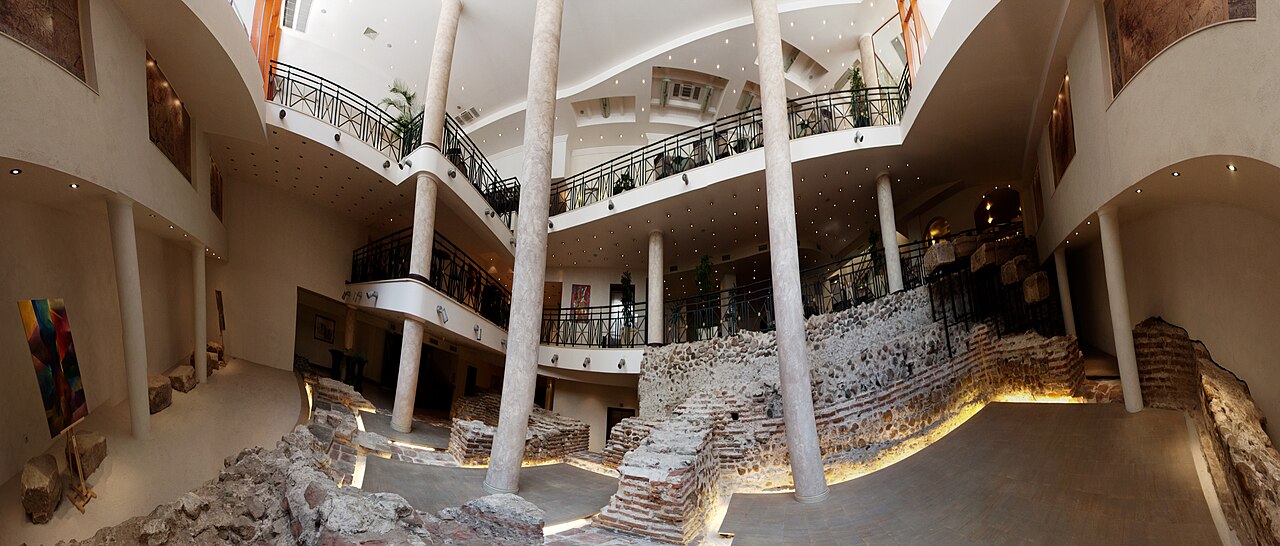
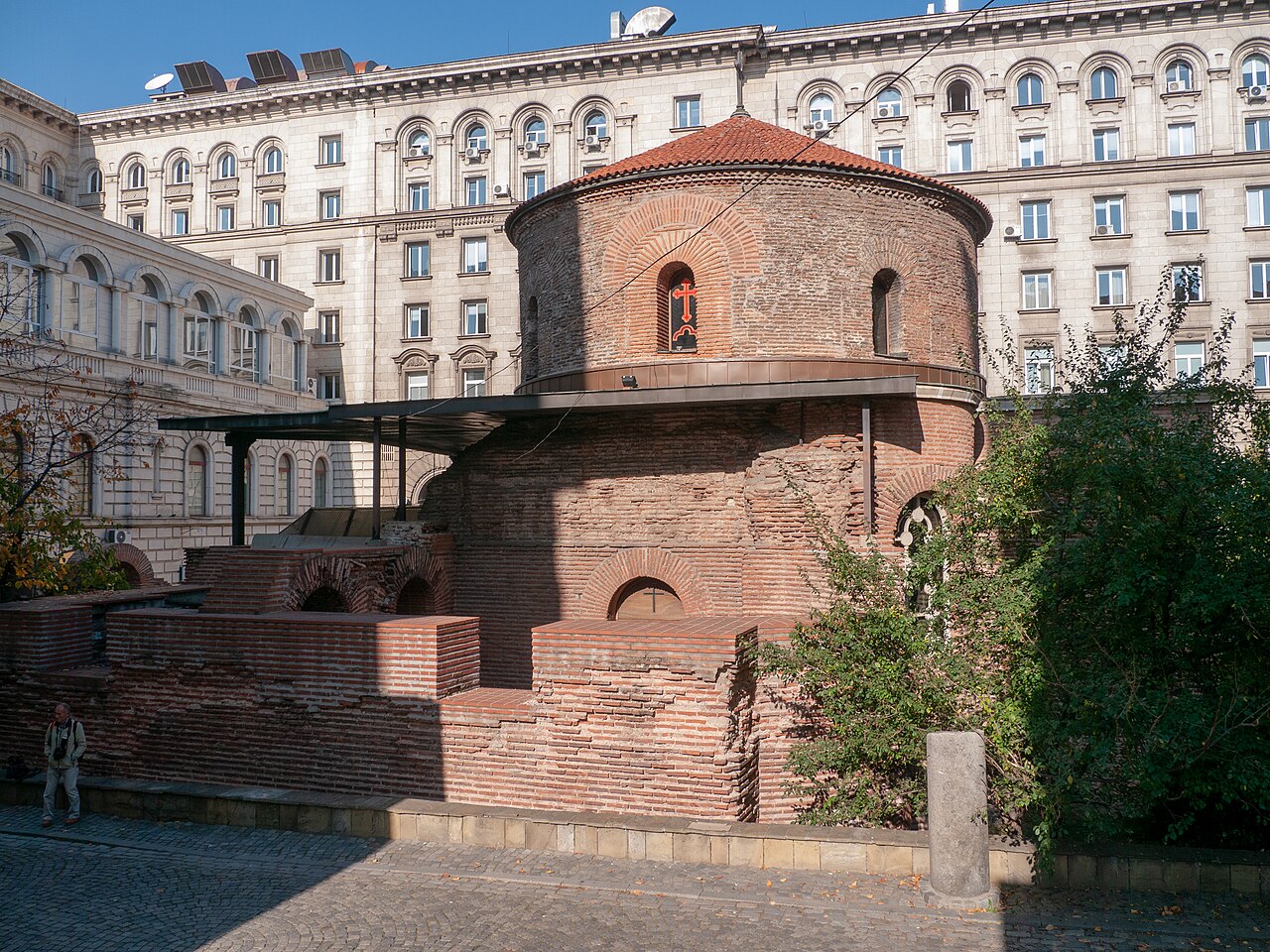
The Romans arrived in the first century and built Serdica, a prosperous city that Emperor Constantine is said to have called his Rome. The Serdica Ancient Complex lets you walk along excavated streets, past walls and mosaics, under glass and beside the metro. Nearby, the Rotunda of St George, a brick building from the fourth century, is one of the oldest buildings in the city and still holds medieval frescoes inside. Together they give the clearest sense of how deep the foundations of Sofia go, and they are free or inexpensive to visit.
Byzantine and medieval Bulgaria
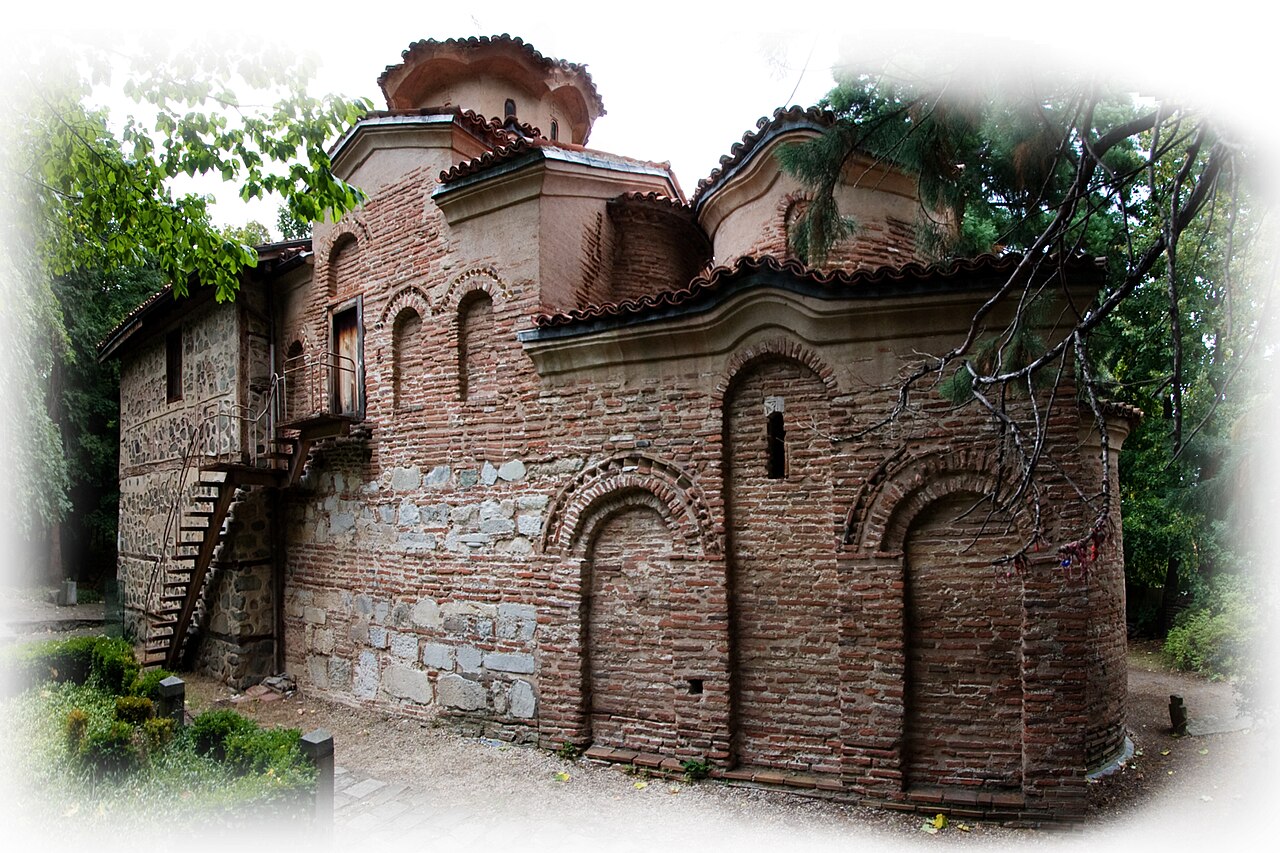
After Rome, Sofia passed through Byzantine, Bulgarian and Serbian hands, and the city took its name from the Church of St Sofia, which stands in the centre. The medieval period is best seen at Boyana Church, where frescoes painted in 1259 are celebrated for their lifelike faces and a sense of humanity that anticipates the Renaissance. The church is small, so visits are limited and advance planning helps. The monasteries on the edge of the city and at Rila continue the story of Orthodox faith as the guardian of Bulgarian identity during centuries of foreign rule.
The Ottoman centuries
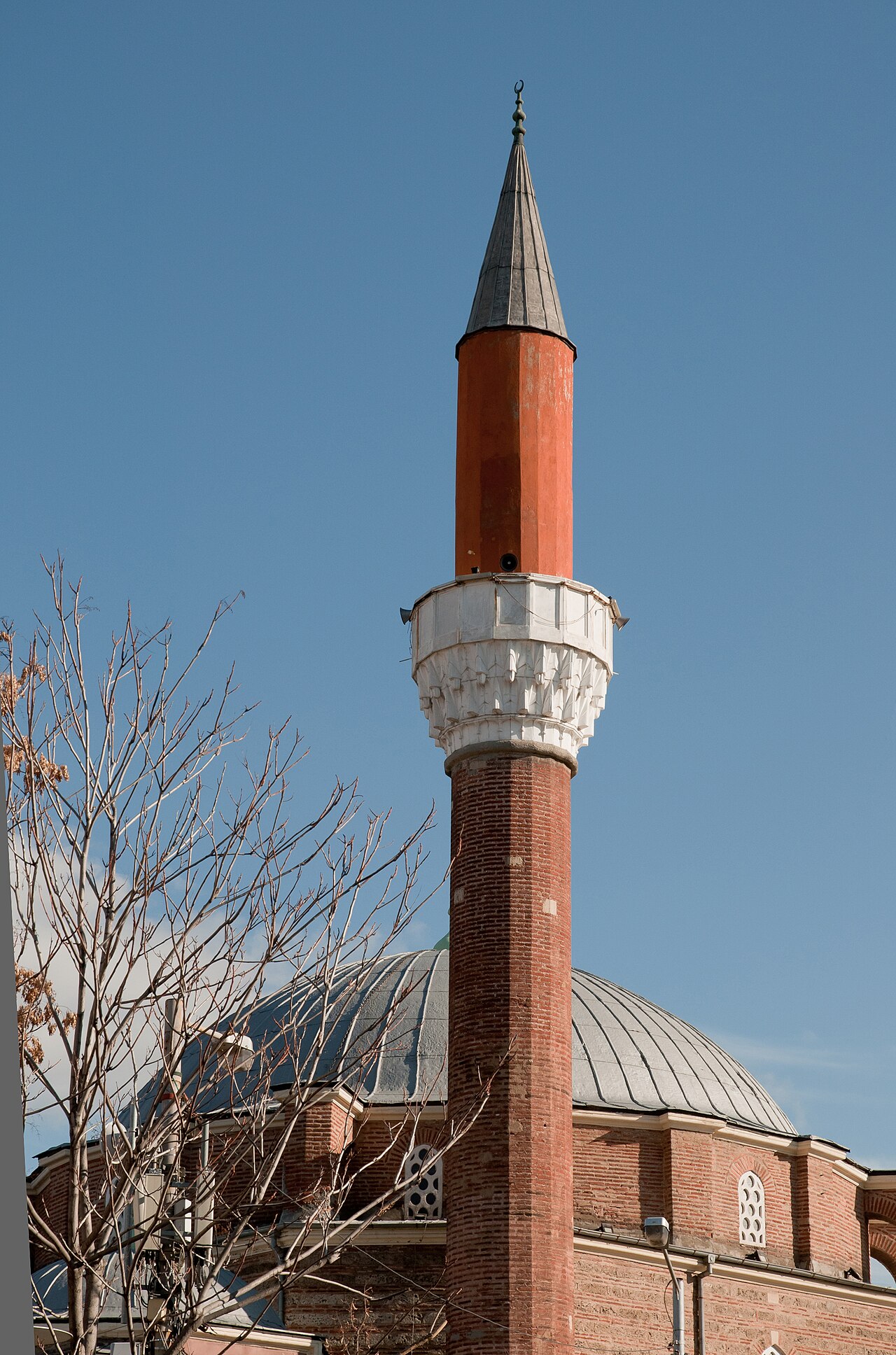
From the late fourteenth century until 1878, Sofia was an Ottoman provincial city. The Banya Bashi Mosque, built in the sixteenth century with a dome and slender minaret, is the clearest reminder, and a short walk away stand the synagogue, the Orthodox cathedral and a Catholic church, which together give the district a nickname that refers to the four religions of the city. The Ottoman period also left behind the mineral baths, the layout of many streets and a taste for coffee, grilled meat and sweet pastries. A retro tram ride or an architectural walk can help you see how the centre fits together.
Liberation and the young capital
Bulgaria regained its independence in 1878, and Sofia was chosen as capital in 1879. In the decades that followed, architects trained in Vienna, Prague and Munich created the neoclassical and Secession buildings of the centre, including the National Theatre, the Central Mineral Baths and the Alexander Nevsky Cathedral, built in memory of the Russian soldiers who died in the war of liberation. A Belle Époque walking tour is the best way to appreciate the details, and the National Art Gallery and the Sofia History Museum fill in the cultural story.
The communist decades
From 1944 to 1989, Bulgaria was a socialist state, and the capital was reshaped around monumental squares and housing estates. The Largo, with its Stalinist-classical ensemble, and the huge National Palace of Culture, opened in 1981, are the strongest examples. A communist walking tour explains daily life, while the Museum of Art from the Socialist Period gathers statues and symbols that once stood in public squares. The mix of humour and seriousness at that museum makes it one of the most thought-provoking stops in the city.
A themed day
For a full day of history, start with the National Archaeological Museum and the Rotunda in the morning, walk through the Serdica complex and then have lunch in the centre. In the afternoon, take a taxi to the National Museum of History and Boyana Church, and finish with a guided communist walk or a visit to the sculpture park if you still have energy. If you prefer fewer museums and more movement, choose a guided walk on the first morning and spend the afternoon at one museum of your choice.
Practical tips
Check closing days before you go, since several museums close on Mondays. Churches and mosques require modest dress and quiet behaviour. Many sights offer audio guides, and guided tours give far more context than signs alone. Bring comfortable shoes for cobbles and tram tracks, and allow time for coffee breaks, since the city’s café culture is part of its heritage. With a little planning, a short stay in Sofia becomes a surprisingly complete tour of European history.