Dalmatian cooking is simple, seasonal and built around three things: the sea, olive oil and a slow pace. Split makes a good place to learn it, because the old town is packed with small restaurants, the markets sit just outside the palace walls and the coast supplies fish, shellfish, vegetables and lamb of a quality that needs little dressing up.
Start at the markets
The Pazar green market lies just outside the palace walls by the east side of the old town and is the best place to see what is in season, from figs, cherries and citrus to leafy chard, olives, cheese, honey and cured ham. It is also where residents shop, so it is a good place to assemble a picnic for a day trip. The fish market, known locally as the Peškarija, stands close to the Riva and is liveliest in the morning, when the catch is laid out and the banter is at full volume. Even if you are not cooking, it is worth the detour.
Dishes to try
Pašticada is a slow-braised beef dish in a dark, sweet-sour sauce, traditionally served with gnocchi and associated with celebrations. Brudet is a fish stew cooked with tomato and wine, and black risotto gets its colour from cuttlefish ink. Grilled fish is sold by weight and presented whole, so ask how it is priced before ordering. Peka, meat or octopus with potatoes cooked slowly under an iron bell covered in embers, usually needs ordering several hours ahead, so ask when you book. Blitva, chard and potatoes dressed with olive oil and garlic, is the classic side. For something lighter, order pršut, the air-dried ham, with local sheep cheese and olives.
Konoba versus restaurant
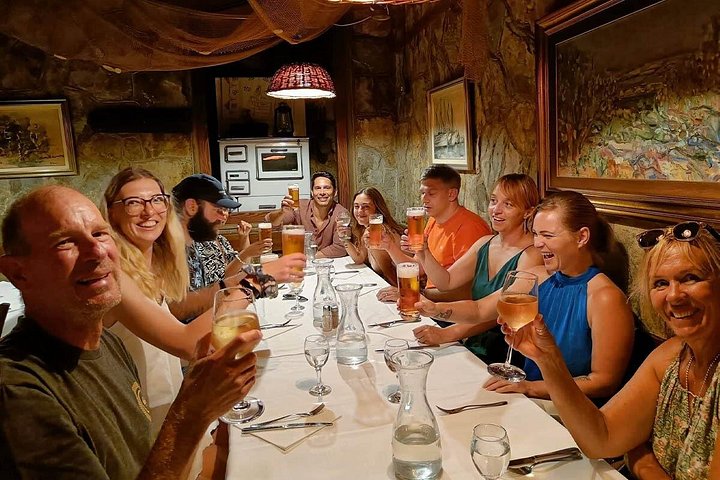
A konoba is a traditional tavern, often small, family-run and focused on a short list of home-style dishes. A restaurant is more likely to have a long menu and a terrace. Neither is automatically better, but the best-value meals in the old town tend to be in the side lanes and on streets away from the front. Riva terraces are about the view and the people-watching; treat them as a place for coffee or a drink, and eat dinner a block or two back.
What to drink
Dalmatia makes some distinctive wines. Plavac mali is the dominant red grape of the coast, full-bodied and best with grilled meat, while Pošip and Vugava are characterful whites that suit fish. Prošek is a sweet dessert wine, and rakija, the local fruit brandy, often comes flavoured with herbs; travarica is the herbal version. Croatian beer is solid, and a spritzer of white wine and soda, known as a bevanda when mixed with red, is an everyday summer drink. Coffee is a ritual here, taken slowly at a table, and there is no pressure to leave.
Sweet things
Look for fritule, small fried dough balls dusted with sugar and flavoured with citrus or rum, and kroštule, fried pastry twists. Gelato shops are everywhere in the old town; judge them by whether the flavours look natural rather than piled high and glossy.
Bačvice and the beach scene
The beach district to the east is where locals play picigin, a ball game played in the shallows, and its beach bars and cafes suit a relaxed lunch after swimming. In summer it is lively into the evening.
Costs, tips and timing
Croatia uses the euro. Lunch is traditionally the main meal, dinner often starts late, and in summer restaurants fill up quickly, so book for the evening you want, especially for tables with a view. Leaving a tip of roughly ten percent or rounding up the bill is customary for good service. In winter, expect some places to close early or for a few weeks and the Riva to be quieter, though the konobas are cosy and the food is at its heartiest. Ask about vegetarian options, since the traditional menu leans on fish and meat, but most kitchens can do grilled vegetables, soup or pasta.
A simple food plan
Coffee on the Riva in the morning, the market or a bakery stop at midday, a long lunch in a konoba, and an early evening spritz before dinner in the lanes. It is not a complicated formula, and it is the best way to eat like a local.