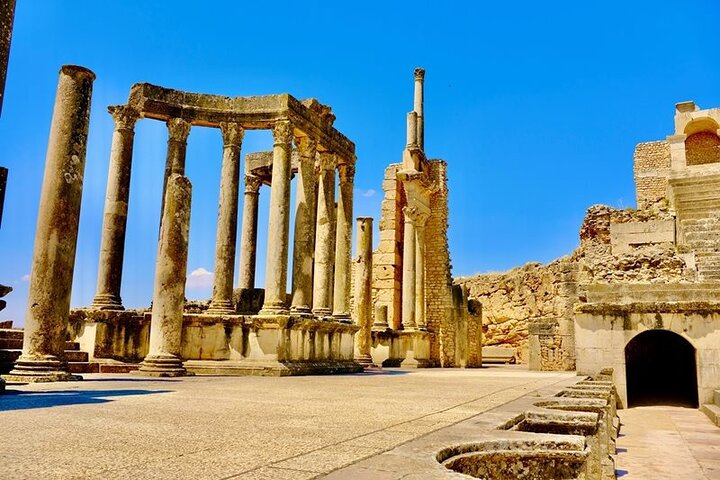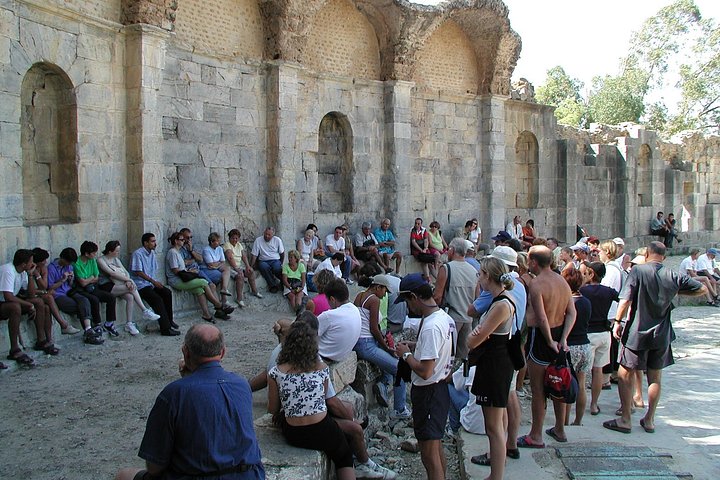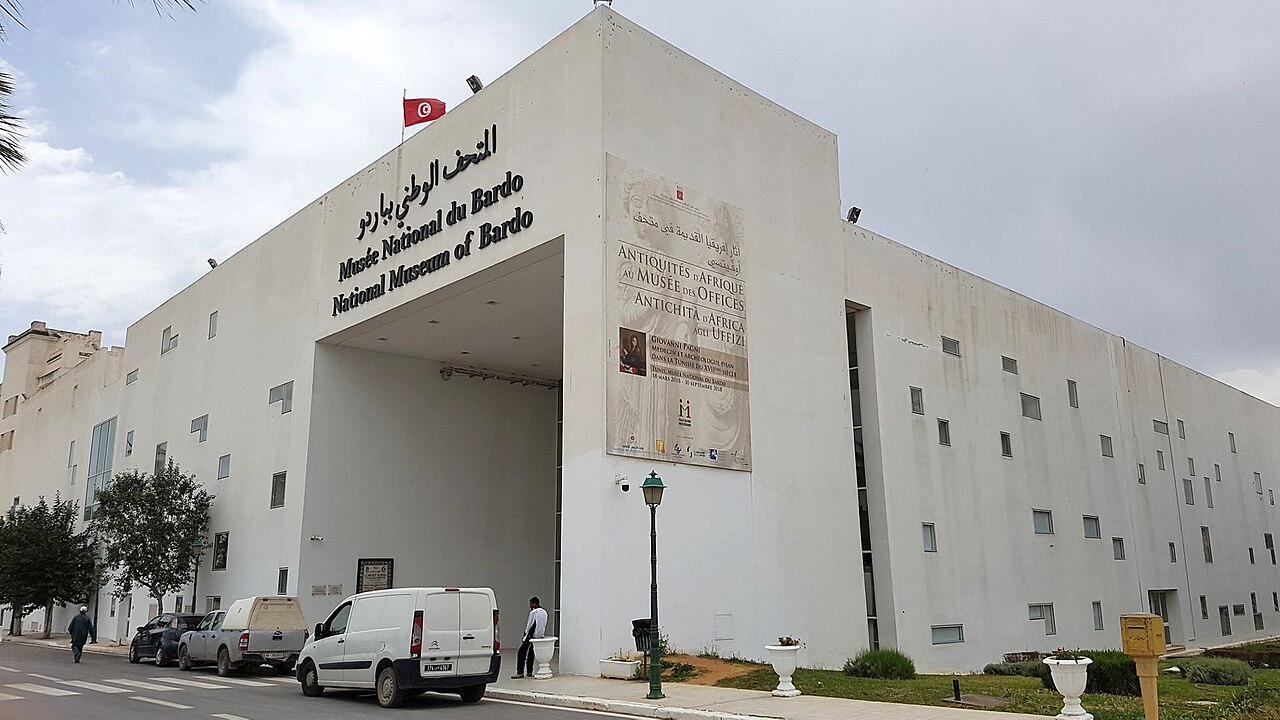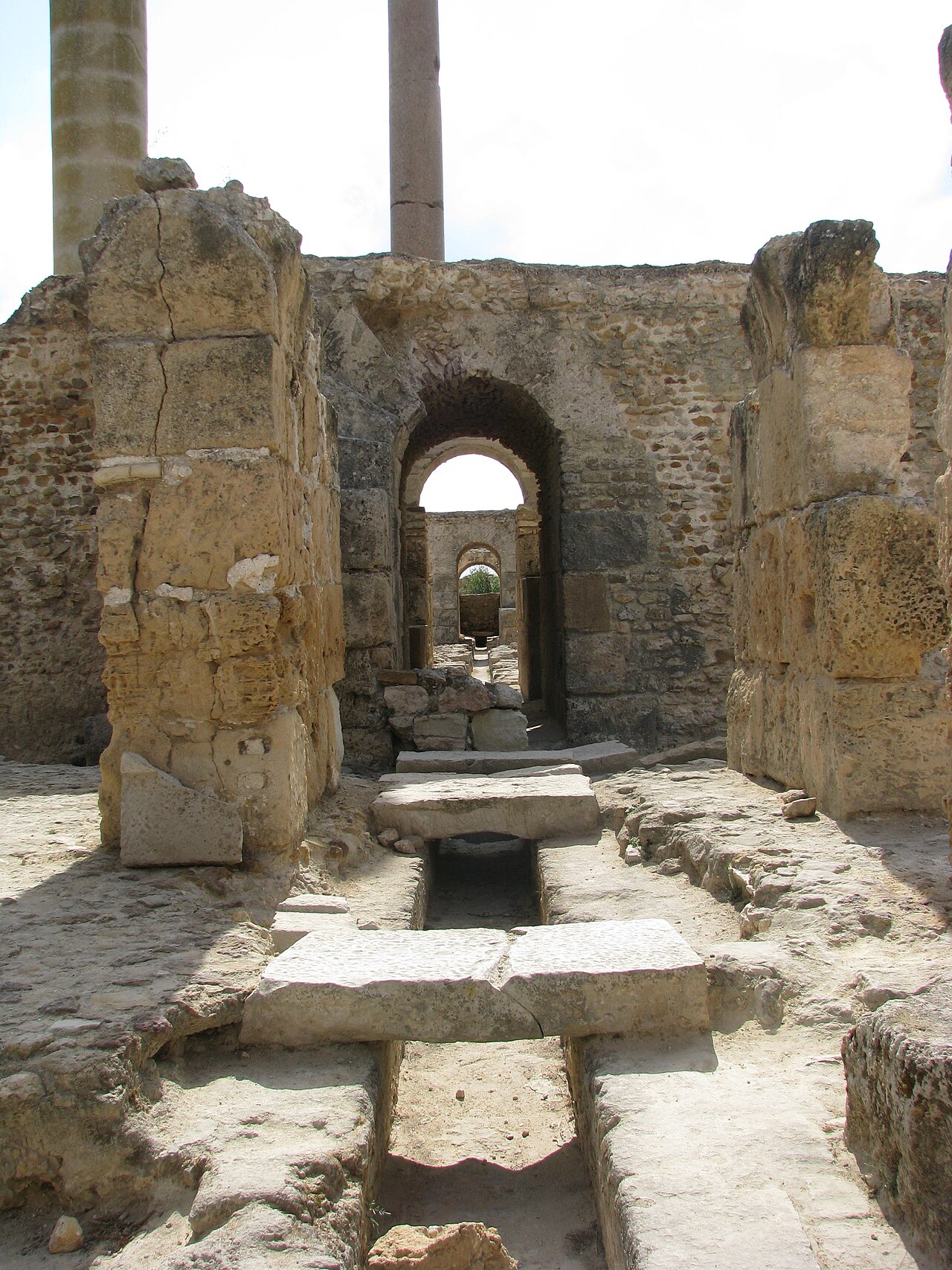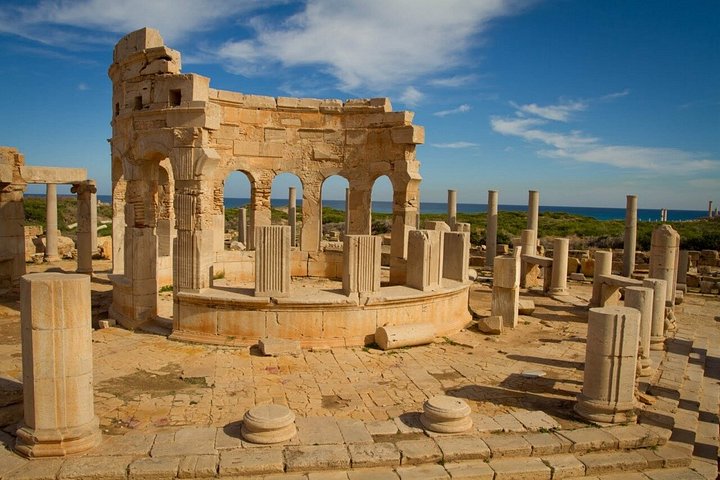
Within easy reach of Tunis are two Roman towns that most visitors never see, which is exactly why they are worth a day. Oudhna, ancient Uthina, lies about half an hour south of the capital. It was founded as a colony for retired legionaries and grew into a prosperous farming town, and today its low hill is crowded with ruins: a Capitol, a partially restored amphitheatre, public baths, great cisterns that stored the water brought by the aqueduct, and the foundations of rich villas whose mosaics have since been moved to the Bardo Museum. The amphitheatre is smaller than El Djem but can be walked in and explored freely, and from the top of the hill the view runs across olive groves and farmland to the distant hills. There is a small museum on site and usually no crowd at all. Thuburbo Majus, further south-west near the town of El Fahs, is the more complete of the two. A Berber and Punic settlement that became a Roman colony, it still has a large forum paved in stone, the tall columns of a Capitol, a temple dedicated to Mercury, a paved palaestra with decorated floors, and two sets of baths, the Summer Baths and the Winter Baths. Courtyards with mosaics, some of them surrounded by columns, give a vivid idea of a prosperous provincial town. Wandering the streets, you find thresholds, drains and wells that make the ordinary life of the town easy to picture.
Planning the day
The two sites are usually combined with Zaghouan on one private tour, which makes a comfortable full day and shows the rural landscape between them. The distances are short, with perhaps an hour between Oudhna and Thuburbo, so you can start later than for Dougga or El Djem and still be back in Tunis for dinner.
A private car and guide are by far the easiest way to reach them, as public transport is thin and neither site has much signage. A guide helps you read the ruins, pointing out how the baths worked, where the market stalls stood and which temples belonged to which gods.
On site
Both sites are outdoors with little shade, uneven ground and few facilities, so wear sturdy shoes, carry water and bring sun protection. Allow about an hour at Oudhna and an hour and a half at Thuburbo Majus. Spring is the best season, when wildflowers cover the ruins and the light is soft.
Summer afternoons can be punishing, so aim for the morning. Hours can vary with the season and holidays, and the sites are generally closed on certain public holidays, so ask your operator to confirm. Small entrance fees are normally paid on arrival, so carry some local currency in small notes.
Who it suits
History lovers who like to explore without crowds, photographers and travellers who have already seen Carthage and want to understand what a smaller Roman town looked like. It is also a relaxed option if you are staying on the Hammamet coast, as the sites lie inland from there.
Children who enjoy clambering over ruins tend to enjoy Oudhna's amphitheatre and the open space of Thuburbo's forum. Pack a picnic or ask your guide to recommend a lunch stop in a nearby village, because the sites themselves have few facilities and the best meals are usually in the small towns along the road.
What to expect
The experience
A private guided day exploring two Roman towns, with time to walk the Capitol, amphitheatre, forum and baths, usually with a stop at Zaghouan.
Best time
Spring for wildflowers and soft light; in summer go in the morning.
How long
About an hour at Oudhna and an hour and a half at Thuburbo Majus, within a day of roughly six to eight hours.
Tips
Wear sturdy shoes, bring water and sun protection, and carry small notes for entrance fees.
Quick picks
- Best for
- Travellers who like Roman ruins without crowds and a relaxed day out of the city.
- Families
- Plenty of open space to explore; children enjoy the amphitheatre and the forum.
- Couples
- A peaceful countryside day with long views and no queues.
- Pair with
- Zaghouan and its Temple of Waters on the same trip, and the Bardo Museum for the mosaics from Oudhna.
- Time needed
- A full day from Tunis, or a half day for Oudhna alone.
Good questions
What is there to see at Oudhna?+
A hilltop Capitol, a partly restored amphitheatre, baths, large cisterns and the foundations of Roman villas. Mosaics from the villas are displayed at the Bardo Museum.
What is Thuburbo Majus known for?+
Its forum, the columns of the Capitol, a temple of Mercury, two sets of baths and mosaic-floored courtyards. It is one of the most complete Roman towns near Tunis.
How far are these sites from Tunis?+
Oudhna is about half an hour south, and Thuburbo Majus is roughly an hour away. They combine easily with Zaghouan in one day.
Are the sites crowded?+
No, both are quiet, and you often have large parts of them to yourself. That is a main reason to go.
Do I need a guide?+
It is strongly recommended. Signage is limited and a guide explains how the baths, forum and temples worked, and handles the transport.